How LED PCB Choices Affect Real-World Performance
In LED projects, PCB selection often looks straightforward at the specification stage. Power rating, material type, and copper thickness are defined early, and on paper, everything appears to be covered. In practice, differences usually show up after the product has been running for some time.
A common situation is that a lighting system passes initial testing without issues, but after a period of use, brightness starts to drop, heat distribution becomes uneven, or color consistency begins to shift. In most cases, the root cause is not the LED itself, but how heat is handled across the PCB.
For this reason, an LED PCB should not be treated as a simple carrier. It is part of the thermal path, and its structure directly affects how efficiently heat moves away from the LED junction.
Material Selection Is Usually About Trade-Offs
In real projects, material selection is rarely about choosing the highest specification. It is about finding a balance that fits the application.
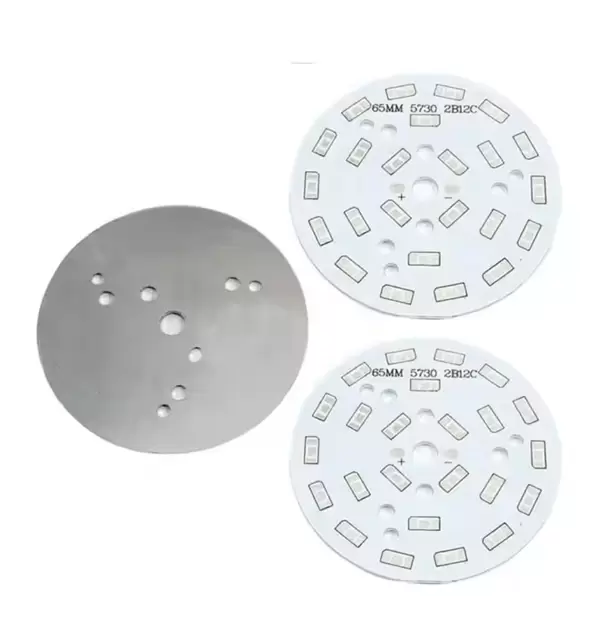
Aluminum-based PCBs are widely used in general lighting, such as street lighting, industrial fixtures, and commercial applications. They offer a practical balance between thermal performance and cost, which makes them suitable for most medium to high power designs.
In more demanding environments, such as automotive lighting or systems that operate continuously at higher temperatures, thermal stability becomes more critical. Under these conditions, ceramic substrates provide better dimensional stability and are less affected by repeated thermal cycling.
The decision is not based on a single parameter. It usually involves considering processing methods, assembly conditions, and long-term operating behavior at the same time.
Heat Issues Rarely Appear Immediately
Thermal problems in LED systems tend to develop gradually rather than causing immediate failure.
When heat is not transferred efficiently, junction temperature remains higher than expected. The system may still function in the short term, but over time, this leads to faster lumen degradation, reduced efficiency, and in some cases, instability in the driver circuit.
Within the PCB structure, heat must pass through several layers. The dielectric layer plays a key role here. A thicker dielectric improves insulation but increases thermal resistance, while a thinner layer improves heat transfer but requires tighter control to maintain reliability.
In most designs, the challenge is to balance:
·Thermal conductivity
·Electrical insulation
·Process stability
If this balance is not considered early, it is difficult to correct later in production.
Copper Thickness and Layout Need to Work Together
Increasing copper thickness is often seen as a direct way to improve current capacity and heat spreading. In practice, it also introduces constraints.
Higher copper weight can affect etching accuracy and limit how fine the circuit layout can be. This becomes more noticeable in designs with tighter spacing or higher density.
At the same time, thermal performance depends heavily on layout. Uneven copper distribution or localized concentration can create hot spots, even if the overall copper thickness is high.
A more effective approach is to focus on how heat is distributed across the board, rather than simply increasing material specifications across the entire design.
Assembly Conditions Influence Final Performance
The performance of an LED PCB is not determined by design alone. Assembly conditions also have a direct impact.
For example:
·Inconsistent reflow profiles can affect the integrity of the dielectric layer
·Poor contact between the PCB and the heat sink reduces thermal transfer efficiency
·Improper mounting can introduce mechanical stress over time
These issues are not always visible during initial testing but tend to appear during long-term operation or in large-scale production.
This is why PCB design, thermal structure, and assembly method are usually considered together rather than separately.
Matching PCB Structure to the Application
Different LED applications place very different demands on the PCB.
In general lighting, the focus is on stable performance and cost control. Standard aluminum-based designs are often sufficient.
In automotive environments, components are exposed to vibration and frequent temperature changes. Structural stability and consistency become more important, which may require thicker copper or more stable substrate materials.
In UV or medical systems, long-term consistency and thermal control are more critical. Material selection and structural design are typically more conservative.
In other words, higher specifications do not automatically lead to better results. What matters is how well the PCB matches the actual operating conditions.
What Makes the Difference in Production
In many cases, performance differences do not come from the design itself, but from how it is executed.
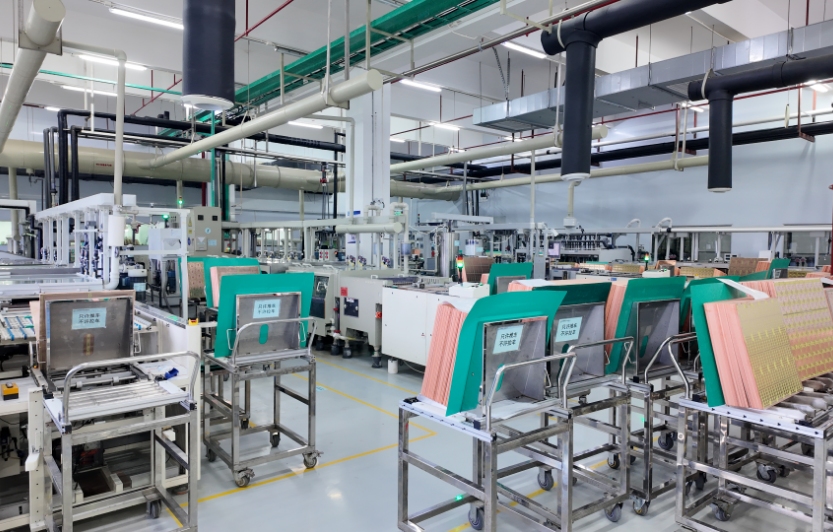
Variations in drawing interpretation, process selection, or production control can all affect the outcome. Once production scales up, even small inconsistencies can become more noticeable.
A reliable LED PCB solution usually comes from a balanced approach:
·Design that aligns with manufacturing capability
·Materials selected based on actual use conditions
·Production processes that can be repeated consistently
When these elements work together, the result is not only better performance but also more stable output across batches.

 en
en



 WhatsApp