Rigid-Flex PCB for Compact, High-Reliability Electronic Designs
In many electronic assemblies, the weakest points are not the components—they’re the connections between boards. Cables loosen, connectors wear out, and solder joints become unreliable over time, especially in systems exposed to vibration or repeated movement.
A well-designed Rigid-Flex PCB removes those risks at the structural level. Instead of linking multiple boards with connectors or wiring harnesses, rigid and flexible sections are built into a single circuit. Electrical paths remain continuous, with no mechanical interfaces in between.
For engineers, this means fewer failure points. For manufacturers, it reduces assembly steps and the chance of misalignment or poor contact during production.
Built for Dynamic Movement, Not Occasional Bending
Flexibility alone is not the advantage—controlled movement is.
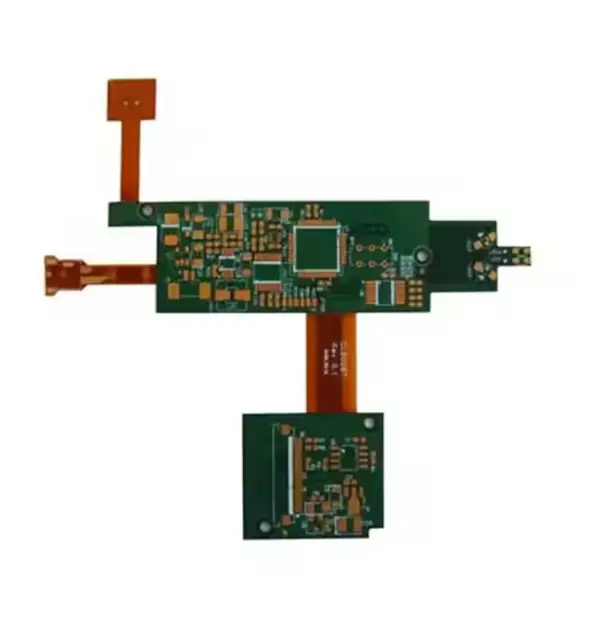
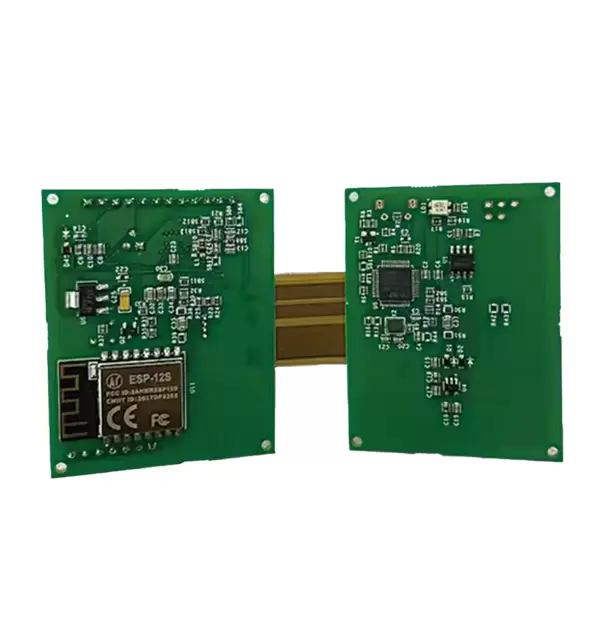
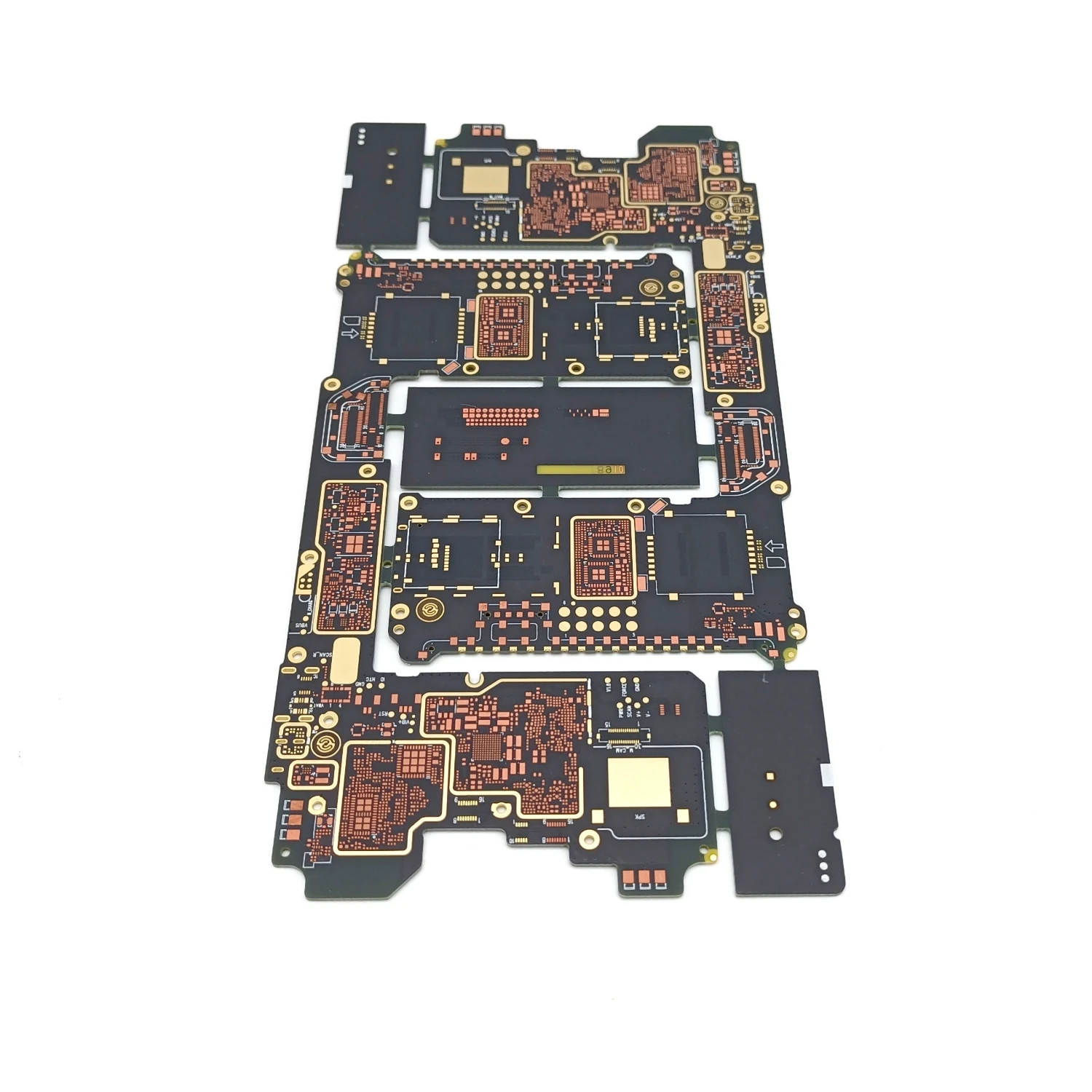
In applications like the structure shown above, the flexible section connects multiple rigid boards and allows them to move or fold within a defined range. A Rigid-Flex PCB is designed with this in mind from the start, including bend radius, copper thickness, and reinforcement in stress areas.
This makes it suitable for:
●Devices that open and close repeatedly
●Systems exposed to constant vibration
●Compact modules where internal movement is unavoidable
Rather than treating bending as a risk, the design turns it into a functional part of the product.
Enabling True 3D Layout in Limited Space
Traditional PCBs are limited to flat layouts. Once space runs out, the only option is to stack boards and connect them—adding complexity and bulk.
A Rigid-Flex PCB changes that approach. Flexible interconnects allow circuits to fold, twist, or route through tight mechanical spaces, making better use of the available volume inside the device.
This is particularly useful in:
●Compact industrial control units
●Medical devices with strict size constraints
●Aerospace and avionics modules
●Portable and wearable electronics
Instead of designing around the PCB, the PCB adapts to the product structure.
Reliable Performance in Harsh Operating Conditions
Electronic systems don’t always operate in controlled environments. Temperature swings, vibration, and long operating hours all put stress on the board.
A properly engineered Rigid-Flex PCB is built to handle these conditions:
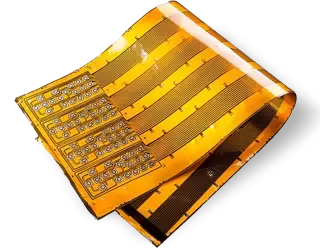
●Flexible materials such as polyimide maintain stability across wide temperature ranges
●Fewer connectors mean fewer points affected by shock or vibration
●Integrated structure reduces mechanical stress between sections
In real-world use, this translates into more stable performance over time, especially in equipment that cannot afford unexpected downtime.
Simplifying Assembly While Improving Consistency
Complex assemblies often involve multiple boards, cables, and connectors. Each additional part increases assembly time and introduces another point where errors can occur.
By consolidating these elements into one structure, a Rigid-Flex PCB simplifies the entire build process:
●Fewer components to source and manage
●Reduced manual assembly steps
●Lower risk of incorrect connections
●More consistent results across production batches
While the initial design may be more involved, the overall manufacturing process becomes more streamlined and predictable.
Manufacturing Capability Overview
●Rigid material: FR-4
●Flexible material: Polyimide (PI) / PET
●Layer count: 4–16 layers
●Rigid thickness: 0.8mm – 3.0mm
●Flexible thickness: 0.10mm – 0.30mm
●Copper thickness: 0.5oz – 3oz
●Minimum trace/space: 0.1mm / 0.1mm
●Minimum hole size: 0.15mm
●Surface finish: LF-HASL, ENIG, ENEPIG, OSP, and more
These capabilities support both standard configurations and more complex rigid-flex structures with multiple bending areas.
A Practical Choice for Complex Electronic Systems
A Rigid-Flex PCB is not just a hybrid of rigid and flexible circuits. It’s a structural solution that reduces interconnection problems, adapts to constrained spaces, and improves long-term reliability.
For applications where traditional multi-board solutions introduce risk or complexity, rigid-flex design offers a cleaner and more durable alternative—both in performance and in production.

 en
en


 WhatsApp