Modern electronic products are expected to deliver more functionality within smaller, lighter, and more compact designs. Engineers developing medical equipment, automotive electronics, industrial control systems, communication devices, and wearable products often face the same challenge: increasing performance without increasing product size.
Traditional PCB assemblies typically rely on multiple rigid circuit boards connected through cables, connectors, or wire harnesses. While this approach has been widely used for decades, it introduces several limitations as electronic systems become more complex. Connectors occupy valuable space, add assembly steps, increase overall weight, and create additional points of failure.
In many applications, connector-related issues remain one of the most common causes of long-term reliability problems. Vibration, repeated movement, thermal cycling, and environmental stress can gradually affect electrical connections, leading to intermittent faults or complete system failure.
Rigid Flex PCB technology offers a different approach. By integrating rigid circuit sections and flexible circuits into a single structure, it eliminates many of the mechanical interconnections found in conventional designs. This allows engineers to simplify product architecture, improve reliability, and make more efficient use of available space.
As industries continue pushing toward higher integration, smaller form factors, and longer service life, Rigid Flex PCB technology is becoming an important design strategy for products where reliability and performance are critical.
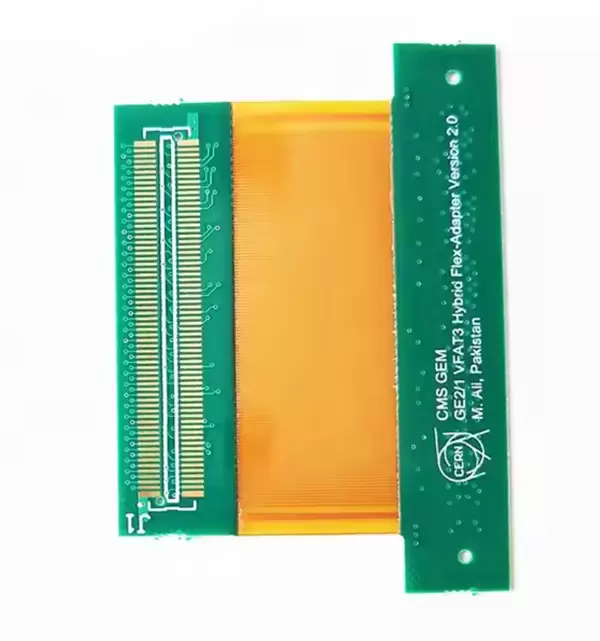
What Is a Rigid Flex PCB?
A Rigid Flex PCB is a circuit board structure that combines rigid PCB sections and flexible circuit sections into a single integrated assembly.
The rigid portions provide mechanical support and serve as mounting areas for electronic components, while the flexible portions act as built-in interconnections that allow the board to bend and fold within the product enclosure.
Unlike traditional assemblies that require separate cables or connectors between boards, electrical pathways in a Rigid Flex PCB remain continuous throughout the entire structure. This integrated design reduces the number of mechanical connections and simplifies overall system architecture.
Because the flexible sections are permanently laminated into the PCB structure, signal transmission occurs through continuous copper conductors rather than external connectors or wiring assemblies.
Structure of a Rigid Flex PCB
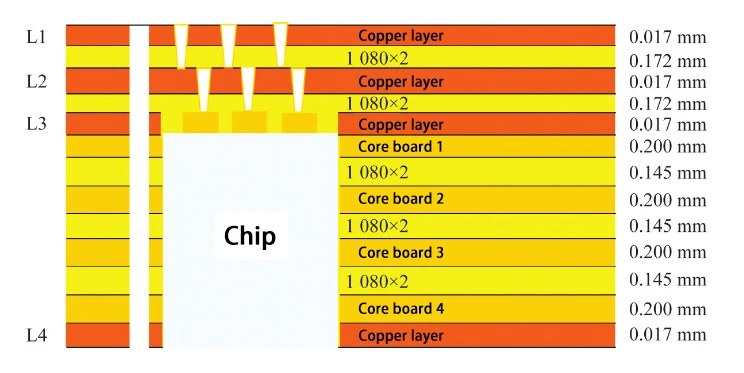
Although configurations vary depending on the application, most Rigid Flex PCB designs consist of:
●Rigid multilayer PCB sections
●Flexible polyimide circuit layers
●Copper conductor layers
●Coverlay protection layers
●Bonding materials or adhesive-free constructions
●Through-hole and microvia interconnections
The rigid sections provide structural stability and component support, while the flexible sections allow the circuit to fold around mechanical constraints inside the product.
This combination enables a level of design freedom that is difficult to achieve with conventional PCB assemblies.
How Rigid Flex PCBs Are Manufactured
Manufacturing a Rigid Flex PCB is significantly more complex than producing a standard rigid circuit board.
The process requires precise integration of materials with very different mechanical properties. Flexible polyimide materials and rigid laminate materials must be laminated together while maintaining dimensional accuracy throughout fabrication.
A typical production process includes:
1.Fabrication of flexible circuit layers
2.Fabrication of rigid PCB layers
3.Layer stackup preparation
4.Controlled lamination
5.Drilling and via formation
6.Copper plating
7.Circuit pattern imaging
8.Surface finishing
9.Electrical testing and inspection
Because both rigid and flexible materials respond differently to heat, pressure, and mechanical stress, process control plays a critical role in manufacturing quality.
This is one reason why many OEMs prefer working with experienced Rigid Flex PCB manufacturers that have dedicated flex circuit production capabilities.
Rigid Flex PCB vs Traditional PCB Assemblies
The primary difference between a Rigid Flex PCB and a traditional multi-board assembly lies in the interconnection method.
Traditional electronic systems often require:
●Board-to-board connectors
●Ribbon cables
●Wire harnesses
●Additional assembly hardware
Rigid Flex PCB technology integrates these connections directly into the circuit structure.
| Feature | Traditional PCB Assembly | Rigid Flex PCB |
|---|
| Connectors | Multiple required | Significantly reduced |
| Internal wiring | Separate cables | Integrated circuits |
| Assembly complexity | Higher | Lower |
| Space utilization | Limited | More efficient |
| Weight | Higher | Lower |
| Reliability | Connector dependent | Integrated structure |
Although the fabrication cost of a Rigid Flex PCB may be higher than that of a standard rigid PCB, the overall product often benefits from fewer parts, simpler assembly, and improved reliability.
Why Engineers Are Replacing Connector-Based Designs
As electronic products become more compact, internal space becomes increasingly valuable.
Every connector requires:
●Mounting space
●Mechanical support
●Additional assembly operations
●Inspection procedures
At the same time, each connector introduces another potential failure point.
Common connector-related issues include:
●Contact wear
●Vibration-induced loosening
●Corrosion
●Assembly errors
Signal interruptions
For products operating in demanding environments, these risks can become significant.
Rigid Flex PCB technology reduces dependence on connectors by integrating electrical pathways directly into the board structure. Fewer interconnections generally translate into fewer reliability concerns over the product lifecycle.
This advantage is particularly important in industries where maintenance access is limited or system failure is unacceptable.
Supporting Three-Dimensional Product Design
One of the most valuable characteristics of a Rigid Flex PCB is its ability to support three-dimensional product layouts.
Traditional rigid boards are limited by flat geometries and often require cables to connect different sections of a product.
A Rigid Flex PCB can bend and fold to fit around:
●Batteries
●Displays
●Sensors
●Mechanical assemblies
●Structural components
This design flexibility allows engineers to make better use of available space without increasing product size.
For compact products, this capability can significantly improve packaging efficiency.
Examples include:
Medical Devices
Portable monitoring systems and diagnostic equipment often require multiple electronic functions within compact housings.
Rigid Flex PCB technology helps reduce internal wiring while maintaining reliability.
Aerospace Electronics
Aircraft and satellite systems frequently operate under strict weight and space limitations.
Reducing connectors and cables can improve both reliability and overall system efficiency.
Automotive Electronics
Advanced driver assistance systems, camera modules, and electronic control units benefit from improved vibration resistance and reduced package size.
Wearable Devices
Smart watches, fitness trackers, and portable electronics often require folded PCB structures to maximise available internal space.
Looking Beyond PCB Cost
A common mistake during procurement is evaluating a Rigid Flex PCB solely based on fabrication cost.
From an engineering perspective, the more relevant metric is total product cost.
When a Rigid Flex PCB replaces multiple boards, cables, and connectors, manufacturers often achieve savings in several areas:
●Connector procurement
●Wire harness production
●Assembly labor
●Inspection time
●Inventory management
●Service and maintenance
In many projects, these savings help offset the higher PCB manufacturing cost.
More importantly, improved reliability can reduce warranty claims and field service expenses throughout the product lifecycle.
Rigid Flex PCB as a Reliability-Driven Design Strategy
For many modern electronic products, choosing a Rigid Flex PCB is no longer simply a packaging decision.
It is often a reliability-driven engineering decision.
As electronic systems continue moving toward higher functionality, smaller form factors, and greater integration, traditional connector-heavy architectures become increasingly difficult to justify.
By combining mechanical flexibility, electrical continuity, and efficient space utilisation, Rigid Flex PCB technology helps designers meet the growing demands of modern electronic products while improving long-term reliability and simplifying system architecture.
Key Advantages of Rigid Flex PCB Technology
The growing adoption of Rigid Flex PCB technology is largely driven by the engineering advantages it offers over conventional PCB assemblies.
While every application has different requirements, most design teams evaluate Rigid Flex PCB solutions based on five key factors:
●Space utilization
●Weight reduction
●Reliability
●Signal performance
●Design flexibility
These factors directly influence product performance, manufacturing efficiency, and long-term operating reliability.
More Efficient Use of Internal Space
Space constraints are becoming increasingly common in modern electronic products.
Medical devices are expected to become more portable. Automotive electronic modules must fit into tighter installation areas. Industrial control systems continue to integrate more functions into compact enclosures.
Traditional PCB assemblies often require:
●Multiple boards
●Ribbon cables
●Wire harnesses
●Connectors
These components consume valuable internal space.
A Rigid Flex PCB allows the circuit itself to become part of the mechanical packaging strategy.
Because the flexible sections can fold and route through unused areas inside the enclosure, engineers gain more freedom when arranging components.
In many projects, adopting a Rigid Flex PCB enables:
●Smaller enclosure dimensions
●Higher component density
●Better internal layout optimization
This advantage is one of the primary reasons compact electronic products increasingly rely on Rigid Flex PCB technology.
Weight Reduction
Weight is a critical consideration in many industries.
Even small reductions can create significant benefits in aerospace, automotive, portable electronics, and wearable devices.
Traditional assemblies often include:
●Connectors
●Cable assemblies
●Mounting hardware
●Mechanical supports
These components add unnecessary weight.
A Rigid Flex PCB integrates many of these functions directly into the board structure.
As a result, designers can eliminate multiple mechanical components while maintaining electrical performance.
Industries that benefit most from weight reduction include:
Aerospace Systems
Every kilogram saved contributes to fuel efficiency and payload optimisation.
Automotive Electronics
Lower system weight supports vehicle efficiency and range improvement.
Portable Medical Devices
Lighter products improve mobility and user experience.
Wearable Electronics
Reduced weight directly improves comfort and usability.
Improved Reliability
Reliability is often the most important reason companies transition to Rigid Flex PCB designs.
Studies across multiple industries consistently show that connectors and cable assemblies are among the most common sources of electronic system failures.
Common failure mechanisms include:
●Connector wear
●Contact oxidation
●Vibration damage
●Cable fatigue
●Assembly defects
Rigid Flex PCB technology addresses these issues by eliminating many of the mechanical interconnections that exist in traditional designs.
With fewer connection points, there are fewer opportunities for failure.
This benefit becomes especially important in products expected to operate continuously for many years.
Better Signal Integrity
Electronic systems are processing larger amounts of data at higher speeds than ever before.
Signal quality has become a critical design consideration.
Traditional cable assemblies may introduce:
●Signal reflections
●Electromagnetic interference
●Crosstalk
●Impedance discontinuities
Rigid Flex PCB structures provide more controlled signal routing environments.
Engineers can design:
●Controlled impedance traces
●Consistent return paths
●Optimised layer stackups
This helps maintain signal quality across complex electronic systems.
Applications involving:
●High-speed communication
●Medical imaging
●Automotive radar
●Industrial networking
Often benefit from the improved electrical performance of Rigid Flex PCB technology.
Greater Design Flexibility
One of the most overlooked advantages of a Rigid Flex PCB is the design freedom it provides.
Instead of designing around cables and connectors, engineers can design around product functionality.
Flexible sections can:
●Bend
●Fold
●Twist
●Wrap-around structures
●while maintaining electrical continuity.
This flexibility often allows engineers to develop products that would be difficult or impossible to implement using conventional PCB architectures.
As product miniaturisation continues, this design freedom becomes increasingly valuable.
How Rigid Flex PCBs Improve Product Reliability
Reliability is often the deciding factor when engineering teams choose between a conventional PCB assembly and a Rigid Flex PCB architecture.
For industries such as aerospace, medical devices, and automotive electronics, system failure is not merely inconvenient—it can result in significant financial losses, safety concerns, or operational disruptions.
The reliability benefits of Rigid Flex PCB technology extend well beyond connector reduction.
Reducing Connector-Related Failures
A typical electronic assembly may contain multiple board-to-board connections.
Each connector introduces potential risks:
●Mechanical loosening
●Contact contamination
●Wear during servicing
●Manufacturing defects
●Over time, these risks accumulate.
By replacing many connector interfaces with continuous copper circuitry, a Rigid Flex PCB significantly reduces failure opportunities.
This is particularly important in equipment designed for long service life.
Superior Vibration Resistance
Electronic equipment often operates in environments where vibration is unavoidable.
Examples include:
●Aircraft systems
●Automotive electronics
●Factory automation equipment
●Railway electronics
Connectors and cables can experience repeated mechanical stress under vibration.
Rigid Flex PCB structures distribute stress more evenly throughout the assembly.
The result is improved resistance to:
●Mechanical fatigue
●Intermittent electrical connections
●Connector loosening
This characteristic makes Rigid Flex PCB technology especially attractive for mission-critical applications.
Improved Mechanical Durability
Repeated movement can eventually damage conventional wiring assemblies.
Flexible circuits used within a Rigid Flex PCB are specifically designed to tolerate controlled bending.
When properly engineered, these flexible sections can withstand repeated mechanical movement while maintaining electrical performance.
This durability helps extend product service life.
Long-Term Stability
Long-term stability is a key requirement for products expected to remain operational for many years.
Medical equipment, industrial control systems, and aerospace electronics frequently have service life expectations exceeding ten years.
By reducing connector count and simplifying internal architecture, Rigid Flex PCB designs help maintain stable electrical performance throughout the product lifecycle.
Fewer components generally mean fewer potential failure mechanisms.
This is one of the reasons many high-reliability industries continue increasing their use of Rigid Flex PCB technology.
About the author:

Sonic Yang
As a major in Electronics and Mechanical Automation, Sonic has been engaged in PCB design, R&D, and manufacturing of electronics for around 22 years, as the engineering director, and coordinates with the supply chain(components and CNC parts), providing professional support and consulting for global customers.

 en
en

.jpg)
 WhatsApp