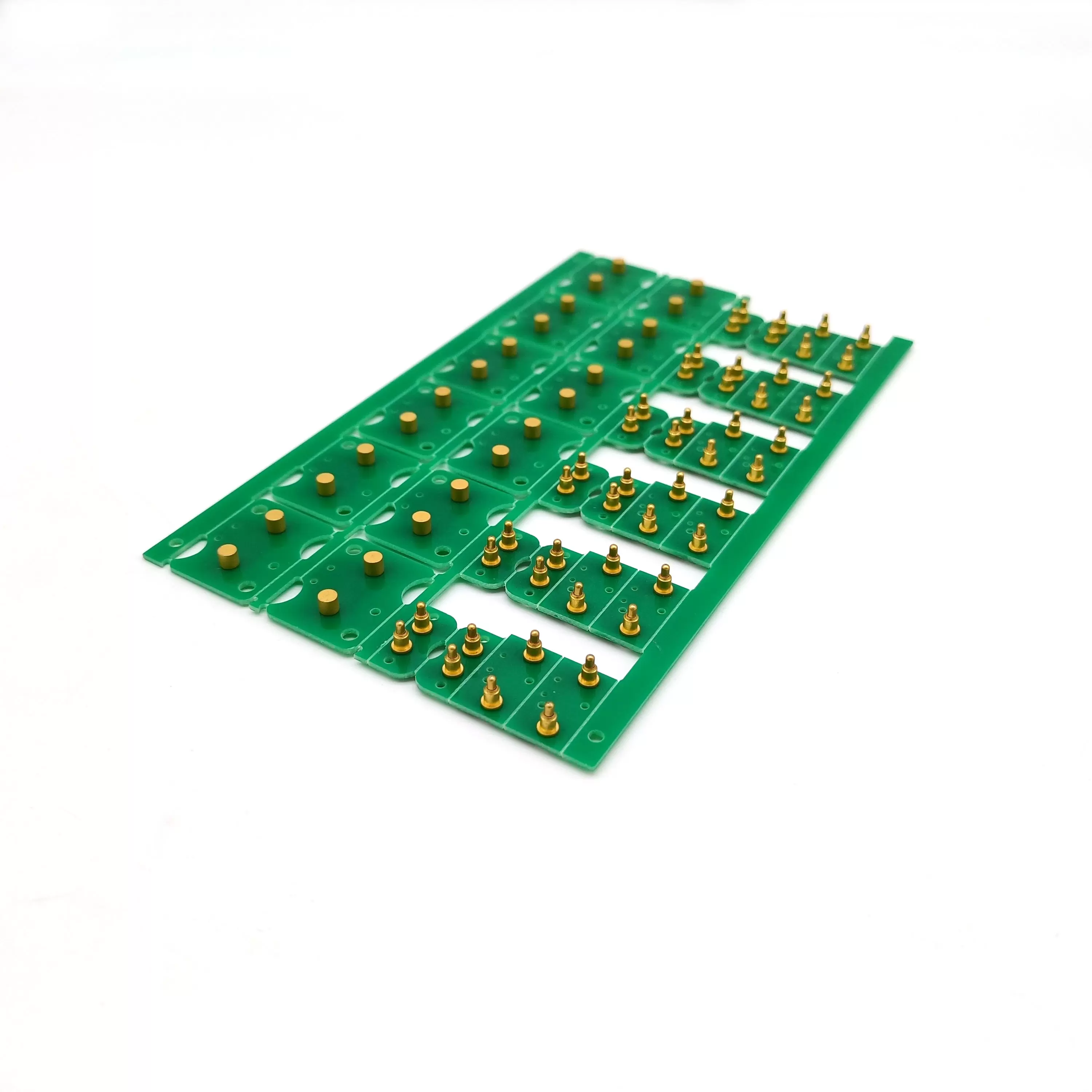
Electronic products continue to shrink while demanding higher connection density, faster testing, and greater reliability. From automated production fixtures to charging docks, medical equipment, automotive electronics, and semiconductor testing platforms, pogo pin carrier PCB assemblies have become an essential part of many electrical connection systems.
Attention often focuses on the spring-loaded contacts themselves. Engineers compare spring force, plating thickness, insertion cycles, and contact resistance when selecting pogo pins. Yet field failures frequently originate somewhere else. The supporting PCB, together with the assembly process used to manufacture it, plays an equally important role in determining whether the finished carrier performs consistently after thousands—or even hundreds of thousands—of operating cycles.
A poorly assembled carrier may introduce slight positional deviations, uneven contact pressure, solder joint fatigue, or PCB warpage. None of these issues are immediately obvious during initial inspection, but they gradually affect electrical stability as the product enters long-term service.
Selecting the right PCB Assembly for Pogo Pin Carrier projects therefore requires more than choosing an experienced PCB fabricator. Manufacturing capability, SMT accuracy, inspection methods, mechanical tolerance control, and engineering support all contribute to the reliability of the finished assembly.
Why PCB Assembly Is Critical for Pogo Pin Carrier Performance
Unlike conventional circuit boards that primarily provide electrical routing, a pogo pin carrier PCB also functions as a precision mechanical platform.
Every spring-loaded contact must maintain accurate alignment throughout repeated compression cycles. Even small assembly deviations can influence electrical performance.
The Carrier PCB Is Part of the Mechanical Structure
Each pogo pin is designed to compress within a specified travel distance while maintaining consistent contact force.
The PCB determines:
· Contact position
· Contact height
· Compression distance
· Mechanical stability
· Parallelism across multiple contacts
Because dozens—or even hundreds—of pogo pins often operate simultaneously, dimensional consistency becomes far more demanding than on ordinary electronic assemblies.
Assembly Accuracy Is Often More Critical Than PCB Fabrication
Modern PCB manufacturing already delivers excellent dimensional precision.
However, several assembly processes can introduce additional variation, including:
· SMT placement accuracy
· Solder volume consistency
· Reflow temperature profile
· Connector positioning
· Mechanical fixture alignment
Even when PCB fabrication fully complies with design specifications, poor assembly quality may still reduce overall contact reliability.
Long-Term Stability Depends on Consistency
A new carrier may perform perfectly during initial electrical testing.
After repeated compression cycles, however, small manufacturing variations begin to accumulate.
Uneven spring loading creates localized stress, increasing wear on selected contacts while reducing contact pressure on others.
Consistent precision PCB assembly minimizes these variations before products enter service.
What Causes Contact Failure in Pogo Pin Carrier Assemblies?
Many engineers initially suspect poor pogo pin quality when electrical contact becomes unstable.
Actual failure investigations often reveal that the root cause lies elsewhere.
PCB Flatness
Surface flatness directly influences spring compression.
A slightly warped PCB causes some contacts to compress further than others.
Consequences include:
· Uneven contact force
· Increased wear
· Variable electrical resistance
· Reduced insertion life
Flatness becomes increasingly important as the number of pogo pins grows.
Large carrier boards containing hundreds of contacts require tighter mechanical control than small assemblies.
Pad Position Deviation
Pogo pins depend on accurate landing locations.
If pad positions deviate beyond design tolerance, contacts may strike pad edges instead of their intended centers.
Repeated operation gradually damages both the contact tip and PCB surface finish.
SMT Placement Offset
Modern pick-and-place equipment provides excellent positioning accuracy.
Nevertheless, incorrect machine calibration, worn nozzles, or improper fiducial recognition may introduce slight placement errors.
For ordinary electronic components, these deviations may remain acceptable.
For spring loaded connector PCB assemblies, positional accuracy directly affects contact geometry.
Solder Joint Fatigue
Repeated mechanical loading generates stress around solder joints supporting connector structures.
Thermal cycling accelerates fatigue, particularly when products operate in industrial environments with significant temperature variation.
Over time, microscopic cracks increase electrical resistance before complete failure occurs.
PCB Warpage
Warped boards change the relationship between every pogo pin and its corresponding contact surface.
Several factors contribute to PCB deformation:
· Uneven copper distribution
· Incorrect reflow profile
· Material selection
· Improper storage
· Environmental humidity
Maintaining dimensional stability throughout production significantly improves long-term performance.
Uneven Contact Pressure
Not every electrical failure results from insufficient spring force.
Uneven compression causes certain contacts to carry greater mechanical load than others.
The result is accelerated localized wear rather than uniform aging across the connector.
Contact Resistance Variation
Electrical resistance changes gradually rather than suddenly.
Typical contributing factors include:
· Surface contamination
· Mechanical misalignment
· Reduced spring compression
· Oxidation
· Progressive solder degradation
Monitoring contact resistance during reliability testing often reveals assembly-related problems long before complete failure occurs.
Key PCB Assembly Processes That Improve Contact Reliability
High-quality PCB assembly services combine advanced manufacturing equipment with rigorous process control.
Several assembly operations have a particularly strong influence on pogo pin carrier performance.
SMT Placement Accuracy
Accurate component positioning establishes the foundation for mechanical consistency.
Modern SMT equipment achieves extremely small placement tolerances, but only when:
· Fiducial recognition remains stable
· Machine calibration is maintained
· Component feeders operate correctly
· PCB support fixtures prevent movement
Maintaining positional consistency across production batches becomes especially important for large connector arrays.
Solder Paste Inspection (SPI)
Uneven solder paste volume creates inconsistent joint geometry.
SPI systems verify:
· Paste height
· Paste area
· Paste volume
· Alignment
Correcting these issues before component placement prevents downstream reliability problems.
Automated Optical Inspection (AOI)
AOI identifies visible assembly defects immediately after reflow.
Typical inspection targets include:
· Component polarity
· Missing parts
· Position deviation
· Solder quality
· Bridging
· Tombstoning
Although AOI cannot evaluate every hidden defect, it significantly improves production consistency.
X-Ray Inspection
Certain connector structures contain solder joints that cannot be evaluated visually.
X-ray inspection detects:
· Void formation
· Hidden solder defects
· Internal connection quality
This technology becomes increasingly valuable for high-density electronic connector assemblies.
Reflow Temperature Profile
Temperature control influences solder joint quality as much as solder paste itself.
Improper thermal profiles may produce:
· Cold joints
· Excessive intermetallic growth
· Component movement
· PCB deformation
Optimized profiles improve both mechanical strength and electrical reliability.
Fixture Calibration
Production fixtures determine mechanical positioning during assembly.
Regular calibration ensures:
· Repeatable positioning
· Stable compression height
· Accurate connector alignment
This becomes particularly important during mass production where thousands of identical carriers are manufactured.
Position Tolerance Control
Individual manufacturing tolerances appear small.
Combined together, however, they create cumulative deviation.
Experienced PCB assembly manufacturer teams manage tolerance stack-up throughout the production process rather than inspecting only the finished assembly.
How PCB Material and Surface Finish Influence Pogo Pin Performance
Assembly quality alone cannot compensate for unsuitable PCB materials.
Material selection influences mechanical stability, dimensional accuracy, and long-term electrical performance.
FR-4 Remains the Standard Choice
Conventional FR-4 satisfies many pogo pin applications because it offers:
· Stable mechanical properties
· Good electrical insulation
· Competitive cost
· Mature manufacturing processes
For moderate operating environments, standard FR-4 provides sufficient reliability.
High-Tg Materials Improve Thermal Stability
High glass-transition-temperature laminates maintain greater dimensional stability during repeated thermal cycling.
Applications involving elevated temperatures or continuous industrial operation frequently benefit from High-Tg materials.
Reduced thermal expansion also helps maintain connector alignment throughout the product lifecycle.
ENIG Surface Finish
Among available finishes, ENIG (Electroless Nickel Immersion Gold) is widely regarded as one of the best choices for PCB for pogo pins.
Its advantages include:
· Excellent surface flatness
· Stable contact resistance
· Strong corrosion resistance
· Good wear characteristics
· Consistent electrical performance
These properties explain why ENIG appears frequently in high-cycle connector applications.
HASL
Hot Air Solder Leveling remains suitable for many conventional electronic assemblies.
However, its uneven surface profile makes it less desirable for precision pogo pin contact areas where consistent compression is required.
OSP
Organic Solderability Preservative offers a cost-effective finish for standard PCB production.
Its primary purpose focuses on solderability rather than repeated mechanical contact, making it less suitable for applications involving continuous pogo pin engagement.
Selecting the proper combination of PCB material, surface finish, and PCB manufacturing and assembly process establishes the foundation for reliable high-cycle connector performance.
Design Considerations Before PCB Assembly
Reliable PCB Assembly for Pogo Pin Carrier projects begin long before the first component reaches the production line. Mechanical stability, electrical consistency, and long service life are largely determined during the design stage. Assembly engineers can optimize manufacturing quality, but they cannot compensate for fundamental layout problems.
Pad Design
The contact pad serves as the interface between the pogo pin and the PCB.
Pad dimensions should provide enough contact area without allowing excessive movement during repeated compression. Designers also consider plating thickness, pad geometry, and spacing to ensure stable electrical performance throughout the product's operating life.
Pads that are too small may accelerate wear, while oversized pads can increase positioning tolerance and affect alignment consistency.
Hole Position Accuracy
Many pogo pin carrier designs include mechanical locating holes, guide pins, or mounting features that determine the final position of the connector assembly.
Poor hole accuracy may shift the entire carrier, creating uneven spring compression across multiple contacts.
Maintaining strict positional tolerance during PCB fabrication simplifies assembly and improves overall consistency.
PCB Thickness
Board thickness influences structural rigidity.
A board that is too thin may flex during repeated insertion cycles, while excessive thickness increases manufacturing cost and may affect connector installation.
Common carrier designs typically select PCB thickness based on:
· Contact density
· Mechanical loading
· Product dimensions
· Mounting method
Copper Weight
Although pogo pin carriers generally do not carry high currents across every contact, copper thickness still affects board rigidity and thermal performance.
Projects involving power delivery or high-current testing may require heavier copper layers than standard signal boards.
Panel Design
Proper panelization improves manufacturing efficiency and reduces handling damage.
Well-designed production panels support:
· Stable SMT placement
· Better conveyor transport
· Reduced board deformation during reflow
· Higher manufacturing yield
Mechanical Reinforcement
Large carrier boards may require additional structural support.
Design solutions include:
· Reinforcement plates
· Mechanical standoffs
· Frame structures
· Additional mounting points
Reducing board flex significantly improves long-term contact consistency during high-cycle operation.
PCB Assembly Challenges in High-Cycle Applications
Not every pogo pin carrier experiences the same operating conditions.
Some connectors engage only a few dozen times during product assembly. Others operate continuously for years inside automated manufacturing systems.
High-cycle environments introduce mechanical fatigue that standard electronic assemblies rarely encounter.
Charging Docks
Consumer charging stations repeatedly connect and disconnect electronic devices throughout their service life.
Small alignment errors gradually increase contact wear and electrical resistance.
Maintaining consistent positioning becomes critical after thousands of charging cycles.
Test Fixtures
Automatic test equipment often performs hundreds or thousands of tests every day.
Every test cycle compresses the pogo pins against the carrier PCB.
Over time, manufacturers monitor:
· Contact resistance
· Spring consistency
· Pad wear
· Mechanical stability
Because production testing depends on repeatable electrical contact, fixture reliability directly influences manufacturing quality.
Medical Equipment
Medical devices frequently require highly reliable electrical interfaces while operating under strict regulatory standards.
Connector failure may interrupt testing or calibration procedures, making assembly consistency particularly important.
Medical applications therefore emphasize:
· Stable positioning
· High-quality inspection
· Controlled manufacturing processes
· Repeatable assembly accuracy
Automotive Electronics
Automotive manufacturing combines large production volumes with demanding environmental conditions.
Carrier assemblies used during production testing must tolerate repeated operation without losing electrical stability.
Temperature variation, vibration, and continuous mechanical loading increase the importance of robust electronic assembly services.
Consumer Electronics
Large-scale electronics manufacturing often processes millions of units annually.
Even minor assembly variation can create significant quality issues across high production volumes.
Manufacturers therefore place considerable emphasis on process capability, statistical control, and inspection throughout PCB assembly.
How to Evaluate a PCB Assembly Manufacturer for Pogo Pin Carrier Projects
Selecting a PCB assembly manufacturer involves more than comparing production capacity or quotation price.
For precision carrier assemblies, engineering capability often determines long-term product reliability.
Manufacturing Equipment
Advanced production equipment improves consistency.
Typical capabilities include:
· High-speed SMT lines
· Precision placement systems
· Nitrogen reflow ovens
· Automated inspection equipment
· Controlled assembly environments
Modern equipment alone does not guarantee quality, but it provides the foundation for repeatable manufacturing.
Engineering Experience
Carrier assemblies differ significantly from conventional consumer electronics.
Manufacturers experienced with:
· Test fixture PCB
· High-density connectors
· Precision positioning
· Mechanical tolerance control
are generally better prepared to support complex projects.
Inspection Capability
Reliable production depends on comprehensive quality verification.
Typical inspection methods include:
· SPI
· AOI
· X-ray
· Functional testing
· Mechanical measurement
Inspection throughout production prevents defects from progressing into later manufacturing stages.
Quality Management System
Consistent production requires standardized procedures.
Many industrial customers evaluate suppliers based on recognized quality systems, documented process control, traceability, and continuous improvement practices.
Engineering Support
Projects often evolve after prototype evaluation.
Manufacturers capable of supporting Design for Manufacturing (DFM), process optimization, and assembly improvements help shorten development cycles while reducing production risk.
Prototype Capability
Small-batch prototype production allows engineers to verify mechanical alignment before committing to volume manufacturing.
Rapid prototype support also accelerates product development schedules.
Mass Production Consistency
A successful prototype does not automatically guarantee stable high-volume production.
Purchasing teams often examine:
· Process repeatability
· Yield performance
· Supply chain stability
· Production planning
· Quality records
Consistency across thousands of assemblies remains one of the strongest indicators of manufacturing capability.
Choosing the Right PCB Assembly Solution for Long-Term Product Reliability
Long-term reliability results from many interconnected factors rather than one individual manufacturing process.
A well-designed pogo pin carrier combines:
· Accurate PCB fabrication
· Precision PCB assembly
· Appropriate material selection
· Stable surface finish
· Controlled manufacturing tolerances
· Comprehensive inspection
Projects focused exclusively on reducing purchase price frequently overlook these engineering considerations.
Lower initial cost may eventually be offset by:
· Increased maintenance
· Product returns
· Testing instability
· Shorter service life
· Higher production downtime
Selecting the appropriate custom PCB assembly solution therefore requires balancing manufacturing capability, engineering support, inspection standards, and long-term consistency.
Frequently Asked Questions
What is a pogo pin carrier PCB?
A pogo pin carrier PCB is a precision circuit board designed to support and accurately position multiple spring-loaded contacts while maintaining consistent electrical and mechanical performance.
Which surface finish is best for pogo pin contact?
ENIG is generally preferred because it offers excellent flatness, corrosion resistance, and stable contact characteristics during repeated compression cycles.
Why does PCB flatness matter in pogo pin systems?
Uneven PCB surfaces create inconsistent spring compression, resulting in variable contact pressure and gradual increases in electrical resistance.
How many insertion cycles can a pogo pin carrier PCB support?
The actual lifespan depends on contact design, plating quality, assembly accuracy, operating environment, and mechanical loading. Properly designed systems may operate through tens of thousands or even hundreds of thousands of cycles.
What PCB thickness is commonly used for pogo pin carriers?
The appropriate thickness depends on board size, mechanical loading, and structural requirements rather than a single universal specification.
Can standard PCB assembly handle pogo pin carrier production?
Basic assembly equipment may complete the project, but high-cycle carrier applications generally benefit from manufacturers experienced in precision positioning and mechanical tolerance control.
How do you reduce contact resistance in pogo pin assemblies?
Maintaining accurate alignment, selecting suitable surface finishes, controlling assembly tolerances, and preventing contamination all contribute to stable contact resistance.
What should I look for in a PCB assembly manufacturer?
Evaluate engineering experience, manufacturing capability, inspection methods, prototype support, process control, quality management, and the ability to maintain production consistency over large manufacturing volumes.
Reliable pogo pin carrier systems depend on far more than high-quality spring contacts. The PCB itself forms the mechanical foundation of the entire connection system, while the assembly process determines whether every contact performs consistently throughout its operating life.
Flatness control, SMT accuracy, solder joint integrity, surface finish selection, material stability, and mechanical tolerance management all influence long-term electrical reliability. As operating cycles increase, small manufacturing variations become increasingly significant, particularly in demanding applications such as automated testing, medical equipment, automotive electronics, and consumer charging systems.
When evaluating PCB Assembly for Pogo Pin Carrier projects, engineering capability should receive the same attention as manufacturing capacity. Manufacturers with experience in precision assembly, comprehensive inspection, process optimization, and mechanical tolerance control are better positioned to deliver consistent results across both prototype development and volume production.
A well-executed assembly process helps maintain stable contact resistance, extends connector service life, and reduces the risk of unexpected failures after products enter the field. For high-cycle applications where reliability cannot be compromised, selecting the right PCB assembly solution remains one of the most effective investments in long-term product performance.
About the author:

Sonic Yang
As a major in Electronics and Mechanical Automation, Sonic has been engaged in PCB design, R&D, and manufacturing of electronics for around 22 years, as the engineering director, and coordinates with the supply chain(components and CNC parts), providing professional support and consulting for global customers.

 en
en



 WhatsApp