- Achieve high reliability by selecting rolled annealed copper for flex regions. This material resists fatigue and extends the lifespan of PCBs.
- Define keepout zones in PCB layouts to prevent component placement in areas that experience frequent bending. This reduces the risk of failures.
- Implement Environmental Stress Screening (ESS) during prototyping. ESS reveals hidden weaknesses by simulating real-world conditions.
- Conduct post-assembly validation with thermal cycling and signal integrity tests. This ensures that the final product meets performance requirements.
- Establish strict quality control protocols in manufacturing. Automated inspections and staff training help prevent handling-induced failures.
Reliability Demands in Industrial Robotics
Environmental and Mechanical Stress Factors
Reliability stands as a primary concern for rigid-flex PCBs in industrial robotics. These systems operate in environments that expose flex pcb assemblies to extreme temperature swings, vibration, and shock loads. Industrial robots often face harsh conditions that threaten the integrity of their electronic components. Designers must address several challenges to ensure stable operation.
- The minimum static bend radius should measure at least six times the thickness of the flex section. Dynamic bends require at least ten times the thickness to prevent copper fatigue and cracking.
- Copper traces in flex regions should run perpendicular to the bend line. This routing distributes stress evenly and extends the flex PCB lifespan.
- Thoughtful stackup design, including symmetric stackups and strategic placement of stiffeners, reduces mechanical stress on solder joints.
- Flex-rigid construction absorbs mechanical stress and reduces the number of interconnects, which lowers the risk of weak connections.
Flexible sections in rigid-flex PCBs handle dynamic motion, which is crucial in robotics, where repeated flexing occurs. Proper design and manufacturing enable a flex PCB to endure hundreds of thousands of bending cycles without failure. RA copper offers superior elongation properties compared to ED copper, which is prone to fatigue cracks under repeated stress. The grain structure difference between RA and ED copper impacts the longevity and reliability of the flex PCB in dynamic applications.
Adhesive System Impact on PCB Reliability
Adhesive systems play a vital role in maintaining the integrity of rigid-flex PCBs. Adhesive failures can lead to delamination, which compromises connections between components and creates critical failure points. In rigid-flex assemblies, the flex ribbon may be permanently bent during installation. Careful planning prevents mechanical stress in critical areas and avoids solder joint fractures.
Designers should define keepout areas in the PCB layout to prevent components from being placed in zones where bending occurs. This strategy reduces the risk of cracking and other failure points. The adhesive system must withstand repeated flexing and environmental stress to ensure reliability. Selecting the right adhesive and optimizing its application helps maintain the integrity of connections and supports the long-term performance of all components.
Rigid Flex PCB Reliability Testing and Validation
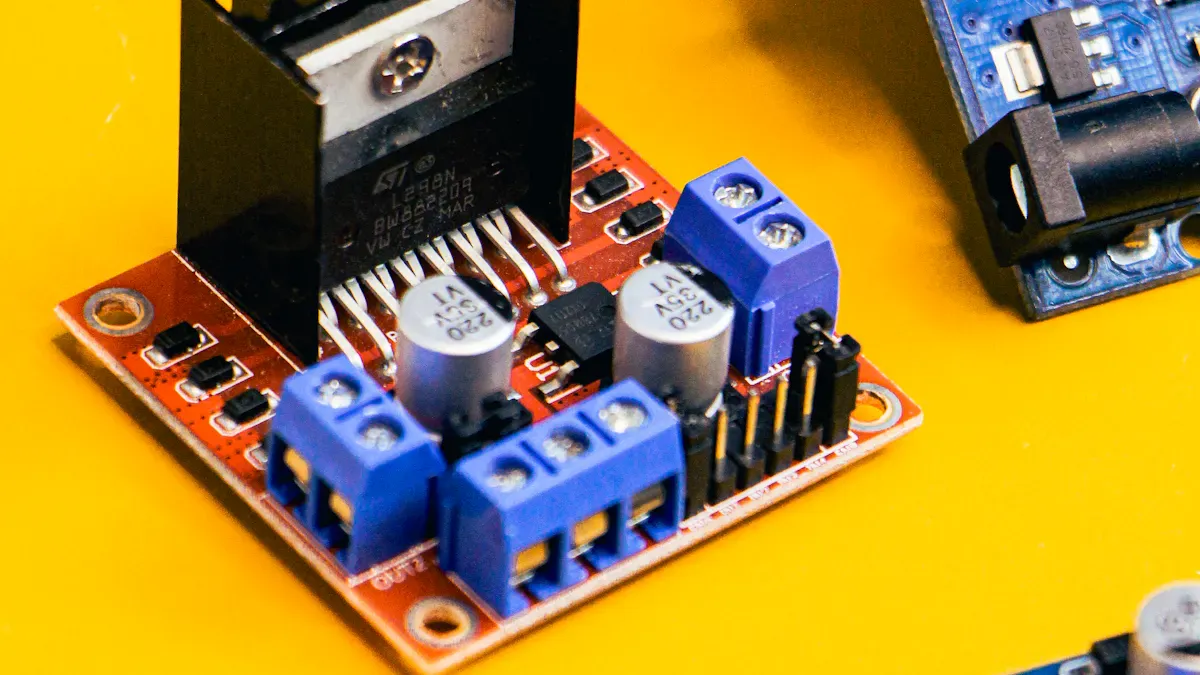
Reliability testing and validation serve as the backbone of quality assurance for rigid flex PCBs in industrial robotics. These processes help engineers identify weaknesses before deployment, reducing the risk of costly failures in the field. Rigid flex PCB reliability testing uncovers design flaws, manufacturing defects, and material inconsistencies that could compromise performance under real-world conditions.
Testing Methods for Industrial Robotics Applications
Industrial robotics demands rigorous evaluation of every PCB assembly. Engineers use a combination of visual, electrical, and mechanical tests to ensure each board meets strict reliability standards. The following table summarises the most effective testing methods for rigid flex PCB reliability testing in these applications:
| Testing Method | Description |
|---|
| Automated Optical Inspection (AOI) | A method used to visually inspect the PCB for defects and ensure quality before deployment. |
| Electrical Continuity Testing | This test checks for proper electrical connections and identifies any faults in the circuitry. |
| Flex Durability Tests | Tests the PCB's ability to withstand repeated bending and flexing, simulating real-world use. |
Engineers also rely on advanced techniques to simulate years of operational stress within a short period. Accelerated ageing tests evaluate the long-term reliability of power distribution networks in flexible circuit boards. Thermal cycling assessments measure the impact of temperature changes on solder joint fatigue and structural integrity. Mechanical stress evaluations help predict failure modes and establish performance metrics for buried power rail systems.
Tip: Environmental Stress Screening (ESS) combines temperature cycling, vibration, and humidity to reveal hidden weaknesses. This approach simulates years of field use in a compressed timeframe, making it a valuable part of rigid flex pcb reliability testing.
Thermal cycling induces stress from differences in thermal expansion rates between materials. This process is critical for assessing how well a rigid flex PCB will perform in environments with frequent temperature fluctuations. By combining these methods, engineers can confidently predict the lifespan and durability of their designs.
Importance of Post-Assembly Validation
Post-assembly validation ensures that rigid flex PCBs maintain their reliability after the manufacturing process. Even the most robust designs can develop issues during assembly, such as solder joint cracks or signal degradation. Rigid flex PCB reliability testing at this stage verifies that the final product meets all performance requirements.
The table below highlights key post-assembly validation methods:
| Testing Method | Purpose |
|---|
| Thermal cycling chambers | Replicate industrial stresses, checking for hysteresis |
| Signal integrity probes | Confirm output fidelity across frequencies |
Thermal cycling chambers expose the assembled PCB to repeated heating and cooling cycles. This process checks for hysteresis and ensures that solder joints and adhesive systems remain intact. Signal integrity probes measure the quality of electrical signals across a range of frequencies, confirming that the board delivers consistent performance.
1. Post-assembly validation detects latent defects that may not appear during initial testing.
2.It provides an extra layer of assurance, especially for PCBs destined for mission-critical robotic systems.
3. Engineers use these results to refine manufacturing processes and improve future designs.
Rigid flex PCB reliability testing, when applied throughout the design, manufacturing, and post-assembly stages, forms a comprehensive strategy for preventing failures. This approach supports the high uptime and operational stability required in industrial robotics.
Case Study: Robotic Arm Control System
Reliability Challenges and Solutions
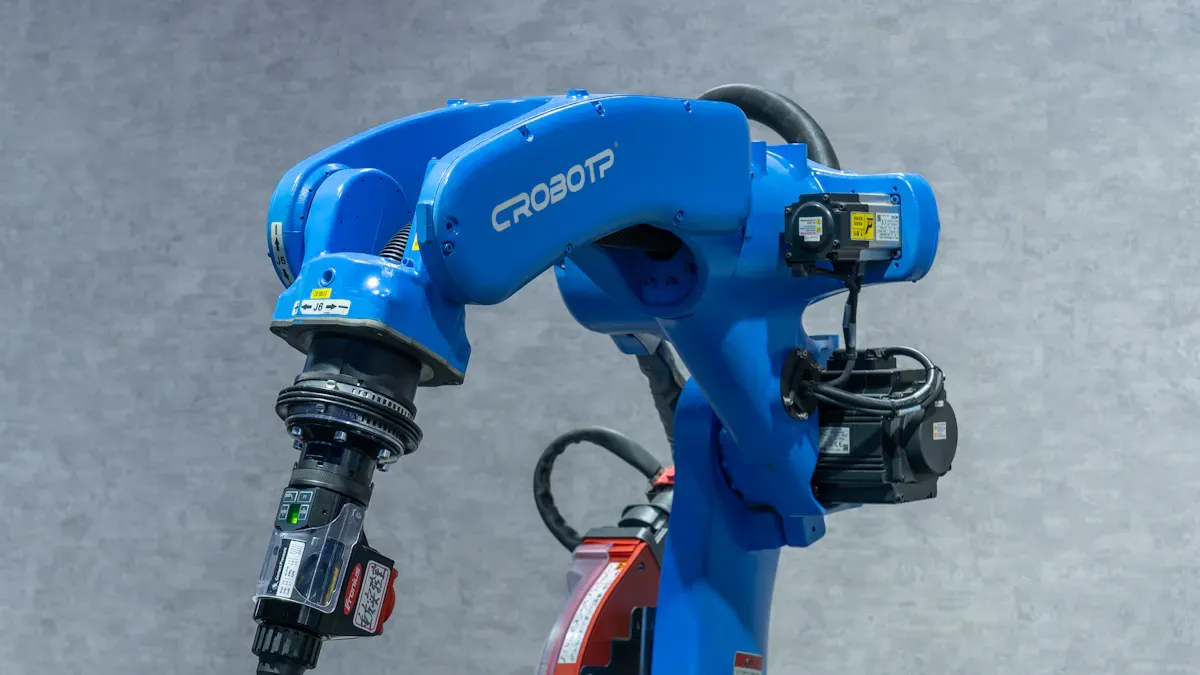
Engineers at a leading robotics manufacturer faced persistent issues with their robotic arm control system. The team observed intermittent malfunctions during high-speed operations. These malfunctions often traced back to the rigid flex PCB assembly. The primary challenges included mechanical fatigue, delamination at adhesive interfaces, and micro-cracking in copper traces.
The team identified three main sources of field failures:
1. Dynamic Flexing: The robotic arm performed thousands of cycles daily. This repetitive motion caused copper fatigue and eventual trace breakage.
2. Thermal Cycling: The system operated in environments with frequent temperature changes. Expansion and contraction stressed solder joints and adhesive layers, leading to delamination.
3. Improper Via Placement: Vias located too close to bend areas experienced stress concentration. This placement increased the risk of open circuits and intermittent faults.
To address these issues, engineers implemented several solutions:
- They switched to rolled annealed copper for all flex regions. This material provided superior ductility and reduced the risk of micro-cracks.
- The design team increased the bend radius in all dynamic sections. This change distributed mechanical stress more evenly across the flex layers.
- They relocated all plated through holes away from bend zones. This adjustment minimised stress on critical interconnects.
- The adhesive system received an upgrade to a high-temperature, flexible formulation. This adhesive maintained bond strength during repeated thermal cycling.
Note: The team also introduced a comprehensive inspection protocol. Automated optical inspection and flex durability tests became standard for every production batch.
Lessons from Field Testing
Field testing played a crucial role in validating the new design. The engineering team deployed several robotic arms in a simulated production environment. Over six months, they monitored performance metrics and tracked all incidents of field failures.
Key lessons emerged from this process:
- Early detection of micro-cracks prevented catastrophic breakdowns. Engineers used high-resolution imaging to inspect flex regions after every 100,000 cycles.
- The upgraded adhesive system eliminated delamination, even after extensive thermal cycling.
- Relocating vias away from bend areas reduced open circuit incidents by 90%.
- Signal integrity remained stable throughout the test period. The team measured consistent transmission quality, even under maximum load.
The field failures that occurred before these improvements highlighted the importance of thorough reliability testing and design iteration. The team documented each failure mode and used these insights to refine their manufacturing process. As a result, the robotic arm control system achieved a significant increase in operational uptime and a measurable reduction in maintenance costs.
Tip: Continuous monitoring and post-deployment analysis help engineers catch emerging issues before they escalate. This proactive approach ensures long-term system reliability in demanding industrial environments.
Case Study: Automated Assembly Robot
Flex Fatigue and Failure Modes
Engineers at an industrial automation company investigated recurring failures in their automated assembly robot. The robot performed repetitive pick-and-place operations, which placed constant stress on the rigid flex PCB interconnects. Over time, the team observed a pattern of flex fatigue in the dynamic sections of the PCB. These failures often appeared as intermittent open circuits or degraded performance during high-speed cycles.
The team documented several failure modes:
●Copper Trace Cracking: Repeated bending caused micro-cracks in copper traces, especially in areas with tight bend radii.
●Delamination: Adhesive breakdown led to separation between layers, exposing conductors and increasing the risk of short circuits.
●Plated Through Hole Fracture: Vias located near flex zones experienced mechanical stress, resulting in fractured connections.
●Signal Degradation: Fatigue and micro-cracks disrupted the integrity of the signal, causing communication errors between control modules.
Note: Early detection of these issues relied on regular inspection and electrical testing after every production cycle.
Design Improvements and Outcomes
The engineering team implemented several design changes to address the root causes of flex fatigue. They increased the bend radius in all dynamic regions, which reduced mechanical stress on copper traces. The team also selected rolled annealed copper for its superior flexibility and resistance to cracking. To prevent delamination, they switched to a high-performance adhesive system designed for repeated flexing.
A summary of the improvements and their outcomes appears below:
| Improvement | Outcome |
|---|
| Increased bend radius | Reduced copper trace cracking |
| Rolled annealed copper | Improved flex life and durability |
| Enhanced adhesive system | Eliminated delamination failures |
| Relocated vias | Minimised plated through-hole fractures |
After these changes, the automated assembly robot achieved a 98.9% reduction in PCB-related failures over six months of continuous operation. The team also reported stable signal transmission and fewer maintenance interventions. These results demonstrated the value of targeted design improvements and ongoing reliability testing in industrial robotics.
Common Issues and Best Practices
Plated Through Hole Placement
Plated through holes often present reliability challenges in rigid flex PCB assemblies. Engineers have observed that improper placement of these holes can lead to stress concentration, especially near flex zones. This stress increases the risk of fractures and open circuits during repeated bending cycles. To reduce these issues, design teams recommend placing plated through holes away from dynamic bend areas. They also suggest using teardrop pads to distribute mechanical stress more evenly around the holes. Careful planning of via locations helps maintain signal integrity and prevents unexpected failures in industrial robotics.
Tip: Always review the mechanical movement of the flex section before finalizing via placement. This step can prevent many common issues related to plated through hole fractures.
Testing Strategies and Design Tips
Effective testing strategies play a key role in identifying and resolving reliability issues before deployment. Engineers use a combination of visual inspection, electrical continuity checks, and flex durability tests to catch defects early. Post-assembly validation, such as thermal cycling and signal integrity measurements, ensures that the PCB performs reliably under real-world conditions.
Best practices in rigid flex PCB design further enhance reliability. The following table summarises proven strategies:
| Best Practice | Description |
|---|
| Use separate ground planes | Reduces noise and improves signal integrity |
| Single-point grounding | Minimises ground loops and stabilises power entry |
| Continuous ground planes | Avoids return path issues in high-speed multilayer boards |
| Isolation gap ≥ 2 mm | Prevents interference between different PCB zones |
| Avoid routing signals across zones | Reduces crosstalk and signal integrity problems |
| Ensure continuous reference plane | Maintains stable signal return paths |
| Add stitching vias if necessary | Improves ground connection and reduces EMI |
| Keep heat sources away from sensitive parts | Reduces thermal stress on critical components |
| Use large copper areas | Enhances heat dissipation and lowers component temperature |
| Match lengths for high-speed signals | Ensures signal integrity and reduces timing issues |
| Provide enough thermal vias | Improves heat dissipation for high-power devices |
Engineers also recommend placing decoupling capacitors close to ICs and avoiding sudden narrowing of copper traces. These steps help maintain power stability and prevent hotspots. By following these guidelines, design teams can address common issues and achieve higher reliability in industrial robotics applications.
Lessons and Recommendations
Actionable Insights for Engineers
Engineers in industrial robotics must prioritize reliability at every stage of rigid flex PCB development. They should select rolled annealed copper for flex regions. This material resists fatigue and extends the lifespan of the circuit. Engineers need to define keepout zones in the PCB layout. These zones prevent component placement in areas that experience frequent bending. They must relocate plated through holes away from dynamic flex regions. This adjustment reduces the risk of fractures and open circuits.
Tip: Engineers should implement Environmental Stress Screening (ESS) during prototyping. ESS exposes the PCB to temperature cycling, vibration, and humidity. This process reveals hidden weaknesses before full-scale production.
Engineers can use the following checklist to improve reliability:
●Increase bend radius in all dynamic sections.
●Use high-performance adhesives that withstand repeated flexing.
●Conduct post-assembly validation with thermal cycling and signal integrity tests.
●Monitor flex regions for micro-cracks after every 100,000 cycles.
A focus on these strategies helps engineers achieve higher uptime and lower maintenance costs in robotic systems.
Guidance for Manufacturers
Manufacturers play a critical role in ensuring rigid flex PCB reliability. They must establish strict quality control protocols. Automated optical inspection and flex durability tests should become standard for every production batch. Manufacturers need to train assembly teams to handle flex sections carefully. Mishandling during installation can introduce stress and cause early failures.
| Manufacturing Best Practice | Benefit |
|---|
| Automated optical inspection | Detects defects before deployment |
| Flex durability testing | Confirms performance under repeated use |
| Staff training | Reduces handling-induced failures |
| Batch traceability | Enables rapid root cause analysis |
Note: Manufacturers should maintain detailed records for each batch. Traceability allows quick identification and resolution of reliability issues.
Manufacturers who adopt these recommendations support robust, long-lasting PCB assemblies. Their efforts contribute to the operational stability of industrial robotics.
Rigid flex PCB reliability in industrial robotics depends on rigorous testing, careful design, and high-quality manufacturing. Case studies show that method-specific thermal cycling tests, clear temperature profiles, and defined failure-detection methods improve outcomes. Engineers should focus on material selection, layer stack-up, impedance control, and effective thermal management. They must address vibration and mechanical stress early. Design for Manufacturing reviews and attention to power and signal integrity support long-term reliability. Applying these best practices helps teams achieve robust performance in demanding environments.
●Method-specific thermal cycling tests
●High-quality manufacturing processes
●Appropriate material selection
●Layer stack-up and impedance control
●Effective thermal management
●Vibration and mechanical stress mitigation
●Design for Manufacturing review
Teams that follow these strategies can expect fewer failures and greater operational stability.
FAQ
What causes most rigid flex PCB failures in industrial robotics?
Mechanical stress, improper via placement, and adhesive breakdown often cause failures. Engineers see copper trace cracking and delamination as common issues. Careful design and thorough testing help prevent these problems.
How often should engineers perform reliability testing?
Engineers should test during design, after assembly, and periodically during operation. Regular testing identifies early signs of fatigue or failure, ensuring long-term reliability in robotic systems.
Which materials improve flex region durability?
Rolled annealed (RA) copper provides superior flexibility and fatigue resistance. High-performance adhesives also maintain bond strength during repeated flexing. These materials extend the lifespan of flex regions.
Can rigid flex PCBs handle high-speed signals reliably?
Yes. Proper stackup design, continuous ground planes, and matched trace lengths support stable high-speed signal transmission. Engineers must validate signal integrity through post-assembly testing.
As a major in Electronics and Mechanical Automation, Sonic has been engaged in PCB design, R&D, and manufacturing of electronics for around 22 years, as the engineering director, and coordinates with the supply chain(components and CNC parts), providing professional support and consulting for global customers.

 en
en


 WhatsApp