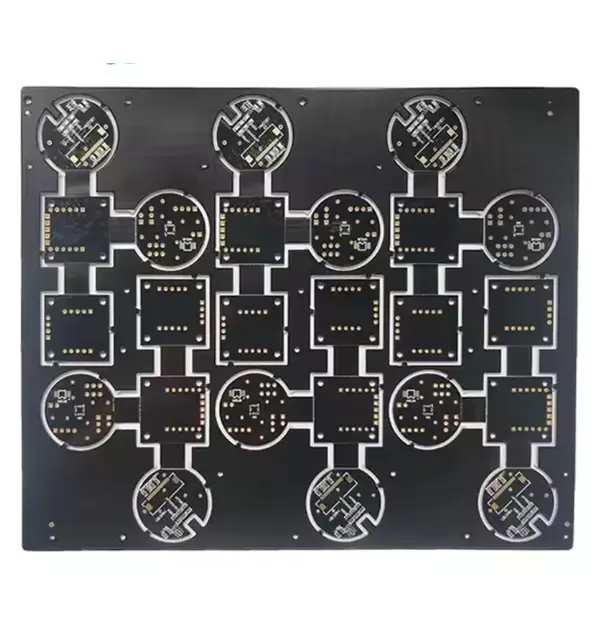
Wearable devices demand electronic solutions that excel in compactness, durability, and reliability. Many engineers choose rigid flex PCB technology to address these challenges. Key requirements for these products include the ability to withstand constant movement, the use of materials like polyimide for high fatigue resistance, and multilayer design to save space. Testing for flexibility ensures the final product meets real-world usage standards. Selecting the right approach shapes both performance and user satisfaction.
Benefits of Rigid Flex PCB
Space and Weight Savings
Wearable devices often require a compact design to fit comfortably on the body. Rigid flex PCB technology delivers significant space and weight efficiency. Flexible circuits allow engineers to fold and shape the board, reducing the overall footprint of the device by 30% to 50%. In some six-layer HDI rigid-flex circuit boards, designers have achieved a 35% reduction in PCB area. These improvements make wearables lighter by 20% to 40% compared to traditional rigid PCBs with wiring harnesses. Fitness trackers and smartwatches, for example, benefit from this reduction, resulting in more comfortable and discreet products. Flexible PCBs also enable thinner enclosures, which further enhances the user experience in wearable technologies.
Enhanced Reliability
Reliability stands as a top priority in wearables. Rigid flex pcb eliminates many of the weak points found in traditional designs. By removing connectors, rigid-flex circuit boards reduce the risk of disconnection caused by shock or vibration. These boards can endure up to 10,000 flex cycles without significant performance loss, while traditional connectors may fail after only a few hundred cycles. Careful material selection and design help mitigate stress at the transition between rigid and flexible areas, further enhancing durability. In industrial sensors, switching from traditional PCBs to rigid-flex designs dropped the annual connector failure rate from 12% to just 2%. This improvement ensures that wearables remain dependable, even during constant movement.
Flexible Design for Wearables
The flexibility enables compact designs that adapt to the unique shapes required by modern wearables. Rigid flex PCB can fit into small, complex enclosures and non-traditional shapes. This adaptability is crucial for products like smartwatches, fitness trackers, and health monitoring devices. Flexible circuits allow these devices to contour to the body, providing both comfort and aesthetic freedom. Smart clothing and AR/VR headsets also use flexible PCBs to integrate sensors and displays seamlessly. The ability to bend and fold the circuitry supports enhanced functionality, enabling complex sensor arrays and new features in compact spaces.
●Rigid flex PCB supports ergonomic designs that improve comfort.
●Flexible circuits enable thinner, lighter, and more wearable products.
●Flexible PCBs allow for integration into unconventional places, expanding the possibilities for wearable design.
Simplified Assembly
Manufacturers benefit from simplified assembly when using rigid flex pcb. By integrating circuitry into a single part, rigid-flex circuit boards eliminate the need for additional connectors and wiring harnesses. This approach leads to direct savings in assembly costs and reduces the likelihood of wiring errors. The use of rigid-flex designs can cut assembly time by 30% to 50%, which lowers labour costs and improves efficiency. Fewer components also make inventory management easier. As a result, production runs become faster and more consistent, supporting the rapid development of new wearables.
Drawbacks and Challenges
Higher Initial Cost
Rigid flex PCBs offer many advantages, but they come with a higher upfront investment compared to traditional PCB solutions. The cost difference becomes clear when examining material, manufacturing, and prototyping expenses. The following table highlights these differences:
| Cost Aspect | Rigid-Flex PCBs | Traditional PCBs |
|---|
| Material Cost (per sq. in) | ~$1.50+ | ~$0.50 |
| Manufacturing Cost | Higher, more complex process | 20-40% less than rigid-flex |
| Unit Cost (Low/Med Volume) | $5–$7 | ~$2 |
| Prototype Cost | $500–$1,000 | <$300 |
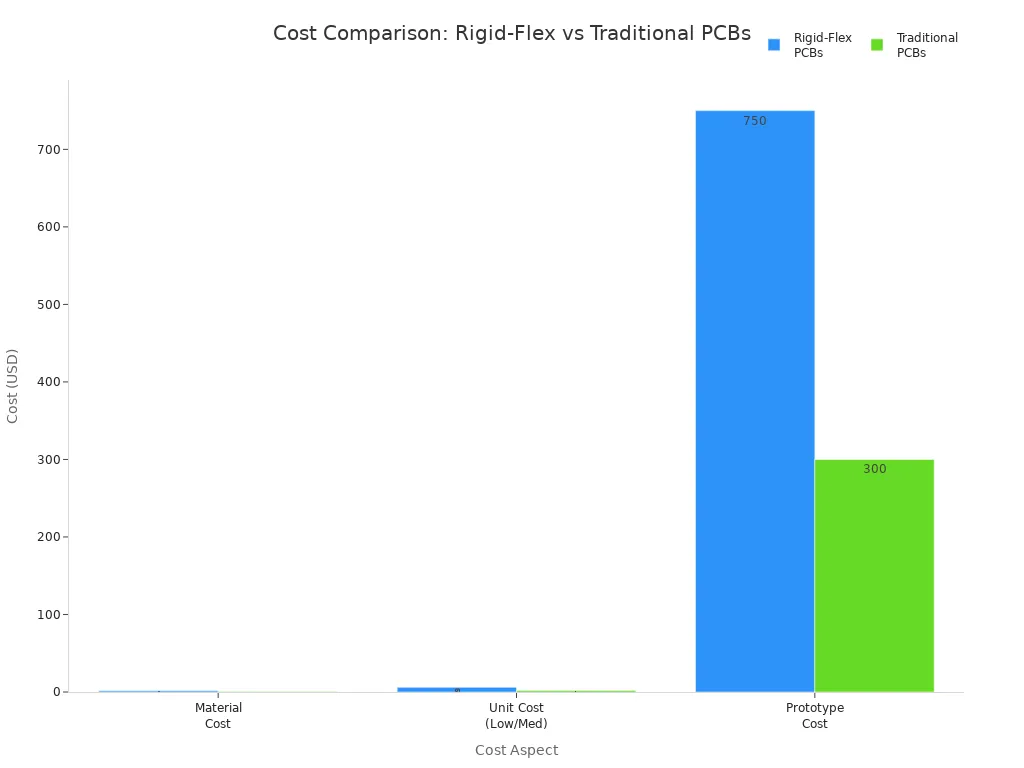
These higher costs can impact the overall budget, especially during the prototyping and early production phases. However, strategic design for cost (DfC) and careful material selection can help manage these expenses. Larger production volumes also reduce per-unit costs, making rigid flex PCBs more cost-effective for mass-market wearables. Long-term savings often result from simplified assembly and improved product consistency.
Design and Manufacturing Complexity
Designing rigid flex PCBs for wearables introduces several engineering challenges. Engineers must carefully plan the stack-up and routing between rigid and flexible sections to minimise stress and prevent failures. Signal integrity and electromagnetic compatibility require precise control of trace types and impedance. Effective thermal management is essential, especially for devices with high-power chips.
Key challenges include:
1. Stack-up and routing design to reduce mechanical stress.
2. Maintaining signal integrity and controlling electromagnetic interference.
3. Managing heat dissipation with copper layers and heatsinks.
4. Ensuring flexible sections withstand repeated bending.
Development timelines can extend due to these complexities. Flexibility requirements, bend radius, and layer stack-up all require close collaboration with PCB manufacturers. Component placement must avoid flex areas or use specialised components with reinforcement. Routing traces perpendicular to the bend axis and avoiding sharp corners help maintain board integrity.
Flex Section Durability Limits
The flex sections in rigid flex PCBs must endure thousands of bending cycles in wearable applications. Most wearable devices expect their PCBs to withstand between 10,000 and 1,000,000 flex cycles, depending on the use case. For example, a smartwatch may require up to 100,000 cycles over two years. Using rolled-annealed copper and maintaining a minimum bend radius of at least ten times the flex thickness can extend the lifespan to over 500,000 cycles.
Common failure modes include:
| Failure Mode | Description | Prevention Measures |
|---|
| Delamination | Separation of layers due to thermal stress or poor adhesive bonding. | Use moisture-resistant adhesives and controlled storage; bake-out processes to remove moisture. |
| Copper Trace Cracking | Cracking from excessive bending or vibration in flex zones. | Use rolled annealed copper for ductility; design with larger bend radii; reinforce high-stress areas. |
| Solder Joint Failure | Cracking of solder joints due to thermal cycling and vibration. | Use lead-free solders with higher fatigue resistance; avoid heavy components in flex zones. |
Thermal and Environmental Stress
Wearable devices often operate in challenging environments, facing temperature swings, humidity, and exposure to dust or sweat. Rigid flex PCBs perform well under thermal cycling and environmental stress, but careful design remains essential. The table below compares the performance of different PCB types:
| PCB Type | Performance under Thermal Cycling | Environmental Stress Resistance | Flexibility | Durability |
|---|
| Rigid-Flex | Good | Good | Moderate | High |
| Rigid | Excellent | Excellent | Low | High |
| Flex | Moderate | Moderate | High | Moderate |
Protective coatings and robust materials, such as high-grade FR-4 and polyimide, help shield the board from moisture and temperature extremes. Environmental testing standards, including temperature cycling and humidity resistance, ensure that the final product meets real-world demands. Compliance with RoHS directives and ISO 10993 for biocompatibility is also important for wearables, especially in medical or skin-contact applications.
Performance and Reliability
Long-Term Reliability in Wearables
Wearable devices require consistent performance over years of daily use. Rigid flex PCBs help maintain electrical performance by providing stable signal transmission, which is essential for accurate data in medical and fitness applications. Flexible circuits in these boards keep impedance low, often below 50 ohms, even when bent or folded. Copper traces with a thickness of 1 oz balance conductivity and flexibility, while minimising trace width to 0.1mm reduces signal loss in compact layouts. These features support the long-term reliability that wearables demand. Manufacturers often conduct reliability tests to ensure that the circuits can withstand thousands of flex cycles without degradation.
Handling Vibration and Movement
Wearable electronics face constant movement and vibration. Rigid flex PCBs combine rigid sections for support and flexible circuits for movement, making them ideal for dynamic environments. This design reduces failure points by eliminating connectors, which often fail under stress. Flexible PCBs alone can handle vibration, but they lack the structural support found in rigid flex designs. Many medical devices, such as implantable heart monitors and surgical tools, use rigid flex PCBs to maintain stable connections while allowing for necessary movement. Rigid PCBs may crack under repeated stress, but flexible circuits and rigid flex PCBs provide both protection and support.
●Rigid flex PCBs integrate support and flexibility.
●Flexible circuits allow for repeated bending without loss of function.
●Devices like pacemakers rely on this combination for safe, reliable operation.
Material and Manufacturing Considerations
The choice of materials in rigid flex PCBs directly impacts performance. Copper serves as the main conductive material, with rolled-annealed copper used in flexible sections for its ability to endure repeated bending. Polyimide offers excellent heat resistance and strength, making it ideal for flexible circuits. FR-4 provides mechanical stability in rigid areas. The table below summarises key materials and their properties:
| Material Type | Key Properties | Impact on Performance |
|---|
| FR-4 | Mechanical strength, stability, and electrical insulation | Suitable for a wide range of applications, withstands normal operating temperatures |
| Polyimide (PI) | Thin, strong, heat-resistant | Ideal for flexible sections, allows for repeated bending without cracking |
| Copper | Conductive material | Maintains good conductivity and signal integrity in flexible areas |
Manufacturing tolerances also play a critical role. Early collaboration with fabricators helps align the design with manufacturing capabilities. Maintaining tight tolerances ensures proper component placement and signal integrity, especially in high-density wearable devices. Prototyping helps identify and resolve issues before full production, supporting consistent quality.
Rigid Flex PCB vs. Flex PCBs and Traditional Designs
Key Differences
Choosing the right PCB type for wearable devices depends on understanding the differences in structure and performance. The table below highlights how rigid, flexible, and rigid flex PCBs compare in key areas:
| Feature | Rigid PCB | Flexible PCB | Rigid-Flex PCB |
|---|
| Material | FR-4, glass epoxy | Polyimide, Kapton | FR-4 + Polyimide |
| Flexibility | None | High (bend radius ~0.1 mm) | Partial (flexible sections) |
| Layer Count | 1-20+ | 1-8 | 4-12+ |
| Cost | Low | High | Highest |
| Weight | Heavy (~1.5 g/cm² for FR-4) | Light (~0.2 g/cm² for polyimide) | Moderate |
| Vibration Resistance | Moderate (5-10G) | High (10-20G) | High (15-20G) |
| Applications | TVs, PCs, appliances | Wearables, smartphones | Aerospace, medical, automotive |
Rigid PCBs offer durability and cost-effectiveness for standard electronics. Flexible PCBs provide unmatched design flexibility and lightweight construction, which suits compact devices like smartwatches. Rigid flex PCBs combine the strengths of both, supporting complex shapes and high reliability, especially in demanding environments.
When to Choose Each Type
Selecting the best PCB type depends on the device’s requirements and intended use. Consider the following scenarios:
●Rigid flex PCBs work best for complex wearable devices that need to fit into small spaces and endure frequent movement. They support heavier components and maintain reliability, making them ideal for medical monitors and advanced smartwatches.
●Flexible PCBs suit lightweight wearables and devices that require continuous bending, such as fitness trackers and flexible displays. They offer high design freedom but may face durability challenges with repeated stress.
●Traditional rigid PCBs fit high-volume, cost-sensitive products where flexibility is not needed. These boards perform well in standard electronics but lack the adaptability required for modern wearables.
| Scenario | Advantages of Rigid Flex PCBs |
|---|
| Wearable Devices | Conform to body shapes, support dynamic use, ideal for smartwatches |
| Medical Devices | Biocompatibility, reliable bending for implantable monitors |
| Automotive Systems | Compact size, heat resistance for in-cabin electronics |
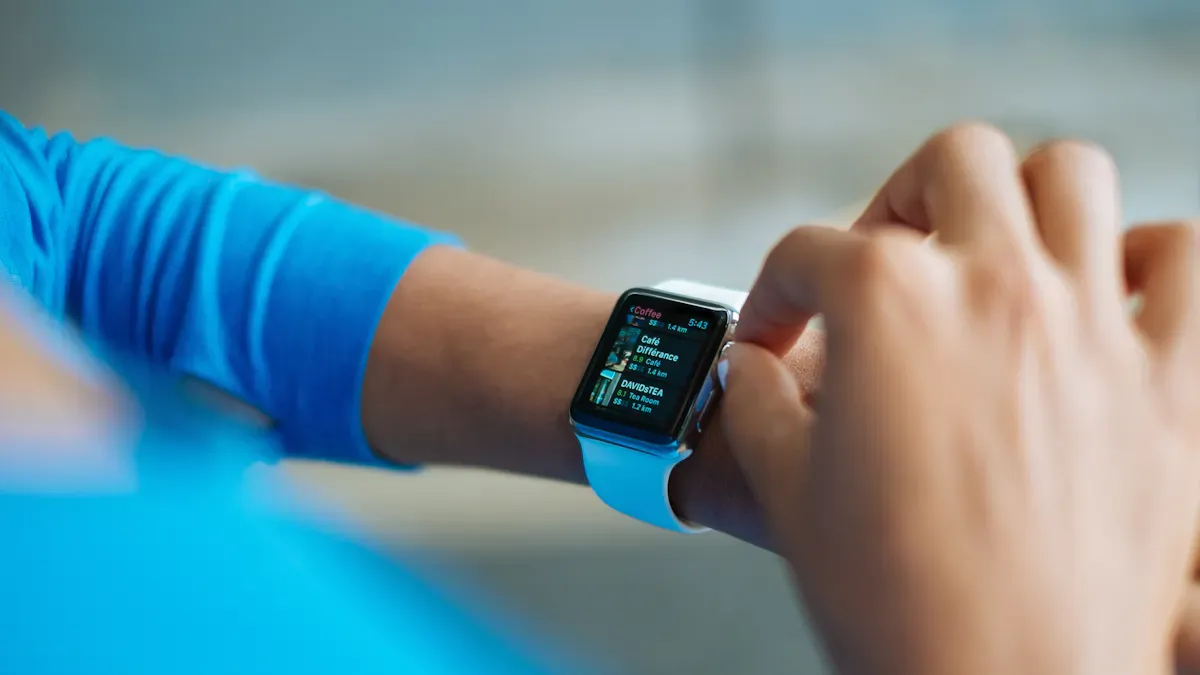
Smartwatches often benefit from rigid flex PCBs because these boards combine space efficiency with the ability to handle constant movement. Designers can create thinner, more reliable products that meet the demands of daily wear.
Decision Guide for Wearable Projects
Project Fit Checklist
Selecting the right PCB for wearables requires careful evaluation. A checklist helps teams decide if rigid flex PCB technology matches their project needs. Consider the following points:
●Does the device require a compact or irregular shape?
●Will the product experience frequent movement or bending?
●Is long-term reliability a top priority for the application?
●Does the design benefit from reduced connectors and cables?
●Will the device operate in harsh or variable environments?
●Is efficient thermal management necessary to prevent overheating?
●Does the project demand high signal integrity for accurate data?
●Has the team planned for thorough testing and validation at each stage?
A project that meets most of these criteria often benefits from rigid flex PCB solutions. This approach supports the unique demands of wearables, especially when comfort, durability, and reliability matter most.
Common Use Cases
Rigid flex PCBs have become essential in many modern wearables. The following examples show where this technology excels:
- Smartwatch internal PCB layout allows for compact assembly and reliable connections in limited spaces.
- Health monitoring patch PCB design provides flexibility, enabling patches to adhere to the skin and function during movement.
- Wearable sports device high-density routing connects multiple sensors in a small area, which is vital for fitness trackers.
These applications highlight the strengths of rigid flex PCBs. Their flexibility lets devices conform to the body, improving comfort and performance. Their durability ensures that wearables can withstand daily use and harsh conditions. Lower assembly costs result from fewer connectors and cables, making them a cost-effective choice for many projects.
Rigid flex PCBs offer significant benefits for wearable devices, including space savings, enhanced reliability, and flexible design options. Some challenges include higher initial costs and complex manufacturing. Each project should match its PCB choice to specific device requirements, reliability goals, and budget. Teams can consult with PCB experts or create prototypes to test their ideas. The checklist in this article helps guide the decision-making process and supports successful wearable product development.
About the author:

Sonic Yang
As a major in Electronics and Mechanical Automation, Sonic has been engaged in PCB design, R&D, and manufacturing of electronics for around 22 years, as the engineering director, and coordinates with the supply chain(components and CNC parts), providing professional support and consulting for global customers.

 en
en




 WhatsApp