Signal amplifier products are becoming increasingly important across modern electronics. From RF communication systems and industrial automation to professional audio equipment, medical devices, and test instruments, amplifiers are expected to deliver accurate signal gain while maintaining excellent stability and low noise performance. As frequencies become higher and circuit density continues to increase, the quality of PCB assembly has become just as important as the circuit design itself.
Many engineers devote significant effort to selecting high-performance amplifiers, optimizing PCB layouts, and simulating signal paths. Yet even a well-designed circuit can fail to achieve its intended performance if the manufacturing process introduces assembly defects, impedance inconsistencies, excessive parasitic effects, or soldering imperfections. This is why PCB Assembly for Signal Amplifier applications requires a much higher level of manufacturing precision than many standard electronic products.
For OEM brands, product developers, and purchasing managers, selecting the right PCB Assembly Manufacturer is no longer simply about finding a supplier capable of placing components on a circuit board. It involves evaluating engineering capability, SMT process control, quality assurance systems, high-frequency manufacturing experience, and long-term production consistency. A professional manufacturing partner helps ensure that every assembled board delivers reliable electrical performance from prototype development through high-volume production.
This article explores why precision manufacturing plays such an important role in signal amplifier projects and what buyers should evaluate when selecting a reliable PCB assembly partner.
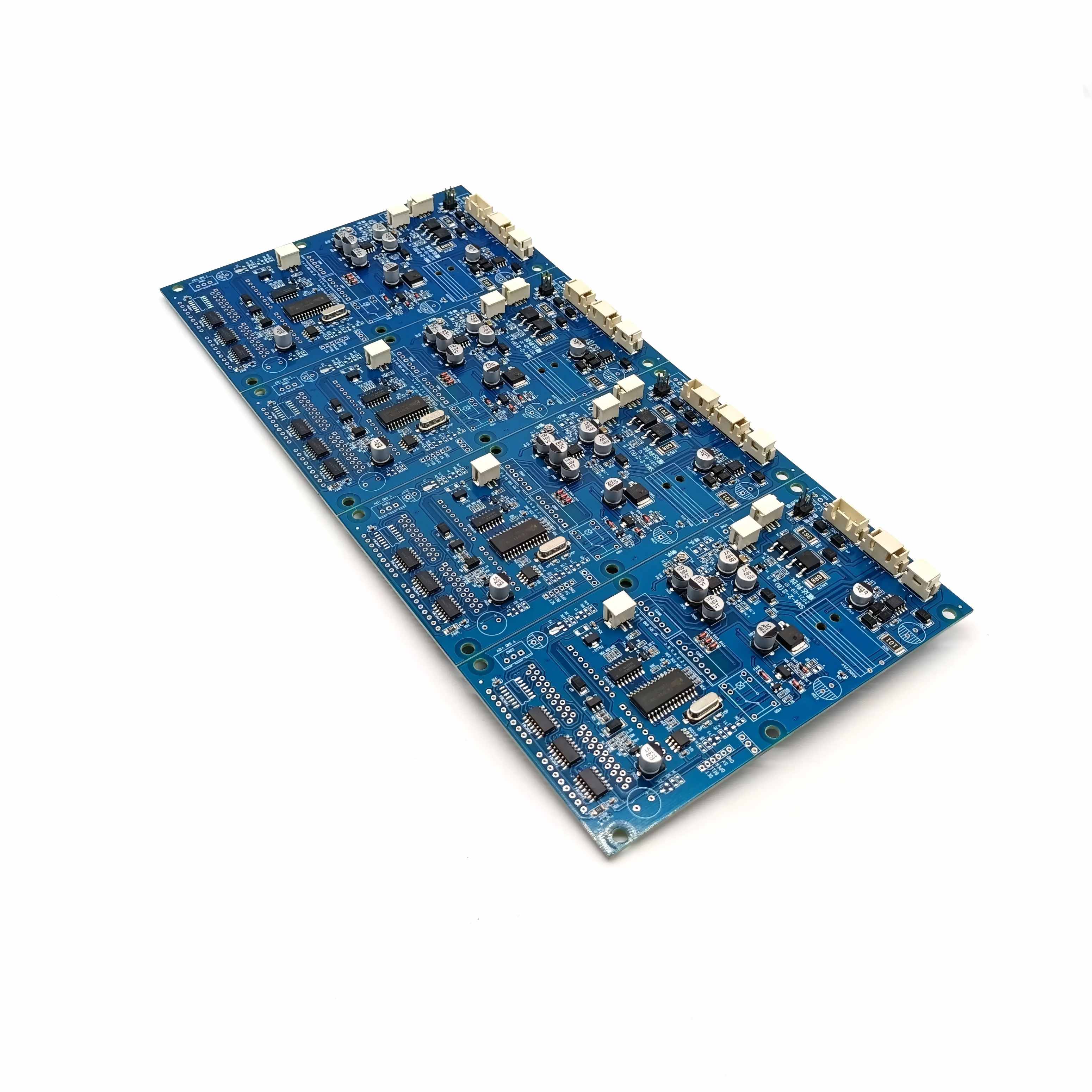
Why Signal Amplifier PCB Assembly Requires Higher Manufacturing Standards
Unlike many digital electronic products that can tolerate relatively small manufacturing variations, amplifier circuits often operate with extremely weak analog signals that are highly sensitive to electrical interference.
Small assembly defects that might have little effect on other products can significantly reduce amplifier performance.
Common challenges include:
· Increased background noise
· Signal distortion
· Gain instability
· Impedance mismatch
· Electromagnetic interference (EMI)
· Reduced frequency response
Whether producing an Audio Amplifier PCB Assembly or an RF Amplifier PCB Assembly, manufacturers must control far more variables than simply solder joint quality.
Every stage of the manufacturing process contributes to final circuit performance.
PCB material quality, solder paste printing accuracy, component placement precision, reflow temperature control, and post-assembly inspection all influence the electrical behavior of the completed board.
For this reason, amplifier projects typically demand tighter manufacturing tolerances than ordinary consumer electronics.
Signal Integrity Begins During PCB Assembly
Signal integrity is often discussed during PCB design, but its preservation depends heavily on assembly quality.
Even when trace routing and impedance calculations are correct, manufacturing inconsistencies may introduce unwanted electrical characteristics.
Examples include:
· Excessive solder volume
· Component misalignment
· Uneven solder fillets
· Flux contamination
· Inconsistent connector mounting
· Poor grounding continuity
Each of these issues can alter current flow or introduce additional parasitic capacitance and inductance.
For High Frequency PCB Assembly, these seemingly minor deviations become increasingly important as operating frequencies rise.
Manufacturers experienced in Signal Amplifier PCB Assembly understand that maintaining signal integrity requires precise process control throughout production rather than relying solely on inspection after assembly.
SMT Precision Directly Influences Amplifier Performance
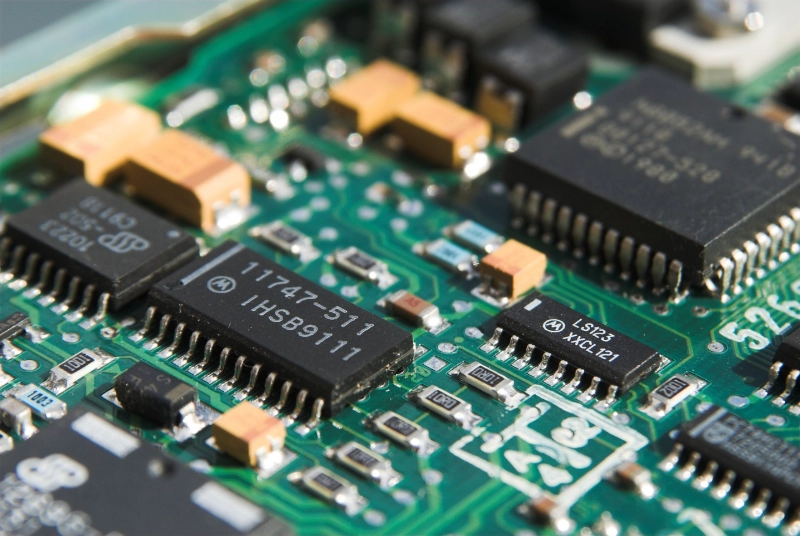
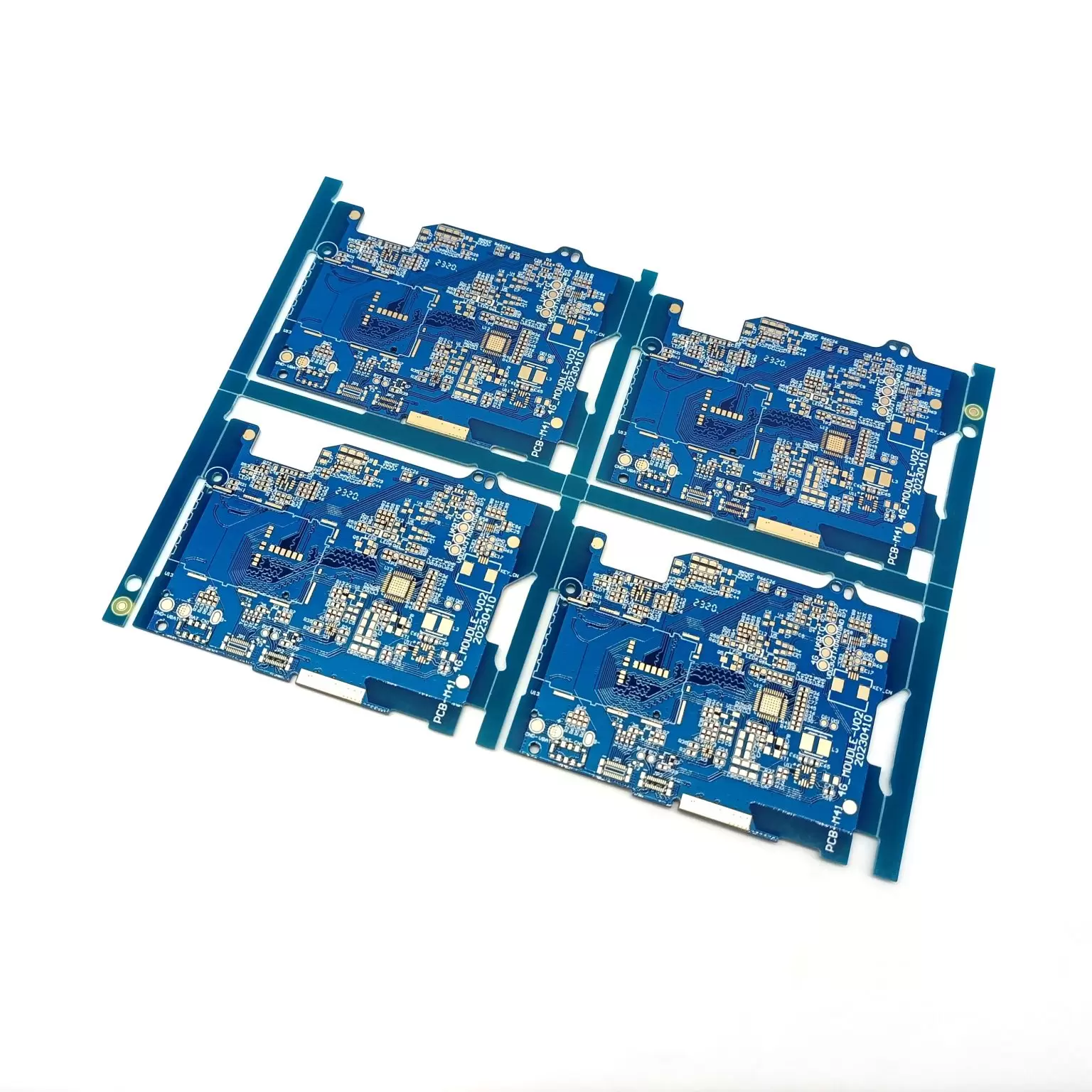
Modern amplifier products frequently utilize miniature passive devices, fine-pitch ICs, RF components, and high-density multilayer PCBs.
Accurate SMT placement is therefore essential.
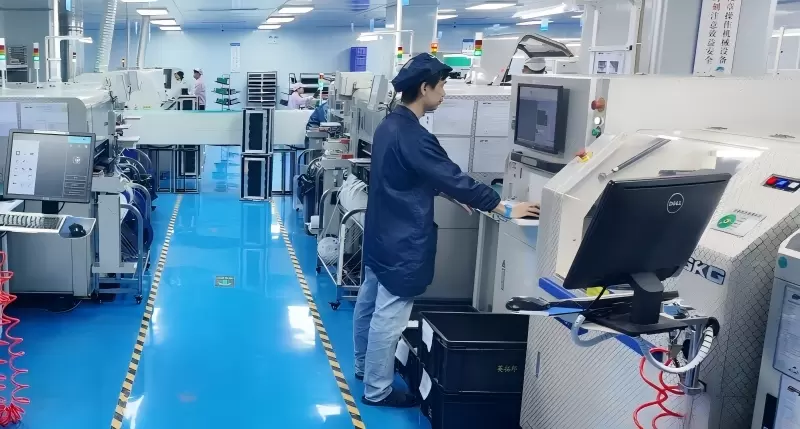
A professional SMT Assembly for a Signal Amplifier project typically emphasizes several process controls:
· High-accuracy component placement
· Consistent solder paste deposition
· Controlled reflow profiles
· Stable PCB support during assembly
· Automated optical inspection (AOI)
· X-ray inspection for hidden solder joints
These controls improve assembly consistency while reducing process variation between production batches.
As electronic packaging continues to shrink, placement accuracy becomes increasingly important for maintaining both mechanical reliability and electrical performance.
Noise Reduction Depends on Manufacturing Consistency
Low-noise amplifier circuits are particularly sensitive to manufacturing quality.
Although circuit designers can minimize theoretical noise sources, assembly defects often introduce additional interference that is difficult to eliminate after production.
Common manufacturing-related noise sources include:
Manufacturing Issue | Possible Performance Impact |
Poor solder joints | Increased contact resistance |
Flux residue | Leakage current |
Ground discontinuity | Higher EMI susceptibility |
Component offset | Signal imbalance |
Thermal damage | Parameter variation |
Connector inconsistency | Unstable signal transmission |
These factors demonstrate why production quality directly influences circuit behavior.
For precision analog applications, manufacturing consistency often determines whether laboratory performance can be successfully reproduced during mass production.
RF Amplifier Projects Demand Specialized Manufacturing Experience
High-frequency circuits present additional manufacturing challenges beyond conventional analog electronics.
An experienced RF Amplifier PCB Assembly provider understands that maintaining consistent electrical characteristics requires strict control over both PCB fabrication and assembly.
Critical considerations include:
· Controlled impedance structures
· RF connector accuracy
· Grounding integrity
· Shield installation
· Solder joint geometry
· Thermal management
Even slight variations in solder joint dimensions may influence impedance continuity at microwave frequencies.
For this reason, manufacturers serving RF industries generally establish specialized production procedures rather than applying standard SMT processes.
Their experience allows them to identify potential issues before they affect product performance.
From Prototype PCB Assembly to Volume Production
Many amplifier products begin as engineering prototypes before entering commercial production.
The transition from prototype to volume manufacturing frequently exposes hidden production challenges.
A reliable Prototype PCB Assembly service should therefore provide more than simple sample production.
Engineering support during early manufacturing helps identify:
· Design for Manufacturing (DFM) issues
· Component sourcing risks
· Assembly process optimization
· Test fixture requirements
· Production yield improvements
Resolving these issues before mass production reduces development time while improving manufacturing efficiency later in the project lifecycle.
Companies offering complete Electronic Manufacturing Services (EMS) can often provide smoother transitions because the same engineering team supports both prototype validation and production scaling.
Quality Control Is More Than Final Inspection
For signal amplifier products, quality cannot be guaranteed by performing electrical tests only after assembly has been completed. Reliable performance depends on controlling every manufacturing step, from incoming materials to final shipment.
A professional Precision PCB Assembly provider typically establishes a multi-stage quality management system that identifies potential issues before they become production defects.
A comprehensive quality process generally includes:
Quality Stage | Purpose |
Incoming material inspection | Verify PCB quality and component authenticity |
Solder paste inspection (SPI) | Ensure consistent solder volume |
SMT placement verification | Confirm component position and polarity |
Automated Optical Inspection (AOI) | Detect visible soldering defects |
X-ray inspection | Verify hidden solder joints on BGA and QFN packages |
Functional testing | Validate amplifier performance under operating conditions |
Final inspection | Confirm appearance, labeling, and packaging quality |
This systematic approach improves production yield while reducing costly field failures.
For PCB Assembly for Signal Amplifier projects, manufacturers often perform additional verification for critical analog and RF sections to ensure the assembled board maintains the intended electrical characteristics.
Thermal Management Should Never Be Overlooked
Signal amplifiers often operate under continuous electrical load, generating heat that can influence long-term reliability and circuit stability.
While thermal performance is usually considered during PCB design, assembly quality also affects heat dissipation.
Improper solder coverage, uneven thermal pad attachment, or insufficient contact between components and copper areas can increase operating temperatures.
Experienced Industrial PCB Assembly providers pay close attention to:
· Thermal pad solder coverage
· Heat sink attachment quality
· Power device alignment
· Copper plane continuity
· Solder void reduction
· Consistent reflow profiles
Stable thermal performance helps prevent gain drift, component aging, and unexpected failures during long-term operation.
For industrial communication equipment and RF systems expected to operate continuously, effective thermal management is just as important as signal integrity.
Why Manufacturing Experience Matters in High-Frequency PCB Assembly
Not every PCB assembly supplier has practical experience with analog and RF electronics.
Many manufacturers specialize in digital consumer products, where assembly tolerances are often less demanding.
By contrast, High Frequency PCB Assembly requires greater process discipline because electrical performance is directly affected by manufacturing precision.
Manufacturers with extensive amplifier production experience typically understand:
· Controlled impedance handling
· Sensitive analog component placement
· RF connector assembly
· Shield installation
· Low-noise grounding practices
· Mixed analog and digital PCB requirements
This accumulated manufacturing knowledge often reduces engineering risks during product introduction.
For overseas buyers, evaluating previous project experience is frequently more valuable than comparing equipment lists alone.
Electronic Manufacturing Services Create Greater Project Flexibility
Many electronics companies now prefer complete Electronic Manufacturing Services (EMS) rather than coordinating multiple independent suppliers.
An integrated EMS provider can support projects throughout the entire product lifecycle.
Typical services include:
· PCB procurement
· Component sourcing
· SMT and through-hole assembly
· Functional testing
· Box build assembly
· Packaging
· Logistics support
This integrated workflow simplifies project management while improving communication between engineering and manufacturing teams.
For amplifier products requiring multiple production stages, centralized manufacturing also reduces supply chain complexity and shortens lead times.
How to Evaluate a PCB Assembly Manufacturer for Signal Amplifier Projects
Choosing a PCB Assembly Manufacturer involves much more than comparing quotations.
Since amplifier products place higher demands on manufacturing consistency, buyers should evaluate suppliers from both technical and operational perspectives.
Important evaluation criteria include:
Engineering capability
Can the supplier provide Design for Manufacturing (DFM) feedback before production begins?
SMT equipment
Does the production line support fine-pitch components, RF devices, and miniature passive packages?
High-frequency experience
Has the manufacturer completed similar RF or analog amplifier projects?
Quality management
Are inspection systems fully integrated throughout production rather than relying only on final testing?
Prototype support
Can engineering samples transition smoothly into mass production?
Supply chain management
Does the supplier maintain stable relationships with authorized component distributors?
Production scalability
Can production expand from small batches to long-term volume manufacturing without compromising consistency?
Suppliers capable of answering these questions with documented experience generally provide lower long-term manufacturing risk.
Prototype to Mass Production Requires Process Stability
One of the biggest challenges in electronics manufacturing is maintaining the same performance achieved during engineering validation after production volumes increase.
A board that performs perfectly during laboratory testing may behave differently once thousands of units are manufactured.
This is why process stability becomes increasingly important during volume production.
Reliable Custom PCB Assembly providers emphasize:
· Process standardization
· Equipment calibration
· Repeatable production parameters
· Statistical process control
· Operator training
· Continuous quality improvement
Rather than treating prototype and production as separate projects, experienced manufacturers build manufacturing processes that can be reproduced consistently throughout the product lifecycle.
This capability is particularly valuable for amplifier products supplied to industrial, communication, and medical markets where long-term consistency is essential.
Why Long-Term Manufacturing Partnerships Deliver Better Results
For many OEM brands, changing PCB assembly suppliers frequently creates unnecessary engineering work, qualification costs, and production delays.
Long-term cooperation with a capable manufacturing partner provides several advantages beyond production itself.
These include:
· Better understanding of product requirements
· Faster engineering communication
· Continuous process optimization
· Stable production scheduling
· Improved component sourcing
· Lower long-term operational risk
As amplifier products become more complex, manufacturers increasingly value suppliers who participate in product development rather than simply executing assembly orders.
This collaborative approach helps improve both manufacturing efficiency and product reliability over time.Signal amplifier products place exceptional demands on electronics manufacturing. Achieving stable gain, low noise, high-frequency performance, and long-term reliability depends not only on circuit design but also on the precision of the assembly process itself.
Professional PCB Assembly for Signal Amplifier applications require controlled SMT placement, consistent soldering quality, effective thermal management, rigorous inspection procedures, and manufacturing teams with practical experience in analog and RF electronics. Every production stage contributes to preserving signal integrity and minimizing performance variation between individual boards.
For companies developing RF communication equipment, audio amplifiers, industrial controllers, or other precision electronic products, selecting the right PCB Assembly Manufacturer is a strategic decision rather than a purchasing exercise. Manufacturers with comprehensive Electronic Manufacturing Services, advanced inspection capabilities, engineering support, and scalable production systems are better positioned to support projects from prototype validation through long-term mass production.
Ultimately, precision manufacturing creates value beyond assembly efficiency. It helps ensure consistent electrical performance, reduces production risk, shortens development cycles, and provides the reliability that engineers and global OEM brands expect from modern signal amplifier products.
About the author:

Sonic Yang
As a major in Electronics and Mechanical Automation, Sonic has been engaged in PCB design, R&D, and manufacturing of electronics for around 22 years, as the engineering director, and coordinates with the supply chain(components and CNC parts), providing professional support and consulting for global customers.

 en
en

 WhatsApp