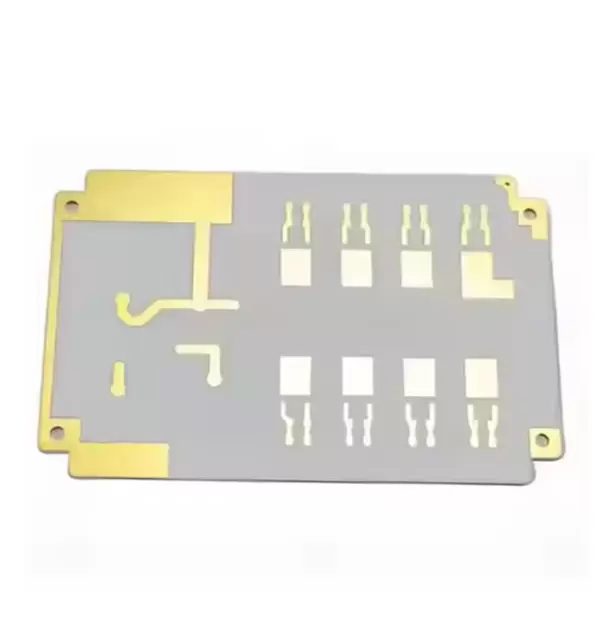
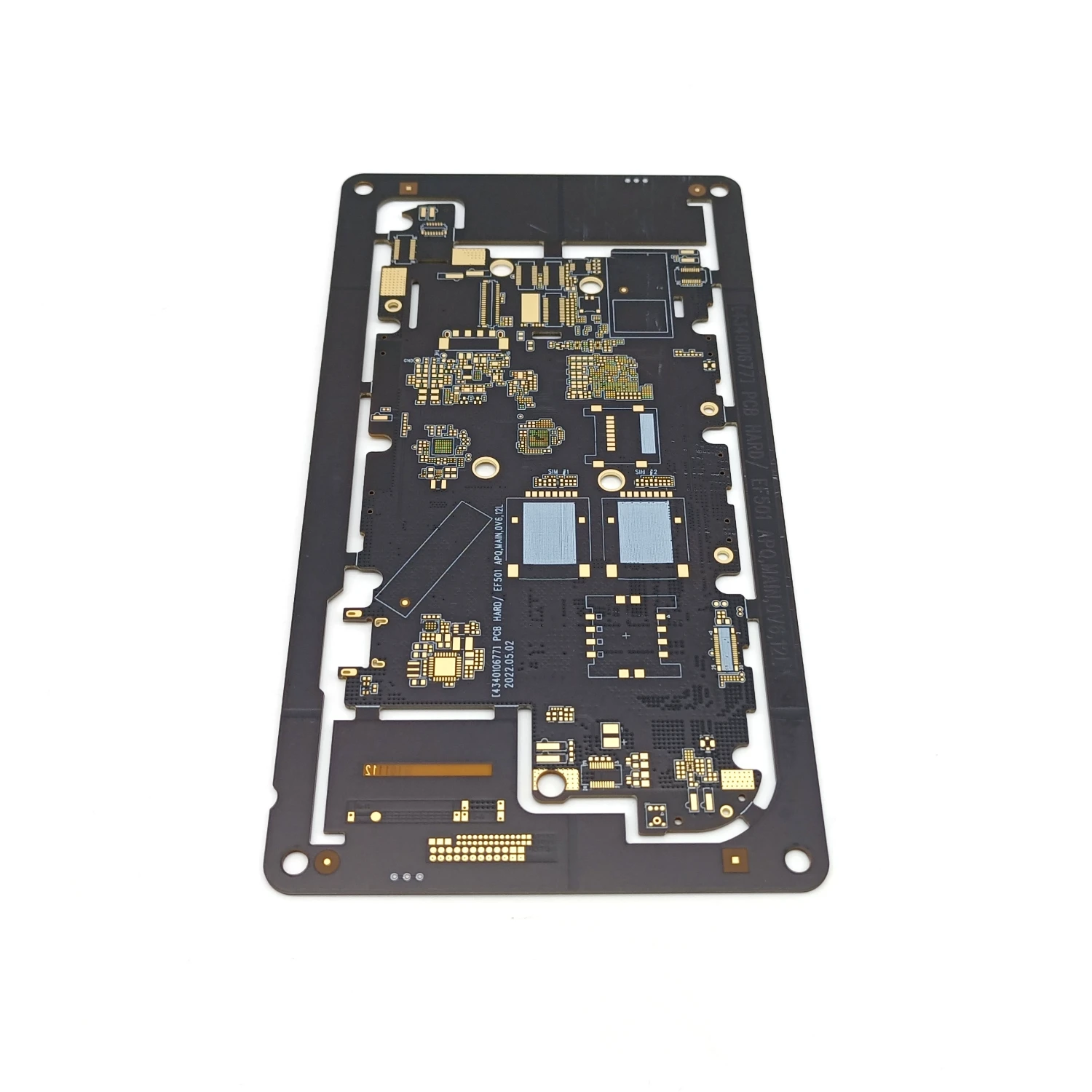
High frequency pcb and high-speed pcb serve distinct roles in advanced electronics. High frequency pcb handles analog RF signals at frequencies above 1 GHz, using specialized materials such as PTFE and Rogers laminates. High-speed pcb focuses on fast digital signals for computing and telecom applications, relying on conventional FR-4 substrates. Both types require precise impedance control, careful layer stackup planning, and tight manufacturing processes. The table below highlights key technical differences and similarities:
| Aspect | High-Speed PCB | High-Frequency PCB |
|---|
| Signal Types | Fast digital signals | Analog RF/microwave signals |
| Materials | Conventional FR-4 | Specialized RF laminates |
| Impedance Control | Reference planes, trace width/spacing | Width/spacing adjustments |
| Manufacturing | Tight process controls | Surface roughness, thickness control |
●High frequency PCBs are designed for analog RF signals above 1 GHz, while high speed PCBs focus on fast digital signals.
●Material choice is crucial: high frequency PCBs use specialized materials like PTFE, while high speed PCBs typically use standard FR-4.
●Both types of PCBs require precise impedance control to maintain signal integrity and prevent data loss.
●Applications differ: high frequency PCBs are used in telecommunications and aerospace, while high speed PCBs are common in computers and consumer electronics.
●Understanding the differences helps you choose the right PCB for your project, ensuring optimal performance.
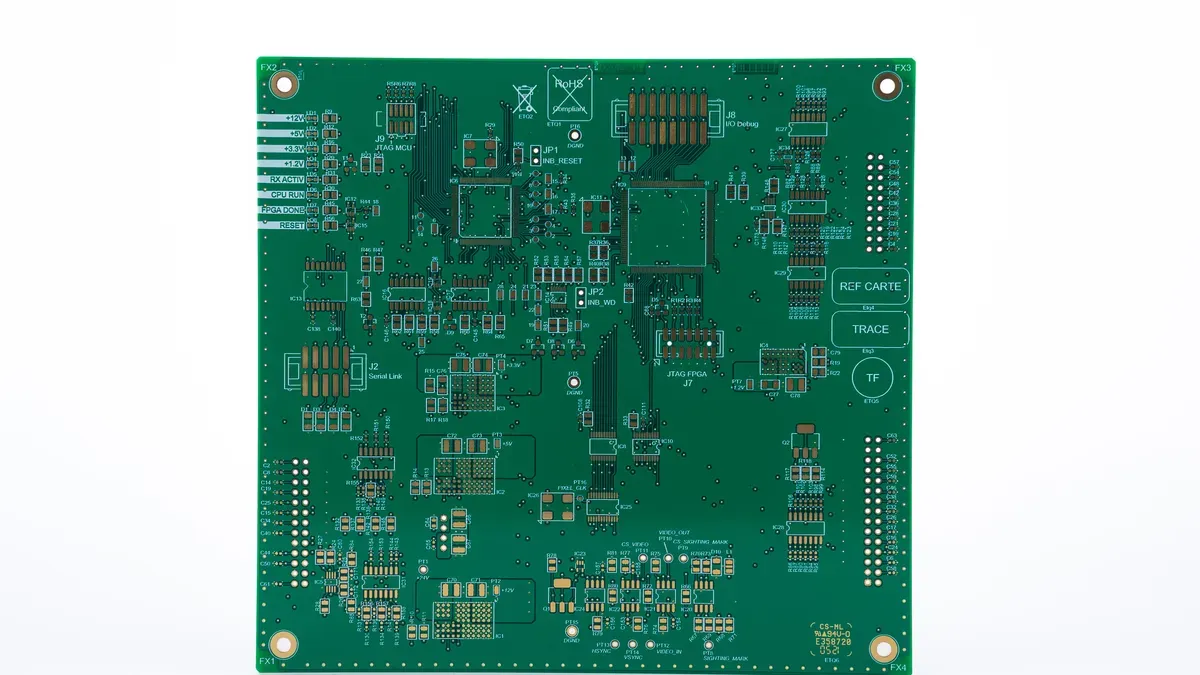
High Frequency PCB and High Speed PCB Basics
High Frequency PCB Definition
High frequency pcb refers to a specialized type of pcb designed to transmit high frequency signals, typically above 1 GHz. These boards are engineered for applications where analog or RF signals must travel with minimal loss and distortion. High-frequency pcb uses advanced materials such as PTFE, Rogers laminates, and ceramic-filled polymers. These materials offer low and stable dielectric constants, low dissipation factors, and minimal moisture absorption. The table below summarizes the defining characteristics:
| Characteristic | Description |
|---|
| Dielectric constant (Dk) | Low and stable across high frequencies to prevent signal deceleration. |
| Dissipation factor (Df) | Low to maintain signal quality and reduce losses. |
| Moisture absorption | Low to avoid performance degradation. |
| Coefficient of thermal expansion | Matches copper to prevent delamination. |
| Dielectric loss tangent | Ranges from 0.0009 to 0.004 for low losses. |
| Thickness criteria | Typically 0.2 to 8 mm. |
| Material types | Rogers, PTFE, and other specialized laminates. |
Recent advancements in high-frequency pcb technology include the use of ceramic and polymer blends, which improve signal integrity and thermal management. These innovations support the demands of 5G, IoT, and compact consumer electronics.
High Speed PCB Definition
High speed pcb is designed to handle rapid digital data transmission. These boards focus on maintaining signal integrity for high-speed digital interfaces, such as those found in computers, networking equipment, and telecommunications. High speed pcb typically uses low-loss FR-4 or other advanced materials to ensure minimal signal loss and consistent impedance. Key characteristics include:
●Emphasis on impedance control for high-speed interfaces.
●Controlled routing to manage skew, timing, and crosstalk.
●Use of materials with high thermal stability and low dielectric constant.
High speed pcb supports the fast movement of digital signals, ensuring reliable data transfer in complex electronic systems.
Frequency and Signal Types
Both high frequency pcb and high speed pcb operate in frequency ranges from several hundred MHz to tens of GHz. However, the type of signals they manage differs:
| PCB Type | Signal Types |
|---|
| High Frequency | RF signals for wireless, radar, satellite; microwave signals; analog signals for instrumentation |
| High Speed | High-speed digital data signals; clock signals; differential signaling for digital interfaces |
High frequency pcb is optimized for analog and RF signals, while high speed pcb is tailored for digital data rates. This distinction shapes the choice of materials, design strategies, and application focus for each pcb type.
Applications of High Frequency and High Speed PCBs
High Frequency PCB Applications
High frequency pcb plays a critical role in industries where reliable transmission of analog and RF signals is essential. Engineers select these boards for systems that require minimal signal loss and precise performance at elevated frequencies. Common applications include:
●Aerospace systems such as satellites, radar, and electronic warfare platforms
●Telecommunications infrastructure, including 5G base stations and wireless networks
●Military technology, including guidance systems and drones
●Wireless communications devices like cell phones, GPS units, and Wi-Fi routers
●Radar systems used for air traffic control and weather monitoring
These applications demand advanced materials and meticulous manufacturing to ensure signal integrity and durability under challenging conditions.
High Speed PCB Applications
High speed pcb is indispensable in environments where rapid digital data transfer is required. Designers rely on these boards to support high-performance computing and telecommunications. Typical uses include:
●Telecommunications equipment for network switching and routing
●High-performance computing systems, including servers and supercomputers
●Fiber-optic communications supporting fast data transmission
●Consumer electronics such as laptops, gaming consoles, and smart devices
●Data centers that require reliable and efficient digital signal propagation
These applications focus on maintaining signal quality and minimizing timing errors, which is vital for modern digital systems.
Application Comparison
The application areas of high frequency pcb and high speed pcb overlap in some sectors but differ in their primary technological requirements. The table below summarizes these distinctions:
| Aspect | High Frequency PCB | High Speed PCB |
|---|
| Application Areas | Wireless communications, radar systems, testing and measuring devices | Digital electronics, telecommunications, consumer electronics |
| Signal Characteristics | Transmits signals at high frequencies, often surpassing 500MHz | Propagates high-speed digital signals, typically reaching 1 Gbps or more |
| Technological Requirements | Requires specialized materials and manufacturing processes to handle high-frequency signals | Can utilize more standard materials and processes |
Note: Both pcb types are essential for advancing technology in their respective fields. Choosing the right pcb depends on the signal type and performance requirements of the application.
Key Differences: High Frequency PCB vs High Speed PCB
Signal Transmission
Signal transmission stands as one of the most important key differences between high frequency pcb and high-speed pcb. High frequency pcb is engineered for analog RF and microwave signals, which require precise control to prevent loss and distortion. These signals often operate above 1 GHz and can reach up to 40 GHz in advanced applications. In contrast, high-speed pcb focuses on the rapid movement of digital signals, where the emphasis lies on maintaining clean transitions and minimizing timing errors. The signal types handled by each pcb dictate the design approach, with high frequency pcb prioritizing low-loss transmission and high-speed pcb concentrating on fast rise and fall times.
Materials and Substrates
Material selection plays a critical role in differentiating high frequency pcb from high-speed pcb. High frequency pcb relies on specialized substrates such as PTFE, Rogers laminates, and ceramic-filled polymers. These materials offer low dielectric constants, minimal loss tangents, and excellent stability across a wide frequency range. High-speed pcb typically uses conventional FR-4, which provides adequate performance for digital signals but cannot match the low-loss characteristics required for analog RF transmission.
The implications for performance are significant. High frequency pcb materials minimize dielectric and radiation losses, ensuring signal integrity at high frequencies. High-speed pcb materials focus on supporting fast digital transitions with sufficient impedance control. The table below summarizes these material differences:
| Aspect | High-Speed PCB | High-Frequency PCB |
|---|
| Signal Types | Fast digital signals | Analog RF/microwave signals |
| Materials | Conventional FR-4 | Specialized RF laminates (e.g., Rogers, PTFE, ceramics) |
| Loss Considerations | Less focus on minimizing loss | Major concern with radiation and dielectric losses |
| Shielding | Less critical | Critical for preventing interference |
| Impedance Control | Reference planes and trace calculations | Width/spacing adjustments |
Design Challenges
Design challenges differ greatly between high frequency pcb and high-speed pcb. High frequency pcb must address issues such as radiation losses, dielectric losses, and electromagnetic interference. Engineers must carefully manage trace widths, layer stackups, and grounding to maintain signal quality. High frequency pcb often requires wider traces and more layers—sometimes eight or more—to achieve the necessary impedance control and shielding.
High-speed pcb design challenges focus on managing signal timing, skew, and crosstalk. While impedance control remains important, the primary concern is ensuring that digital signals arrive at their destination without distortion or delay. The following list highlights the unique design challenges for each pcb type:
High frequency pcb:●Requires specialized RF laminates for low-loss performance.
●Demands critical shielding to prevent interference.
●Needs precise control of dielectric thickness and surface roughness.
High-speed pcb:●Uses conventional FR-4 for most applications.
●Prioritizes fast rise and fall times in digital signals.
●Focuses on trace routing and timing management.
Manufacturing Complexity
Manufacturing complexity represents another key difference. High frequency pcb production involves tighter tolerances, advanced process controls, and specialized equipment. Manufacturers must minimize surface roughness and control dielectric thickness to maintain consistent performance. High-speed pcb manufacturing, while still demanding, can use standard processes and equipment with more relaxed tolerances.
High frequency pcb often requires additional steps such as network analyzer testing and spectrum analysis to verify signal integrity. High-speed pcb typically relies on time-domain reflectometry and eye-pattern testing. These differences in manufacturing complexity impact both production time and quality assurance.
Cost Factors
Cost factors for high frequency pcb and high-speed pcb reflect the differences in materials, stackup, and manufacturing requirements. High frequency pcb uses premium materials like PTFE and ceramics, which increase raw material costs. The need for more layers, tighter tolerances, and specialized testing further raises the overall expense. High-speed pcb, using standard FR-4 and simpler stackups, remains more cost-effective for most digital applications.
The table below compares the main cost factors:
| Cost Factor | High-Frequency PCB | High-Speed PCB |
|---|
| Materials | PTFE, ceramic | FR-4 |
| Layer Stackup | 8-layer, 10-layer, or more | 4-layer, 6-layer |
| Manufacturing | Tighter tolerances, specialized equipment | Relaxed tolerances, standard equipment |
| Testing | Network analyzers, spectrum analyzers | Time-domain reflectometry, eye-pattern testing |
| Overall Cost | Higher | Lower |
Comparison Table
The following table provides a concise overview of the key differences between high frequency pcb and high-speed pcb:
| Aspect | High Frequency PCB | High Speed PCB |
|---|
| Signal Types | Analog RF/microwave signals | Fast digital signals |
| Material Selection | PTFE, Rogers, ceramics | FR-4, low-loss FR-4 |
| Design Challenges | Loss minimization, shielding, impedance control | Timing, skew, crosstalk, impedance control |
| Manufacturing Complexity | High (tight tolerances, advanced testing) | Moderate (standard processes, basic testing) |
| Cost | Higher (specialized materials, more layers) | Lower (standard materials, fewer layers) |
| Application Focus | Wireless, radar, satellite, RF systems | Computing, telecom, data centers |
Choosing between high frequency pcb and high-speed pcb depends on the signal type, performance requirements, and budget constraints. Careful material selection and awareness of design challenges ensure optimal results for each application.
High-Frequency PCB and High Speed PCB Similarities
Impedance Control
Impedance control stands as a foundational requirement for both high-frequency pcb and high speed pcb designs. Engineers must maintain precise impedance values to support high-speed transmission and prevent signal reflections. Both types of pcb use advanced techniques to achieve controlled impedance, such as parallel termination, Thevenin termination, and differential pair termination. These methods address impedance mismatches, which can degrade integrity and cause data errors. Accurate impedance control also supports effective filtering and shielding, which are essential for maintaining the integrity of signals in demanding environments. Fabrication processes must remain consistent to ensure that impedance values do not drift, as even minor variations can impact performance.
Signal Integrity
Signal integrity is a shared priority for high-frequency pcb and high speed pcb. Both require careful management of impedance to prevent signal reflection and distortion. Series and parallel termination techniques help match impedance and minimize reflections, which is critical for preserving the integrity of high-speed or high-frequency signals. Material selection also plays a significant role. Boards often use substrates with low dielectric constant and low loss tangent to reduce signal loss and distortion. These measures ensure that the pcb delivers reliable performance, even as data rates and frequencies increase. Engineers must consider every aspect of the design, from trace width to layer stackup, to maintain the integrity of transmitted signals.
EMI and Noise Management
Electromagnetic interference poses a significant challenge for both high-frequency pcb and high speed pcb. Fast-switching signals and high-frequency operation can generate EMI that disrupts signal quality and affects nearby components. Effective EMI management relies on several strategies:
●Careful trace layout and routing to minimize radiated noise.
●Implementation of solid ground planes to provide a return path for signals.
●Strategic placement of decoupling capacitors to filter out unwanted noise.
●Use of shielding and filtering components to block external interference.
●Maintenance of consistent controlled impedance and layer stackup to reduce susceptibility to EMI.
Proper grounding and shielding techniques are essential for preserving the integrity of signals and ensuring that the pcb operates reliably in complex electronic systems.
Shared Design Concerns
High-frequency pcb and high speed pcb share several core design concerns. Both require tight process controls during manufacturing to maintain consistent performance. Layer stackup planning is critical, as it influences trace routing, crosstalk, and overall integrity. Signal and power integrity analysis is necessary to model and predict how the pcb will perform under real-world conditions. Material selection differs, but both types of pcb demand substrates that support their specific requirements for controlled impedance and low loss. The table below summarizes these shared concerns:
| Design Concern | High-Speed PCB Considerations | High-Frequency PCB Considerations |
|---|
| Impedance Control | Requires careful control using reference planes | May taper traces and use different approaches |
| Layer Stackup | Focus on trace routing and minimizing crosstalk | Minimize dielectric thickness and plan component placement |
| SI/PI Analysis | Important for modeling signal and power integrity | Requires additional modeling of parasitic resonances |
| Materials | Typically uses FR-4, may use other dielectrics | Requires specialized RF laminates |
| Terminations | Focus on proper terminations to prevent reflections | Less common on high-frequency boards |
| Manufacturing | Requires tight process controls and testing | Processes to minimize surface roughness and control dielectric thickness |
Both high-frequency pcb and high speed pcb demand a disciplined engineering approach. Attention to detail in design and manufacturing ensures that the integrity of signals remains uncompromised, supporting the advanced performance required in modern electronic systems.
Design and Manufacturing Considerations
Design Approaches
Engineers approach pcb design with a focus on signal integrity and reliability. High frequency pcb requires careful selection of low-loss materials to support analog and RF signals. High speed pcb emphasizes digital signal quality and timing. Both types demand precise layer stackup planning. This process ensures that signal layers sit next to solid reference planes, which improves shielding and reduces interference. Major design considerations include trace width, spacing, and the placement of differential pairs. Designers must also address challenges such as crosstalk and impedance mismatches. Thermal management plays a role in both types, as dense circuits can generate heat that affects performance.
Manufacturing Processes
Manufacturing high frequency pcb and high speed pcb involves strict process control. High frequency pcb production uses advanced techniques to maintain tight tolerances on trace width and dielectric thickness. Manufacturers select materials that match the design requirements, often using specialized equipment for lamination and drilling. High speed pcb manufacturing can use standard processes, but still requires attention to layer stackup and impedance control. Both types face challenges related to maintaining consistency across production batches. Thermal management strategies, such as optimized via placement and controlled cooling, help prevent warping and ensure stable performance.
Best Practices
To achieve quality and reliability in pcb production, engineers follow several best practices:
●Implement controlled-impedance transmission lines for high-speed signals.
●Maintain uniform distance between differential trace pairs throughout the pcb.
●Ensure intra-pair skew remains minimal for multi-gigabit signals.
●Position signal layers adjacent to a solid reference plane for optimal shielding.
●Plan layer stackup to support both signal integrity and thermal management.
●Address challenges early in the design phase to avoid costly revisions.
Consistent application of these best practices leads to improved performance and long-term reliability. Careful attention to design considerations and manufacturing details ensures that each pcb meets the demands of advanced electronic systems.
Selecting the right pcb type requires a clear understanding of the differences and similarities between high frequency and high speed pcb. Each pcb serves unique signal transmission needs and relies on specific materials and design strategies. Matching pcb characteristics to application requirements ensures optimal performance. Consulting with pcb experts or manufacturers offers several advantages:
●Detailed design for manufacturability review prevents delays and improves reliability.
●Pre-layout simulation confirms material and design choices for signal quality. Professional guidance helps engineers achieve the best results for advanced pcb applications.
FAQ
What is the main difference between high frequency PCB and high speed PCB?
High frequency PCBs handle analog or RF signals above 1 GHz. High speed PCBs focus on fast digital signals. The difference lies in signal type, material selection, and application area.
Can high frequency PCBs be used for digital applications?
Yes, high frequency PCBs can support high-speed digital signals, especially when signal integrity at very high data rates is critical. Engineers often choose these boards for mixed-signal or advanced communication systems.
Why are specialized materials like PTFE or Rogers used in high frequency PCBs?
Specialized materials such as PTFE and Rogers provide low dielectric loss and stable electrical properties. These features ensure minimal signal loss and consistent performance at high frequencies.
How do I choose between high frequency and high speed PCB for my project?
Evaluate your signal type and frequency requirements. Select high frequency PCBs for analog or RF signals above 1 GHz. Choose high speed PCBs for digital signals with fast data rates. Consult with a PCB expert for complex needs.
About the author:

Sonic Yang
As a major in Electronics and Mechanical Automation, Sonic has been engaged in PCB design, R&D, and manufacturing of electronics for around 22 years, as the engineering director, and coordinates with the supply chain(components and CNC parts), providing professional support and consulting for global customers.

 en
en


 WhatsApp