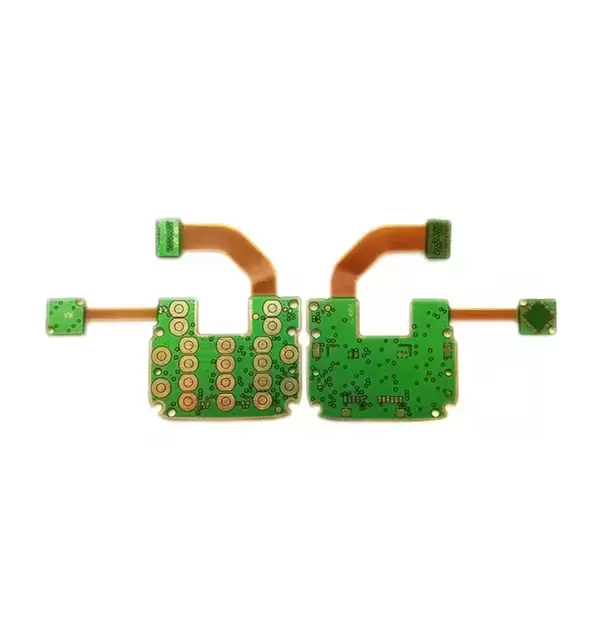
Rigid flex pcb technology stands out as the top solution for wearable devices. The unique blend of rigid and flex circuits allows these boards to bend, fold, and twist, making them perfect for compact and complex shapes. This high level of flex supports creative designs in wearables. Flex circuits also enhance comfort for users, as they easily adapt to movement and body contours. With fewer connection points, flex structures boost reliability and long-term performance. For modern portable electronics, flex offers unmatched adaptability.
●Rigid flex PCBs combine rigid and flexible circuits, allowing wearables to bend and fit comfortably on the body.
●These PCBs reduce the number of connectors, enhancing reliability and minimizing the risk of failure in active environments.
●Flexibility and space efficiency enable innovative designs, allowing for compact and lightweight wearable devices.
●Rigid flex PCBs can withstand harsh conditions, ensuring durability and consistent performance in various environments.
●Using rigid flex PCBs can streamline assembly processes, reducing production costs and improving overall device quality.
Rigid Flex PCB Advantages for Wearable Devices
Flexibility and Space Efficiency
Flex is a defining feature of rigid flex pcb technology. This flexibility allows designers to create wearable devices that fit comfortably on the body and adapt to movement. Flex pcbs can bend, fold, and twist, which makes them ideal for wearables with unique shapes. The integration of wiring and connectors into a single unit frees up valuable space inside the device. This space efficiency means more room for sensors, batteries, or other advanced features.
| Application Example | Benefit of Flex and Space Efficiency |
|---|
| Smart Rings | Ultra-compact design, seamless fit |
| ECG Patches | Thin profile, conforms to skin |
| Glucose Monitors | Lightweight, flexible for daily wear |
| Hearing Aids | Fits in small cavities, enhances comfort |
Flex pcbs provide significant space and weight savings compared to traditional multi-board assemblies. They combine rigid and flexible sections, which gives both structural support and adaptability. In wearables, this advantage leads to lighter devices that users can wear for long periods without discomfort. Flexible circuit boards also allow for creative layouts, making it possible to fit advanced electronics into the smallest portable electronic devices.
Higher Reliability and Durability
Wearables demand high reliability and long-lasting performance. Rigid flex pcb designs decrease the number of solder joints and connectors, which reduces the risk of premature failures. By eliminating connectors, flex pcbs lower the number of potential failure points. This is crucial for wearables that experience constant movement, vibration, and exposure to different environments.
●Fewer connections mean fewer chances for mechanical or electrical failure.
●The integrated structure of flex pcbs withstands over 200,000 bending cycles, ensuring durability even with repeated flexing.
●Polyimide materials in flex sections provide excellent temperature resistance, from -200°C to 150°C, which supports reliable operation in harsh conditions.
Flex pcbs also absorb mechanical strain better than rigid-only designs. This higher reliability is essential for medical wearables, fitness trackers, and other devices that must perform consistently. The reduction in connectors and solder joints leads to higher capabilities and longer device lifespans. Flex circuits help maintain stable signal flow and minimize electromagnetic interference, which further boosts performance.
3D Layouts in Portable Electronic Devices
Rigid flex pcb technology enables true 3D layouts. Flex sections allow the circuit to fold, twist, and wrap around internal components. This advantage maximizes the use of available space in wearables and portable electronic devices. Designers can create compact products without sacrificing features or battery life.
| Benefit | Description |
|---|
| Space Minimization | 3D layouts reduce device size requirements |
| Weight Reduction | Fewer connectors and cables lower overall weight |
| Reliability | Rigid and flex layers enhance connection reliability |
| Fewer Parts | Integrated design means fewer components |
| Simplified Assembly | Easier and faster assembly process |
| Cost Efficiency | Lower assembly and logistics cost |
Flex pcbs support complex shapes and tight mechanical spaces. The rigid sections provide a stable base for mounting components, while the flex areas allow for movement and folding. This combination simplifies assembly and reduces the risk of incorrect connections. The result is a more reliable and cost-effective solution for advanced wearables.
Tip: When designing with flex pcbs, keep vias and solder joints out of bend zones, use curved traces, and balance copper distribution to maximize durability.
The advantages of flex pcbs in wearables include flexibility, space efficiency, higher reliability, and the ability to create innovative 3D layouts. These features make flex pcbs the preferred interconnect solutions for modern circuit board technology.
Comparing Rigid-Flex PCBs to Other PCB Types
Rigid PCBs vs. Rigid-Flex PCBs
Rigid pcbs have a fixed structure and cannot bend or flex. This limitation makes them less suitable for wearables, which often require flexible shapes and movement. Rigid flex pcb technology combines the strength of rigid sections with the adaptability of flex areas. This design allows the board to absorb shocks and vibrations, which increases durability. Rigid-flex pcbs minimize connection points, reducing the risk of failure. They can also conform to body shapes, making them more comfortable for long-term use. In wearable applications, rigid-flex pcbs can endure 10G shocks and pass sweat simulations with minimal signal drift, showing high reliability in real-world conditions.
Flexible PCBs vs. Rigid-Flex PCBs
Flex pcbs offer more adaptability than rigid boards, but they lack the structural support needed for mounting heavy components. Rigid-flex pcbs combine the benefits of both types. The rigid sections provide a stable base for components, while the flex areas allow for movement and folding. This integration leads to a compact and lightweight design, which is essential for wearables. Flex pcbs reduce the number of interconnects, optimizing space and improving durability. They can bend and flex without cracking, making them ideal for body-worn devices. The lightweight design also minimizes connectors and wiring, reducing overall device weight.
| Advantage | Description |
|---|
| Reduced Assembly Costs | Eliminates the need for multiple connectors, cutting assembly time by up to 30%. |
| Enhanced Reliability | Fewer connection points lead to lower chances of failure, crucial for wearables. |
| Compact Design | Ideal for fitting into tight spaces, enhancing wearability. |
Why Rigid-Flex PCBs Offer Higher Reliability
Flex pcbs stand out for their higher reliability in wearable and portable electronic devices. The integration of rigid and flexible circuits reduces the need for bulky connectors, which lowers the risk of failure. Flex pcbs can withstand repeated bending and harsh environments, maintaining stable performance over time. Flexible circuit boards also help absorb mechanical stress, which is important for devices exposed to constant movement. The combination of flex and rigid sections ensures that the device remains both durable and comfortable. Flex circuits support compact layouts, making them the preferred choice for modern wearables that demand high reliability and long-term performance.
Applications of Rigid Flex PCB in Wearable Devices
Smartwatches and Fitness Trackers
Smartwatches and fitness trackers have become essential wearables for many people. These devices rely on flex pcbs to achieve compact and ergonomic designs. The combination of rigid and flex sections allows for the integration of sensors, displays, and batteries in a single, lightweight unit. Flex pcbs enable the device to bend and fit comfortably on the wrist, supporting daily movement. The use of flex in these wearables improves signal integrity and reduces assembly complexity. The table below highlights the main advantages:
| Advantage | Description |
|---|
| Improved Signal Integrity | Flex pcbs enhance reliable signal transmission in compact wearables. |
| Reduced Assembly Complexity | Streamlined assembly lowers errors and increases production efficiency. |
| Enhanced Design Flexibility | Rigid and flex sections allow for innovative layouts in small spaces. |
Flex sections provide the adaptability needed for ergonomic shapes, while rigid areas offer a stable base for components. This balance supports the durability and performance required for active lifestyles.
Medical Wearables and Portable Electronic Devices
Medical wearables, such as glucose monitors and ECG patches, depend on flex pcbs for their ability to conform to the body. Flex enables continuous monitoring by allowing the device to stay in close contact with the skin. Portable electronic devices like insulin pumps use flex pcbs to achieve lightweight sizes and mechanical stability. The integrated unit design enhances reliability and thermal management, reducing the risk of overheating. Flex pcbs also minimize the number of connectors, which lowers the chance of failure during daily use. These features make flex pcbs ideal for medical applications that require consistent performance.
“Flexible pcbs allow for bendability, while rigid flex pcb solutions combine stability with flexibility. Applications include smart clothing, medical wearables, and foldable smartphones. With the rise of wearable technology, flex pcbs are revolutionizing how electronic components are integrated into daily-use gadgets.”
Innovative Designs and User Comfort
Flex pcbs have enabled a new generation of innovative wearables. Designers can now create devices that fit into small and complex enclosures, such as smart rings and fitness bands. The flexibility of flex pcbs allows for thinner, lighter, and more ergonomic products. This adaptability improves user comfort, as devices can contour to the body and reduce weight by up to 20%. The reduction in connectors and the use of a single flex circuit board increase reliability and comfort. Flex pcbs support creative layouts, making wearables feel like natural extensions of the body. The combination of flexibility, lightweight sizes, and an integrated unit ensures that flex pcbs remain the top choice for advanced wearables.

Solving Design Challenges with Rigid-Flex PCBs
Miniaturization and Complex Shapes
Miniaturization is a major goal in modern wearables. Rigid flex pcbs help engineers meet strict design specifications by allowing circuits to fit into small and complex enclosures. This technology supports adaptability to unique shapes, which is essential for devices that must be discreet and comfortable. Flex pcbs reduce the number of connections, which improves reliability and makes the device more durable. The flexibility of these pcbs also enables thinner and more ergonomic designs, giving designers more freedom to create visually appealing products.
●Adaptability to small and complex enclosures
●Improved reliability through fewer connections
●Enhanced comfort and aesthetic freedom for wearables
These features make flex pcbs the preferred interconnect solutions for compact devices that require both function and style.
Performance in Harsh Environments
Wearable devices often face harsh environments, such as extreme temperatures or high humidity. Rigid flex pcbs use advanced materials that maintain performance in these conditions. The table below shows how different materials contribute to durability and shock resistance:
| Material Type | Key Properties | Performance in Harsh Environments |
|---|
| Polyimide | Thermal stability, flexibility, moisture resistance | Withstands -55°C to over 200°C, excellent chemical resistance |
| High-Tg FR-4 | High glass transition temperature | Resists deformation at elevated temperatures |
| Adhesives | Thermal and moisture resistance | Must withstand up to 150°C and prevent moisture absorption |
| Copper Foil | Ductility and corrosion resistance | Rolled annealed copper allows bending without cracking |
| Protective Coatings | Flexibility and moisture protection | Polyimide coverlays and conformal coatings enhance durability |
These materials ensure that flex pcbs deliver consistent performance, even when exposed to shocks or rapid temperature changes. This reliability is critical for wearables used in sports, medical, or industrial settings.
Assembly and Manufacturing Efficiency
Rigid flex pcbs offer significant potential cost savings during assembly and manufacturing. By combining rigid and flexible layers, these pcbs allow for 3D configurations that optimize space and reduce the need for connectors. Fewer connectors mean fewer sources of failure, which increases device lifespan and reliability. Flex pcbs also improve shock performance, making them ideal for devices that experience frequent movement.
●Combines rigid and flexible layers for design flexibility
●Enables 3D layouts, optimizing internal space
●Reduces the number of connectors, simplifying assembly
●Fewer interconnections lead to greater reliability and longer device life
Compared to traditional pcbs, rigid flex pcbs streamline the assembly process, require only one test run, and reduce overall production time. These advantages translate into lower cost, faster production, and improved quality for wearable devices.
Rigid flex PCBs deliver unmatched flexibility, reliability, and space efficiency for modern wearables. Their unique design supports dynamic movement and compact layouts. Key benefits include:
| Benefit | Description |
|---|
| Improved Signal Integrity | Maintains strong performance in wearable devices. |
| Reduced Assembly Costs | Streamlines production and lowers labor needs. |
| Enhanced Reliability | Fewer connection points mean fewer failures, even in tough conditions. |
| Design Freedom | Enables curved or folded devices without losing connectivity. |
| Compact Design Capabilities | Fits easily into small spaces, perfect for advanced wearables. |
Consider rigid flex PCBs for your next project to achieve innovative designs and proven performance.
FAQ
What is a rigid flex PCB?
A rigid flex PCB combines rigid and flexible circuit board sections into one unit. This design allows the board to bend and fit into small or complex spaces, making it ideal for wearable devices.
Why are rigid flex PCBs better for wearables than traditional PCBs?
Rigid flex PCBs offer greater flexibility, higher reliability, and better space efficiency. They reduce the number of connectors, which lowers the risk of failure in wearable devices.
How durable are rigid flex PCBs in daily use?
Rigid flex PCBs can withstand over 200,000 bending cycles and extreme temperatures. This durability ensures reliable performance in wearables that experience frequent movement and harsh conditions.
Can rigid flex PCBs help reduce device size?
Yes. Rigid flex PCBs enable 3D layouts and eliminate bulky connectors. This feature allows designers to create smaller, lighter, and more comfortable wearable devices.
About the author:

Sonic Yang
As a major in Electronics and Mechanical Automation, Sonic has been engaged in PCB design, R&D, and manufacturing of electronics for around 22 years, as the engineering director, and coordinates with the supply chain(components and CNC parts), providing professional support and consulting for global customers.

 en
en



 WhatsApp