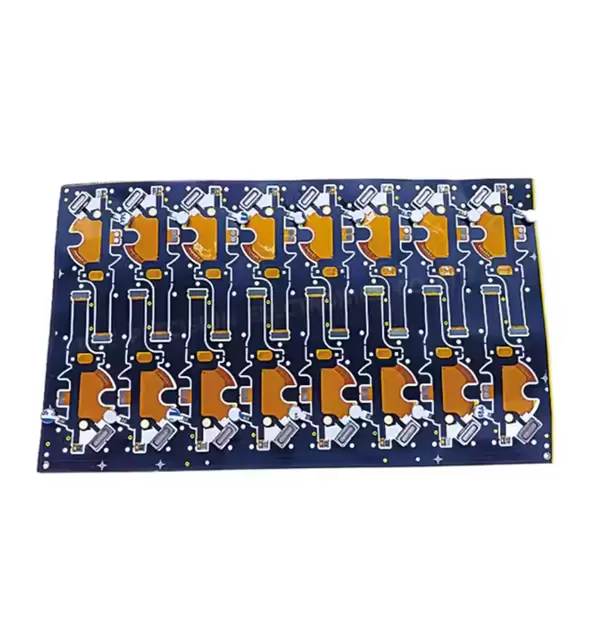
Flexible PCB technology drives innovation in aerospace electronics by providing lightweight, reliable solutions for critical environments.
| Application | Description |
|---|
| Avionics systems | Ensures reliable interconnections in tight spaces. |
| CubeSats | Lightweight and compact, integrating multiple components. |
| BenPCB delivers durable, high-frequency flexible PCBs with rapid prototyping, making them essential for advanced aerospace applications. | |
●Flexible PCBs reduce weight and improve reliability in aerospace applications, making them essential for avionics and satellite systems.
●These PCBs enhance performance by minimizing failure points, which is crucial for mission-critical environments like military communications and radar systems.
●Flexible PCB technology supports compact designs, allowing for innovative electronics integration in unmanned vehicles and advanced military equipment.
Flexible PCB Applications in Avionics
Flexible PCB technology transforms avionics by enabling lightweight, reliable electronics that withstand harsh aerospace conditions. These pcbs eliminate extra connectors and wiring, reducing overall weight and failure points. Their advanced materials, such as polyimide and PTFE, deliver high-frequency and thermal performance essential for mission-critical applications.
Flight Control Systems
Flight control systems rely on flexible pcb designs for compact, robust assemblies. Engineers use rigid-flex pcbs to minimize connectors and solder joints, which lowers failure points in extreme environments. Aircraft control modules benefit from lightweight pcbs that resist vibrations and ensure durable connections. The integration of flexible pcbs enhances reliability and supports long-term performance in aerospace missions.
| Evidence | Description |
|---|
| Rigid-flex PCBs | Enable compact, lightweight, and highly reliable systems for flight control. |
| Flexible PCBs | Lightweight and vibration-resistant, ensuring robust connections. |
| Design Strategies | Fewer connection points improve board performance. |
| Integration | Seamless integration reduces failure points. |
| Durability | Built to withstand extreme conditions. |
Navigation Modules
Navigation modules in aircraft require flexible pcb solutions for size reduction and weight efficiency. These pcbs fit into limited spaces and contribute to fuel savings. Their three-dimensional flexibility allows integration into complex avionics designs. The reduction in potential failure points increases reliability, which is vital for safe navigation.
| Benefit | Description |
|---|
| Compact Solutions | Flexible pcbs create designs that fit into tight spaces. |
| Weight Reduction | They save weight, improving fuel efficiency. |
| Enhanced Reliability | Fewer failure points boost navigation system reliability. |
| Size Reduction | Rigid-flex pcbs shrink electronic assemblies. |
| Integration Flexibility | Three-dimensional flexibility supports advanced avionics integration. |
Environmental Sensors
Environmental sensors in aerospace and defense use flexible pcb applications for lightweight, durable designs. These pcbs bend and conform to various shapes, fitting into tight spaces. Their resistance to extreme temperatures and vibrations ensures reliable operation in challenging conditions. Flexible pcbs enhance operational efficiency and safety in radar units, communication systems, and navigation devices.
●Flexible pcbs are lighter than traditional boards.
●They withstand extreme environmental conditions.
●Their bendability allows compact sensor designs.
●They endure temperature and vibration extremes.
●Flexible pcb applications improve efficiency and safety.
Flexible PCB in Satellite Systems
Payload Electronics
Satellite payload electronics depend on flexible pcb technology for efficient and reliable operation. Engineers select flexible pcb applications to fit electronics into tight spaces, which is essential for aerospace missions. These pcbs offer lightweight and compact designs, reducing the overall mass of satellites. The versatile nature of flexible pcb allows designers to bend and conform circuits to unique shapes, supporting innovative electronics layouts. The table below highlights the primary functions of flexible pcb in payload electronics:
| Functionality | Description |
|---|
| Lightweight and compact | Ideal for fitting into tight spaces within satellites. |
| High reliability | Reduces the risk of failure in harsh space environments. |
| Versatile design | Can bend and conform to unique shapes, allowing for innovative designs. |
| Mass reduction | Lowers the overall mass of satellites, crucial for launch efficiency. |
| Reliable connections | Provides reliable electrical connections in extreme environments. |
| Space efficiency | Occupies less space, vital for aerospace applications. |
| Flexible usage | Can be squeezed or folded, making efficient use of tight enclosures. |
| Lightweight nature | Helps reduce the overall mass of satellite designs. |
Power Distribution
Flexible pcb applications play a vital role in satellite power distribution. These pcbs connect solar panels to onboard systems, enabling efficient energy transfer. The lightweight structure of flexible pcb improves electronics performance by aiding battery recharging. Engineers rely on flexible pcb for its ability to handle power distribution in confined spaces. The following list summarizes the advantages:
●Flexible pcbs connect solar panels on satellites.
●They enable efficient transfer of solar energy to satellite systems.
●This efficiency aids in recharging onboard batteries.
Communication Circuits
Satellite communication circuits require flexible pcb applications for reliable signal transmission. These pcbs absorb shocks and bend without damage, which is important during satellite launches. Flexible pcb withstands temperature fluctuations from -200°C to +200°C, space radiation, and vacuum conditions. This durability ensures electronics performance and prevents component failure. Flexible pcb provides superior signal integrity with controlled impedance and reduced electromagnetic interference. These features support high-speed data transmission, which is crucial for aerospace communication systems.
Tip: Flexible pcb applications in satellite systems enhance reliability, reduce mass, and improve electronics performance in extreme aerospace environments.
Flexible PCB for Military Communications
Secure Radio Devices
Military communication relies on secure radio devices that demand compact, lightweight, and reliable electronics. Flexible pcb technology plays a vital role in these applications. Engineers use rigid-flex pcbs to integrate multiple modules within small enclosures, which enhances portability for field operations. The reduction in weight, sometimes up to 60% compared to traditional wiring harnesses, allows soldiers to carry advanced communication tools without extra burden.
●Flexible pcbs enable compact designs for secure radios.
●They support integration of multiple electronics modules.
●Weight reduction improves mobility in military environments.
●Rigid-flex pcbs increase device reliability during missions.
Tactical Equipment
Tactical military equipment requires advanced electronics that can withstand dynamic movement and harsh conditions. Flexible pcb applications enable intricate wiring harnesses in fighter jets and compact assemblies in satellite systems. Their ability to conform to complex shapes ensures that electronics fit into space-constrained designs. The table below highlights the main benefits of flexible pcbs in tactical equipment:
| Benefit | Description |
|---|
| Lightweight | Flexible pcbs reduce overall equipment weight, which is crucial for mobility. |
| Conformity to Shapes | They adapt to complex shapes, supporting compact and efficient electronics layouts. |
| Enhanced Reliability | Flexible pcbs maintain high reliability in harsh environments, essential for mission success. |
These applications show why flexible pcb solutions are essential for modern military systems.
Signal Processing
Signal processing in military communications depends on high-frequency performance and signal integrity. Flexible pcb applications support advanced signal processing by allowing the integration of cutting-edge electronics in both portable and vehicle-mounted systems. Their robust construction ensures reliable operation in extreme aerospace and battlefield conditions. Flexible pcbs help maintain clear communication channels, which is critical for mission effectiveness.
Note: Flexible pcb technology continues to advance, supporting the evolving needs of military communications and electronics.
Flexible PCB in Radar and Sensor Equipment
High-Frequency Routing
Radar systems in aerospace and defense rely on flexible pcb applications for high-frequency routing. Engineers select flexible pcbs because they deliver low dielectric loss and controlled impedance. These features improve signal integrity and reduce noise, which is essential for radar electronics. PTFE and ceramic composites help achieve a low dielectric constant and low dissipation factor, especially above 10 GHz. Solid ground planes and careful trace spacing minimize crosstalk and reflections. Flexible pcb designs support high-speed communication and maintain clarity in complex electromagnetic environments.
●Low dielectric loss enhances signal transmission.
●Controlled impedance ensures stable performance.
●Improved signal integrity supports radar applications.
●PTFE and ceramic composites reduce signal loss.
●Solid ground planes minimize noise.
Sensor Arrays
Flexible pcb applications enable the miniaturization of sensor arrays in defense systems. Designers use flexible pcbs to create lightweight and thin sensor packages. These pcbs endure high mechanical stress, making them ideal for bending and twisting in compact electronics. Efforts focus on reducing sensor package thickness to under 0.5mm and increasing functional density. Flexible circuits are thinner and lighter than traditional rigid pcbs, which is vital for aerospace sensor arrays.
●Flexible pcbs withstand mechanical stress.
●Thin profiles allow compact sensor designs.
●Sensor packages aim for thickness under 0.5mm.
●Increased functional density supports miniaturization.
●Lightweight circuits improve aerospace applications.
Electronic Warfare
Electronic warfare systems depend on flexible pcb applications for reliable and space-saving electronics. Modern infantry electronics use flexible pcbs in heads-up displays and vital signs monitors. The U.S. Army’s Nett Warrior system features a compact 22-layer rigid-flex pcb, showing advanced integration. Military standards like MIL-PRF-50884 highlight the reliability of flexible circuits. Flexible pcbs support jamming, surveillance, and countermeasure systems. They maintain strong signal integrity and high-speed communication in demanding environments.
Flexible pcb applications reduce weight and save space, which is crucial for military electronics.
| System | Flexible PCB Role |
|---|
| Heads-up displays | Lightweight, compact electronics integration |
| Nett Warrior system | 22-layer rigid-flex pcb for advanced applications |
| Countermeasure units | Reliable, high-speed signal processing |
Flexible PCB Applications in Unmanned Vehicles
Unmanned vehicles, such as drones and autonomous ground systems, rely on advanced electronics for mission success. Flexible pcb technology supports these vehicles by enabling compact, lightweight, and reliable applications that operate in demanding environments.
Control Systems
Control systems in unmanned vehicles require high reliability and robust construction. Engineers use rigid-flex pcbs to combine flexible and rigid elements, which reduces connectors and solder joints. This design lowers the risk of failure, especially in extreme conditions. Rigid-flex pcbs absorb stress through flexible layers and provide stability with rigid sections. These pcbs meet MIL-STD-810 standards, handle shocks up to 50G, and operate in temperatures from -65°C to 150°C. This level of durability ensures that control systems maintain consistent performance during critical missions.
Surveillance Payloads
Surveillance payloads demand space-efficient and lightweight electronics. Flexible pcb applications allow designers to create ultra-thin assemblies that fit into tight spaces. These pcbs reduce weight, which improves flight efficiency for unmanned aerial vehicles. High-density interconnect techniques and embedded components further enhance reliability. Flexible pcb solutions support advanced imaging and sensor modules, making them essential for modern surveillance applications.
●Space efficiency due to ultra-thin construction
●Weight reduction for improved flight performance
●Enhanced reliability with high-density interconnects
Power Management
Efficient power management is vital for unmanned vehicle applications. Flexible pcbs regulate and distribute electrical power to various subsystems, ensuring optimal operation. By consolidating multiple rigid boards and connectors into a single flexible pcb, engineers simplify installation and improve signal integrity. Compact designs increase system reliability, which is crucial for maintaining power supply during extended missions.
●Efficient regulation and distribution of power
●Reduced part count and simplified installation
●Improved signal integrity and system reliability
Flexible pcb applications continue to drive innovation in unmanned vehicle electronics, supporting high performance and mission success.
Flexible PCB Fabrication for Modern Electronics
Flexible pcb fabrication plays a vital role in modern electronics, especially for aerospace and defense. Engineers select materials and processes that ensure reliability, durability, and space-saving designs. These choices support applications from avionics to foldable smartphones.
Material Selection (PI, PET, PTFE)
Material choice is critical in flexible pcb fabrication. Polyimide (PI), PET, and PTFE stand out for their unique properties. Polyimide offers high-temperature tolerance and robust performance, making it ideal for avionics, satellite systems, and military-grade electronics. PET and PTFE provide excellent bendability and flexibility, which are essential for foldable smartphones and consumer electronics.
| Material | Performance Characteristics |
|---|
| Polyimide (PI) | High-temperature tolerance, exceptional reliability, robust performance for critical applications. |
| PET | Lightweight, flexible, suitable for consumer electronics and foldable smartphones. |
| PTFE | High heat resistance, durability, and flexibility for demanding environments. |
Layer and Thickness Options
Flexible pcb fabrication allows for a range of layer counts and thicknesses. Increasing layers can improve routing and signal integrity, but also adds thickness, which may affect bendability. Rigid-flex printed circuit boards combine rigid and flexible sections, optimizing space and reliability for modern electronics. Substrate thicknesses, such as 12.5 microns for maximum flexibility or 25 microns for general use, help engineers tailor designs for foldable smartphones and other compact devices.
Quality Assurance and Testing
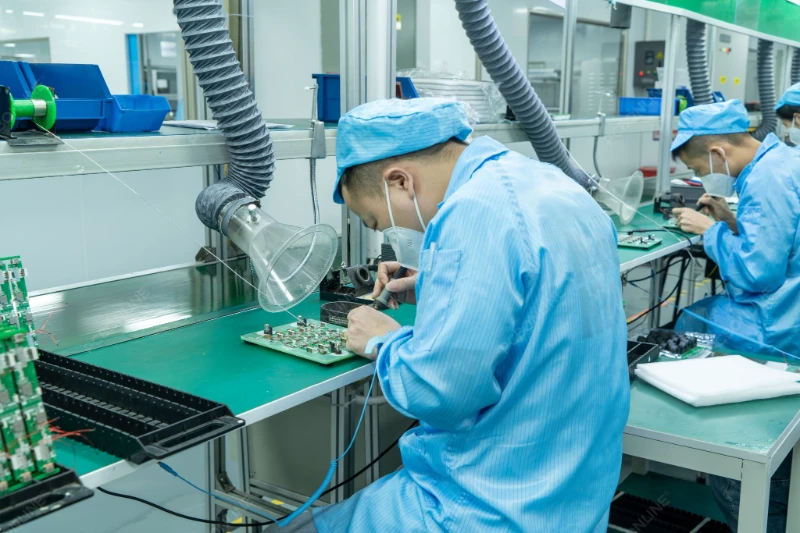
Quality assurance is central to flexible pcb fabrication for aerospace and defense. Manufacturers follow strict standards, including AS9100D, IPC-A-610 Class 3/3A, and MIL-PRF-50884. Testing includes 100% electrical checks, automated optical inspection, and environmental stress tests. BenPCB’s rapid prototyping and ISO 9001-certified processes ensure every pcb meets the highest reliability standards for modern electronics and consumer electronics.
Tip: Advanced flexible pcb fabrication supports quick iterations, high reliability, and integration into space-saving designs for foldable smartphones and printed circuit boards.
Flexible pcb technology transforms aerospace and defense systems by optimizing size, weight, and reliability. BenPCB’s solutions deliver superior performance in critical environments. Future applications will expand in military aircraft, space vehicles, and augmented reality training.
| Aspect | Benefit |
|---|
| Reliability | Improved in harsh conditions |
| Performance | Enhanced for mission-critical use |
FAQ
What industries benefit most from flexible PCB technology?
Flexible PCB technology supports industrial, automotive, and consumer sectors. These industries require reliable, lightweight circuits for high-performance applications in challenging environments.
How do flexible PCBs improve automotive and industrial electronics?
Flexible PCBs reduce weight and save space in automotive and industrial systems. They enhance reliability and support advanced features for both consumer and industrial electronics.
Why do consumer, industrial, and automotive products use flexible PCBs?
Consumer, industrial, and automotive products use flexible PCBs for compact designs. These circuits allow engineers to create innovative, high-performance applications for demanding environments.
Tip: Flexible PCBs enable advanced features in consumer, industrial, and automotive electronics, supporting rapid innovation and reliability.
About the author:

Sonic Yang
As a major in Electronics and Mechanical Automation, Sonic has been engaged in PCB design, R&D, and manufacturing of electronics for around 22 years, as the engineering director, and coordinates with the supply chain(components and CNC parts), providing professional support and consulting for global customers.

 en
en


 WhatsApp