Industrial robots, collaborative robots, automated guided vehicles, medical equipment, and intelligent inspection systems all rely on sophisticated electronic control units to perform accurately. Every movement, signal, and command passes through one or more printed circuit boards before reaching motors, sensors, or communication modules. This makes robot PCB assembly one of the most critical stages in robotic equipment manufacturing.
As robotic systems become more compact while delivering greater computing capability, the electronic hardware inside them must handle higher current density, faster signal transmission, and longer operating cycles than ever before. Standard PCB materials can still satisfy many conventional applications, but demanding robotic environments often expose their thermal and mechanical limitations.
This is where ceramic PCBs have gained significant attention. Their excellent thermal conductivity, dimensional stability, and resistance to harsh operating conditions allow electronic assemblies to perform more consistently under continuous workloads. For manufacturers seeking long-term reliability rather than simply reducing initial production costs, ceramic substrates have become an increasingly practical option.
Understanding how ceramic technology improves robot PCB assembly helps engineers, OEM buyers, and equipment manufacturers make better decisions during product development and component selection.
Higher Performance Robots Require Higher Performance PCB Assemblies
A robot is far more than a mechanical structure with motors and gears. Inside every system is a network of electronic assemblies working simultaneously to process information, distribute power, and coordinate movement.
Typical robotic control systems include multiple functional boards responsible for:
· Motion control
· Servo drive management
· Sensor acquisition
· Power conversion
· Communication interfaces
· Safety monitoring
Each board generates heat while exchanging data continuously with the others. During long production shifts, temperatures inside electrical enclosures continue to rise. If thermal energy cannot be removed efficiently, electronic components begin operating outside their optimal range.
Even small temperature increases can influence system performance. Motor drivers become less efficient, processors automatically reduce operating frequency to protect themselves, and solder joints experience greater mechanical stress after repeated heating and cooling cycles.
These issues rarely appear during short laboratory testing but often emerge after thousands of operating hours in real production environments.
For this reason, PCB material selection has become an important engineering decision rather than simply a manufacturing choice.
Why Traditional PCB Materials Reach Their Limits
FR-4 remains the most widely used PCB substrate across the electronics industry because it offers a balanced combination of mechanical strength, electrical insulation, and manufacturing cost.
Many industrial controllers continue using FR-4 successfully. However, robotics introduces operating conditions that place far greater demands on the circuit board itself.
Robotic equipment frequently operates:
· Twenty-four hours per day
· Under continuous vibration
· Near power electronics
· Inside compact enclosures
· Across varying ambient temperatures
Under these conditions, heat accumulation becomes increasingly difficult to manage.
FR-4 provides thermal conductivity of only around 0.25 W/m·K, meaning heat spreads slowly through the substrate. Instead of quickly dissipating, thermal energy remains concentrated around high-power components.
This localized heating can gradually affect nearby ICs, capacitors, MOSFETs, and driver circuits, shortening component life and reducing system stability.
Engineers have traditionally compensated with larger heat sinks, additional cooling fans, or thicker copper layers. While these approaches help, they also increase system size, weight, and manufacturing complexity.
Many robotics manufacturers now prefer solving the problem at the PCB level rather than adding more mechanical cooling hardware.
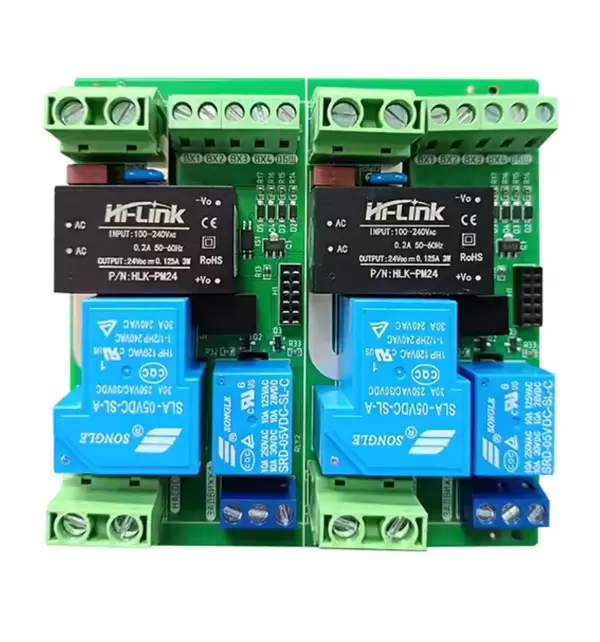
Ceramic PCBs Change the Thermal Equation
Ceramic substrates behave very differently from conventional epoxy-based materials.
Instead of trapping heat within localized regions, ceramic materials conduct thermal energy rapidly across the entire substrate before transferring it toward cooling structures or surrounding air.
Depending on the selected material, thermal conductivity can increase dramatically.
For example:
PCB Material | Typical Thermal Conductivity |
FR-4 | ~0.25 W/m·K |
Alumina Ceramic | 20–30 W/m·K |
Aluminum Nitride | Up to 220 W/m·K |
Silicon Carbide | Extremely High |
This improvement changes how electronic assemblies handle continuous operation.
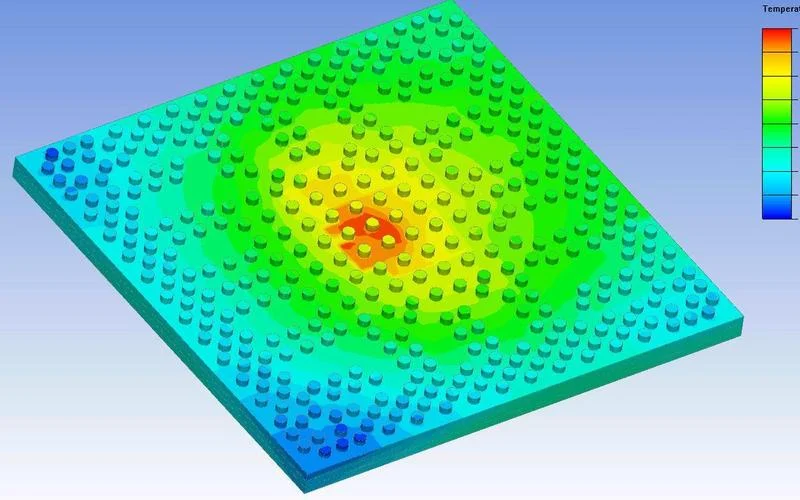
Rather than allowing individual components to reach excessive temperatures, ceramic PCBs distribute heat more evenly across the board. Lower operating temperatures reduce thermal stress throughout the entire assembly instead of protecting only one device.
For robotic applications that run continuously throughout the day, this difference becomes increasingly valuable over time.
Stable Operating Temperatures Improve Overall Reliability
Temperature affects nearly every electronic component.
Power semiconductors lose efficiency when operating temperatures rise. Capacitor lifetime decreases significantly under continuous heat exposure. Solder joints experience repeated expansion and contraction that eventually produces microscopic cracks.
Reducing operating temperature by even a modest amount can extend component lifespan considerably.
Ceramic PCBs contribute by maintaining more uniform thermal conditions across the board.
Instead of creating isolated hot spots, they help equalize temperatures between processors, motor drivers, power converters, and surrounding passive components.
This thermal stability offers several practical advantages for robot PCB assembly:
· Reduced component stress during continuous operation
· More consistent electrical performance
· Longer maintenance intervals
· Lower probability of unexpected shutdowns
Rather than reacting to overheating after it occurs, ceramic substrates help prevent excessive heat from developing in the first place.
Better Mechanical Stability Under Continuous Motion
Robotic equipment introduces another challenge rarely encountered in stationary electronics.
Movement.
Industrial robots accelerate, decelerate, rotate, and repeat identical motion cycles thousands of times every day. These repeated mechanical loads create constant vibration throughout the electronic assemblies.
At the same time, internal temperatures fluctuate as motors start and stop under changing production demands.
Every heating cycle causes PCB materials to expand slightly. Cooling causes them to contract again.
Materials with relatively high thermal expansion gradually introduce mechanical stress into solder joints and component leads.
Ceramic substrates possess a much lower coefficient of thermal expansion than conventional FR-4 boards.
Because dimensional changes remain extremely small, solder joints experience less fatigue throughout years of operation.
For robotic equipment expected to deliver long service life with minimal maintenance, this additional stability contributes directly to improved field reliability.
Supporting Higher Power Density Without Increasing PCB Size
Manufacturers continue pursuing smaller robotic platforms while expecting greater functionality from each generation.
More sensors.
More communication interfaces.
More computing capability.
More motor channels.
Yet available installation space rarely increases.
This forces engineers to place more electronic components within the same PCB area.
Higher component density naturally increases thermal density as well.
Ceramic substrates allow designers to manage greater power concentration without significantly enlarging the PCB itself.
Instead of relying solely on external cooling structures, heat begins dissipating immediately through the substrate.
This enables more compact control boards while maintaining safe operating temperatures.
For mobile robots, collaborative robots, and precision automation equipment where installation space remains limited, this advantage provides greater design flexibility without sacrificing reliability.
Signal Integrity Becomes More Important as Robotic Systems Grow More Complex
Thermal performance is only one reason ceramic substrates are becoming more common in robot PCB assembly. Signal quality is another factor that directly influences system performance.
Modern robotic equipment processes information from multiple sources simultaneously. Cameras capture images, positioning sensors measure movement, motor encoders provide real-time feedback, and communication modules exchange data with controllers or cloud platforms. All of these signals travel through PCB traces before reaching processors or control units.
When signals become faster, the PCB itself begins influencing transmission quality.
Conventional PCB materials perform well for many industrial control products, but higher frequencies increase dielectric loss and make signal integrity more difficult to maintain. Small disturbances may not stop a machine immediately, yet they can reduce positioning accuracy, slow communication, or increase error rates during long operating periods.
Ceramic substrates offer stable dielectric properties and lower signal loss, allowing electronic circuits to maintain more consistent performance under demanding operating conditions.
For equipment that depends on accurate motion control and continuous data processing, this stability becomes increasingly valuable.
Ceramic PCBs Help Power Electronics Operate More Efficiently
Power conversion is another area where ceramic materials provide measurable advantages.
Most robotic platforms contain several power stages responsible for supplying stable voltage to processors, sensors, communication modules, and motors. These circuits frequently include components such as MOSFETs, IGBTs, gate drivers, and power management ICs.
These devices generate considerable heat during normal operation.
If excessive temperature builds around power electronics, several problems may appear:
· Reduced conversion efficiency
· Higher switching losses
· Increased electrical resistance
· Accelerated component aging
Ceramic substrates quickly transfer heat away from these high-power devices, helping them remain within recommended operating temperatures.
Lower junction temperatures improve switching efficiency while reducing thermal stress throughout the entire power circuit.
Instead of adding larger heat sinks or increasing enclosure size, engineers can improve thermal performance through better PCB material selection.
This approach is especially attractive for compact robotic controllers where installation space remains limited.
Improving Manufacturing Consistency During PCB Assembly
Material selection influences manufacturing quality as much as operational performance.
A reliable robot PCB assembly depends not only on circuit design but also on stable production processes.
Ceramic PCBs provide several advantages during manufacturing because their dimensional stability remains excellent throughout soldering and assembly.
During SMT production, circuit boards experience multiple heating cycles inside reflow ovens. Materials expand and contract as temperatures rise above solder melting points before cooling again.
Excessive movement can introduce alignment errors, particularly on densely populated boards containing fine-pitch devices.
Ceramic substrates remain highly stable throughout thermal processing, helping maintain accurate component placement.
Manufacturers often appreciate this consistency because it supports:
· Accurate SMT positioning
· Stable solder joint formation
· Reduced board warpage
· Improved production repeatability
These advantages become increasingly important when assembling multilayer robotic control boards containing processors, communication modules, memory devices, and precision sensors.
Supporting Long-Term Industrial Operation
Many robotic systems operate in environments that place continuous stress on electronic hardware.
Typical applications include:
· Automated production lines
· Warehouse logistics systems
· Material handling equipment
· Packaging machinery
· Medical automation
· Semiconductor manufacturing
Unlike consumer electronics, these systems cannot simply be restarted whenever a problem occurs.
Unexpected downtime often results in production delays, maintenance costs, and lost output.
Reliability therefore becomes one of the most important purchasing criteria.
Ceramic PCBs help improve long-term durability by reducing several common failure mechanisms associated with heat and mechanical stress.
Lower operating temperatures reduce component degradation.
Better dimensional stability minimizes solder fatigue.
Excellent corrosion resistance allows assemblies to perform more consistently in challenging industrial environments.
When combined with high-quality PCB manufacturing and professional SMT assembly, ceramic substrates contribute to electronic systems capable of maintaining stable operation throughout extended service cycles.
Selecting the Right Ceramic Material for Robotic Applications
Not every robotic project requires the same ceramic substrate.
Engineers typically select materials according to thermal requirements, electrical characteristics, operating environment, and overall project budget.
Three ceramic materials are commonly considered.
Ceramic Material | Typical Characteristics | Typical Robotic Applications |
Alumina (Al₂O₃) | Cost-effective, reliable insulation, good thermal performance | General industrial controllers, sensor boards |
Aluminum Nitride (AlN) | Very high thermal conductivity, excellent electrical insulation | High-power motor drivers, processor modules |
Silicon Carbide (SiC) | Outstanding thermal and mechanical performance | Extreme industrial environments and specialized equipment |
Each material offers different advantages.
For many industrial robots, alumina provides an excellent balance between performance and manufacturing cost.
Applications involving high-power motor control or intensive computing often benefit from aluminum nitride because of its exceptional thermal conductivity.
Projects operating under particularly demanding environmental conditions may require more specialized ceramic materials.
Selecting the appropriate substrate should always consider the complete electrical and mechanical requirements rather than focusing on a single specification.
Design Considerations Before Choosing Ceramic PCB Assembly
Although ceramic substrates provide numerous technical advantages, successful implementation depends on proper engineering during the design stage.
Several factors should be evaluated early in product development.
Component placement remains critical. High-power devices should still be positioned to encourage efficient heat transfer.
Copper thickness must match current-carrying requirements without unnecessarily increasing manufacturing complexity.
Thermal vias, heat spreaders, and enclosure design should work together with the ceramic substrate instead of replacing each other.
Engineers should also consider compatibility between the PCB and the selected manufacturing process.
Working closely with an experienced PCB assembly supplier during the design phase often prevents unnecessary redesign later in production.
A supplier familiar with ceramic PCB fabrication can recommend practical adjustments that improve manufacturability while preserving electrical performance.
Choosing the Right Manufacturing Partner
Advanced materials alone cannot guarantee a reliable product.
The quality of robot PCB assembly depends heavily on manufacturing capability.
When evaluating a PCB supplier, buyers should consider several technical factors:
· Experience with ceramic PCB fabrication
· Precision SMT assembly capability
· Quality inspection procedures
· Thermal management expertise
· Prototype and volume production capacity
· Material traceability
· Compliance with international quality standards
Manufacturers serving industrial automation projects should also demonstrate experience producing assemblies for high-reliability applications rather than only consumer electronics.
Early communication between designers and manufacturing engineers often results in better production efficiency and improved long-term product reliability.
Ceramic PCB Technology Continues to Expand Across Robotics
Robotic equipment continues evolving toward higher integration, greater computing capability, and more demanding operating environments.
Electronic assemblies must simultaneously become smaller, more powerful, and more reliable.
Meeting these objectives requires improvements not only in semiconductor technology but also in the materials supporting the entire electronic system.
Ceramic PCB technology has already proven its value in industries where thermal management and reliability are critical, including aerospace, power electronics, telecommunications, and automotive systems. The same advantages are now driving wider adoption throughout robotics.
Manufacturers developing next-generation robotic platforms increasingly recognize that improving thermal performance at the PCB level produces benefits throughout the entire product. Lower temperatures contribute to higher efficiency, greater operational stability, reduced maintenance requirements, and longer equipment life.
For companies investing in advanced robot PCB assembly, ceramic substrates represent more than a material upgrade. They provide a practical engineering solution for supporting increasingly complex electronic systems while maintaining the reliability expected in modern industrial environments.
As robotic technology continues advancing, ceramic PCBs are likely to become a standard choice for high-performance control boards, helping manufacturers build equipment capable of delivering consistent performance under the demanding conditions of real-world operation.
About the author:

Sonic Yang
As a major in Electronics and Mechanical Automation, Sonic has been engaged in PCB design, R&D, and manufacturing of electronics for around 22 years, as the engineering director, and coordinates with the supply chain(components and CNC parts), providing professional support and consulting for global customers.

 en
en

.jpg)

 WhatsApp