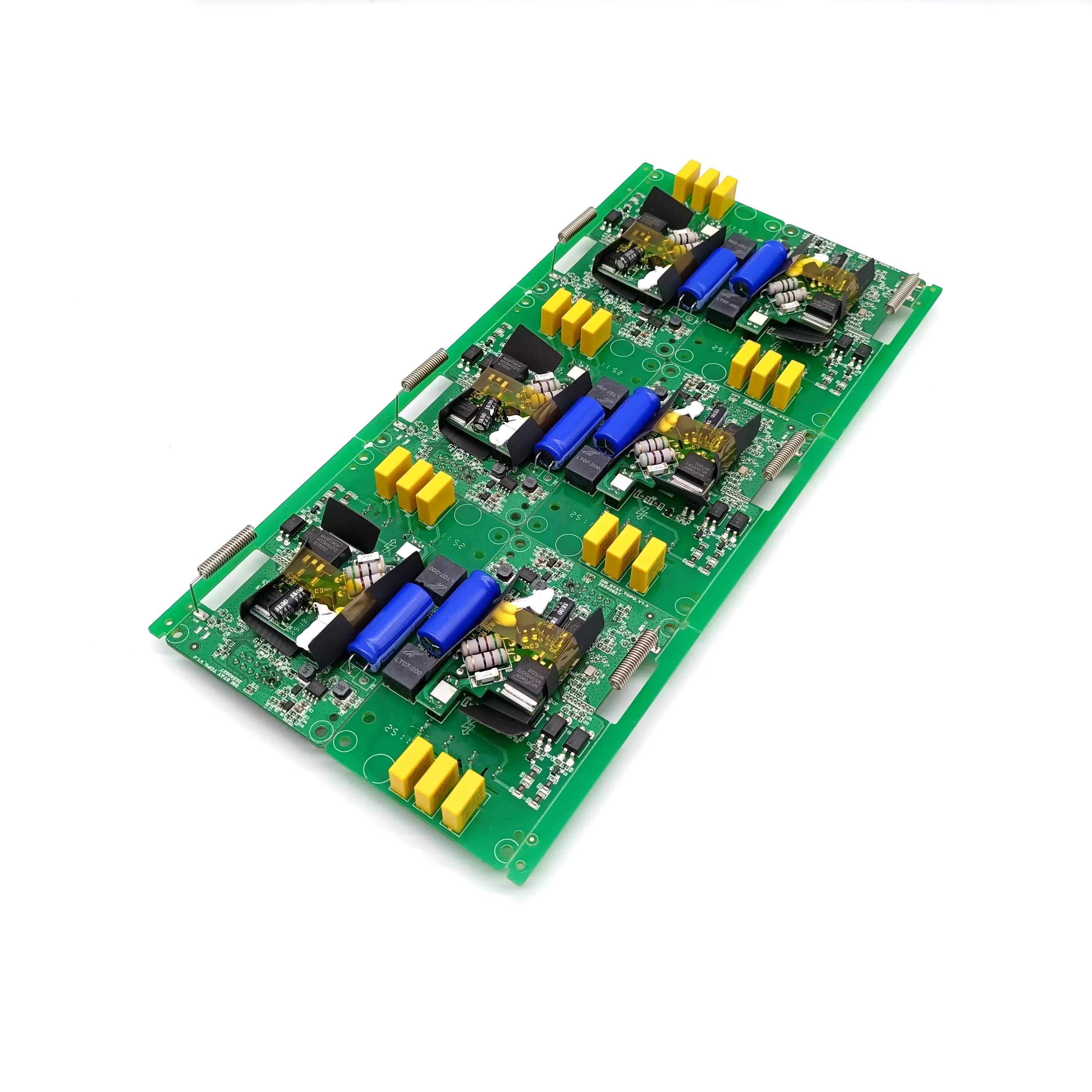
BENLIDA’s pcb assembly for electricity meter power grid strengthens smart meter performance by delivering stable operation and precise energy measurement. Advanced assembly techniques and high-quality materials help maintain data accuracy and reliability. Rigorous quality control ensures each meter operates efficiently, even in demanding power grid environments. Utilities benefit from consistent data and reduced maintenance. End-users gain confidence in long-term energy monitoring. Industry trends are shaping smart meter integration with features such as communication modules, anti-tamper functions, and improved power management. These advancements support the evolution of smart energy meter pcb solutions
· Smart meter PCB assembly enhances energy measurement accuracy, ensuring reliable billing and data integrity.
· High-quality materials and rigorous testing improve the durability of smart meters, making them reliable in harsh environments.
· Real-time data processing allows utilities to monitor energy usage effectively, leading to better load management and reduced downtime.
· Advanced features like anti-tamper functions protect smart meters from unauthorized access, ensuring data security.
· Efficient power management in smart meters supports long-term energy savings and sustainability in power grid applications.
PCB Assembly Performance Benefits
Signal Accuracy and Data Integrity
Smart meter pcb assembly plays a crucial role in maintaining signal accuracy and data integrity for energy meter pcb systems. The assembly process uses advanced fabrication methods that focus on high-precision measurement circuits. These circuits help ensure zero billing drift over time, which is vital for accurate energy readings. The use of high-stability, low-thermal-expansion laminates and premium surface finishes prevents pad corrosion and reduces accuracy drift caused by thermal cycles. Specialized engineering reviews for metrology signal isolation, such as split ground planes, allow the ADC to capture energy data without digital noise interference.
Evidence Description | Impact on Signal Accuracy and Data Integrity |
Advanced fabrication focused on maintaining signal integrity for high-precision measurement circuits. | Ensures zero billing drift over time, enhancing data accuracy. |
Utilization of high-stability, low-thermal-expansion laminates and premium surface finishes. | Prevents pad corrosion, reducing accuracy drift caused by thermal cycles. |
Specialized engineering reviews for metrology signal isolation using split ground planes. | Ensures ADC captures energy data without digital noise interference. |
Smart meter pcb smt assembly uses controlled soldering processes for metering shunts, which ensures zero resistance drift. This process is essential for maintaining calibration and accuracy in meter readings. Sensors embedded in the energy meter pcb detect voltage and current, sending data to the firmware for processing. The firmware then analyzes this data to provide reliable energy measurements. Smart meter pcb through-hole assembly further enhances signal stability by securing components that are sensitive to vibration and environmental changes. The combination of these techniques ensures that the smart meter pcb soldering process delivers consistent performance and reliable calibration.
· High-stability, low-thermal-expansion laminates help prevent accuracy drift.
· Premium surface finishes like OSP or ENIG are used to avoid pad corrosion.
· Controlled soldering processes for metering shunts ensure zero resistance drift.
Smart meter pcb assembly also integrates sensors that monitor environmental factors. These sensors feed data to the firmware, which adjusts calibration settings to maintain accuracy. The energy meter pcb design supports real-time data collection, allowing utilities to track consumption and billing with confidence. The firmware updates regularly to improve calibration and enhance accuracy, making the smart meter pcb smt assembly a dependable solution for modern power grids.
Reliability in Harsh Grid Environments
Reliability is a key requirement for energy meter pcb assemblies used in power grid applications. Smart meter pcb assembly must withstand temperature fluctuations, humidity, and electrical noise. The selection of high-quality components and rigorous quality control processes ensures that each meter operates reliably over long periods. Functional testing, calibration verification, aging tests, and accuracy tests are performed during smart meter pcb smt assembly to meet high standards.
Aspect | Contribution to Reliability |
High-quality components | Ensure accurate readings and long-term performance |
Rigorous quality control | Involves functional testing, calibration verification, aging tests, and accuracy tests to meet high standards |
Reliable component sourcing | Ensures only high-quality components are used in assemblies |
Smart meter pcb through-hole assembly uses robust materials and designs to enhance durability. The energy meter pcb must operate in harsh environments, such as factories or outdoor installations. Engineering strategies focus on material selection and layout to improve longevity. The smart meter pcb soldering process includes burn-in testing and full-process inspections, such as AOI, X-Ray, ICT, and FCT, to validate reliability.
· This document emphasizes the engineering of PCBs specifically for harsh factory environments, which can be analogous to power grid conditions.
· It discusses the critical aspects of material selection and design that contribute to the durability and performance of PCB assemblies under challenging conditions.
· The guide outlines various strategies for enhancing the robustness and longevity of PCB assemblies in harsh environments, relevant to power grid applications.
Sensors in the energy meter pcb monitor temperature and humidity, sending real-time data to the firmware. The firmware uses this information to adjust calibration and maintain accuracy. Smart meter pcb smt assembly ensures that each meter can handle unpredictable conditions without performance drift. Utilities rely on these assemblies for consistent energy measurement and reduced maintenance.
Real-Time Processing Speed
Smart meter pcb assembly supports real-time processing speed, which is essential for accurate energy monitoring and billing. The energy meter pcb uses advanced sensors to collect voltage and current data. The firmware processes this data instantly, allowing the meter to provide up-to-date readings. Smart meter pcb smt assembly integrates high-speed components that enable rapid data transfer between sensors and firmware.
Smart meter pcb through-hole assembly secures components that require stable connections for fast processing. The smart meter pcb soldering process ensures that each joint is reliable, minimizing signal loss and latency. Calibration routines run automatically in the firmware, updating settings to maintain accuracy. The energy meter pcb design allows for quick firmware updates, improving processing speed and data reliability.
Quality Control Step | Description |
ISO Certification | Certified with ISO 9001/IATF 16949 |
Full-Process Inspections | AOI (100% surface inspection), X-Ray, ICT, FCT |
Burn-in Testing | Reliability validation through stress testing |
Incoming Material Inspection | Strict checks for smart meter-specific components |
Product Yield Rate | ≥99.5% for smart meter PCBA |
Smart meter pcb assembly uses sensors to monitor power quality and detect anomalies. The firmware analyzes this data in real time, adjusting calibration to maintain accuracy. Utilities benefit from fast data processing, which enables efficient load management and billing. The energy meter pcb supports continuous operation, ensuring that meters deliver reliable readings without interruption.
Tip: Real-time processing speed in smart meter pcb smt assembly helps utilities respond quickly to changes in power demand and detect faults before they affect service.
Smart meter pcb assembly also considers environmental and sustainability factors. Eco-friendly materials and recycling methods reduce waste in energy meter pcb production. Renewable energy sources are used in manufacturing processes to minimize environmental impact. The firmware manages power consumption efficiently, supporting sustainable operation in smart meter pcb through-hole assembly.
Smart meter pcb soldering process ensures that each connection is robust, supporting long-term calibration and accuracy. Sensors and firmware work together to deliver reliable energy data, making smart meter pcb assembly a cornerstone of modern power grid applications.
Smart Meter PCB Assembly Features
Advanced Component Placement
Smart meter pcb component placement machine technology is essential for precise assembly. These machines position components with high accuracy, which is critical for stable power measurement. The use of smart meter pcb component placement machine ensures that each part sits exactly where it should, reducing the risk of signal interference. Smart meter pcb reflow soldering follows, creating strong electrical connections. This process uses controlled heat to bond components, which helps maintain long-term reliability. Through-hole soldering adds extra durability for parts that handle high power or temperature. The combination of smart meter pcb component placement machine and smart meter pcb reflow soldering supports consistent performance in demanding grid environments.
Note: Advanced placement and soldering techniques help prevent defects and extend the life of the assembly.
BENLIDA’s Technical Specifications:
Material | FR-4 TG150 |
Board Thickness | 1.6mm |
Layers | 2 |
Copper Thickness | 1OZ |
Surface Treatment | Lead Free-HASL |
Communication Module Integration
Integration of communication modules is a key feature in modern smart meter designs. This integration enables two-way data exchange between the meter and utility control centers. Real-time communication improves power grid management by allowing quick responses to changes in demand. The integration also supports advanced features like remote monitoring and fault detection. Smart meter pcb component placement machine ensures that communication chips are installed accurately, which is vital for reliable data transmission. Smart meter pcb reflow soldering secures these modules, minimizing crosstalk and signal loss. Advanced techniques such as differential signaling further enhance interoperability and maintain signal quality.
Power Management and Efficiency
Efficient power management is crucial for smart meters. Advanced assembly techniques, including smart meter pcb reflow soldering, help reduce energy losses. Optimized layouts and low-power components lower overall consumption. The integration of power management circuits ensures that the meter operates efficiently, even during peak loads. Smart meter pcb component placement machine positions these circuits for maximum effectiveness. Quality control processes, such as functional and environmental stress testing, verify that the assembly can handle real-world power conditions. Features like sleep modes and efficient distribution networks further improve energy efficiency, supporting long-term operation in the field.
Real-World Impact of PCB Assembly for Electricity Meter Power Grid
Grid Monitoring and Load Management
Smart meter technology has transformed how utilities monitor and manage the power grid. Advanced PCB assembly allows each meter to collect and transmit accurate data about energy consumption. This data helps utilities balance supply and demand, preventing overloads and blackouts. The integration of communication modules in smart meters enables real-time updates, which support quick responses to changes in the grid. As a result, utilities can optimize load management and improve the reliability of energy delivery. Industry reports show that the demand for reliable PCB assemblies is rising due to the growth of IoT devices and the expansion of telecommunications networks. These trends highlight the importance of advanced assemblies in supporting smart grid infrastructure.
Maintenance Reduction and Downtime
Smart meter PCB assemblies are designed for long-term reliability, which reduces the need for frequent maintenance. The careful selection of components and robust manufacturing processes help prevent failures that could disrupt energy distribution. Utilities benefit from fewer service calls and less downtime, which leads to cost savings and improved customer satisfaction. Key factors that contribute to reduced maintenance include:
· Enhanced reliability of the PCB assembly, which lowers the risk of unexpected failures.
· Focus on long-term stability through careful component selection.
· Manufacturing processes that withstand harsh conditions, such as temperature changes and humidity.
· Prevention of cascading failures that could affect multiple meters or sections of the grid.
A stable smart meter assembly ensures that data collection remains consistent, supporting accurate billing and efficient energy management.
Security and Tamper Resistance
Security is a top priority for smart meter installations. Advanced PCB assembly techniques help protect meters from tampering and unauthorized access. Anti-tamper features are built into the design, making it difficult for intruders to alter data or disrupt meter operation. Long-term stability and operational consistency are essential in unpredictable environments. The following table highlights features that support these goals:
Evidence Type | Description |
High-Reliability FRAM Memory | Non-volatile memory with long endurance, ideal for smart meter applications. |
Consistent Supply of Components | Reliable sourcing of metering chips ensures ongoing support for energy systems. |
BOM Optimization & PCB Assembly | Flexible services minimize risks of production disruption. |
These features ensure that each smart meter continues to deliver accurate data, even in challenging conditions. Utilities and end-users can trust the integrity of energy measurements, which supports fair billing and effective grid management.
BENLIDA’s PCB Assembly for Electricity Meter Power Grid supports stable meter operation and accurate energy measurement. Each meter uses advanced assembly and high-quality materials. Rigorous testing ensures every meter delivers reliable energy data. Utilities and end-users benefit from this technology in many ways:
· Real-time monitoring of energy usage with each meter, helping control energy consumption
· Automated and accurate billing for every meter, removing manual readings and improving energy management
· Enhanced energy efficiency for each meter through better data insights
This technology helps every meter maintain long-term accuracy and stability. Future smart meter designs may use new PCB technology to improve energy data collection and grid management. Each meter will continue to play a key role in energy monitoring and efficiency.
FAQ
What materials are used in BENLIDA’s PCB Assembly for electricity meters?
BENLIDA uses FR-4 TG150 material with 1.6mm thickness and 1OZ copper. The board has two layers and a lead-free HASL finish. These materials ensure durability and stable performance in power grid environments.
How does BENLIDA ensure the quality of each PCB assembly?
Every unit undergoes strict quality checks, including solder joint inspection and electrical testing. This process helps guarantee consistent performance and reliability for every electricity meter.
Why is signal accuracy important in smart meter PCB assemblies?
Signal accuracy ensures that energy measurements remain precise over time. Accurate signals prevent billing errors and support reliable energy management for utilities and end-users.
What features help prevent tampering with smart meters?
BENLIDA’s assemblies include anti-tamper features. These features protect meters from unauthorized access and data manipulation. Utilities can trust the integrity of their energy data.
About the author:

Sonic Yang
As a major in Electronics and Mechanical Automation, Sonic has been engaged in PCB design, R&D, and manufacturing of electronics for around 22 years, as the engineering director, and coordinates with the supply chain(components and CNC parts), providing professional support and consulting for global customers.

 en
en





 WhatsApp