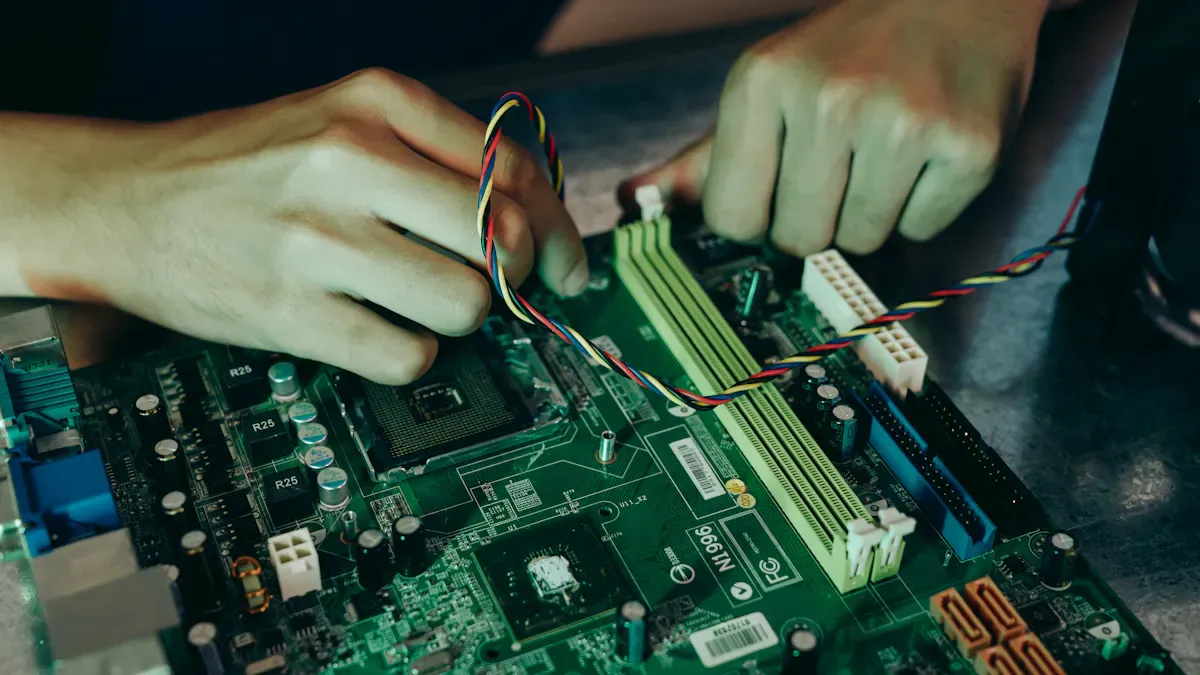
You use a high-frequency PCB when your device needs to work with signals over 1 GHz. In electronics, people call anything above this range high-frequency. Devices like smartphones and Wi-Fi routers need these boards for fast and clear communication. You must pick the right materials to keep signals strong at these speeds. Signal integrity means your signals stay clear and do not get weak. High-frequency and high-speed PCBs are not the same thing. High-frequency is about how often the signal happens. High speed is about how fast data moves.
Key Takeaways
- High-frequency PCBs are important for devices working over 1 GHz. They help devices talk clearly and quickly.
- Picking the right materials, like PTFE, keeps signals strong. It also stops energy from being wasted in high-frequency uses.
- Knowing how high-frequency and high-speed PCBs are different is very important. It helps people design better and makes devices work well.
- High-frequency PCBs fix problems like crosstalk and signal reflections. This makes them great for wireless and medical devices.
- Using flexible high-frequency PCBs gives more ways to design things. It also helps devices work better in small spaces.
High Frequency PCB Basics
What Defines High Frequency
A circuit is called high-frequency if it works above 500 MHz. Engineers use high-frequency PCBs for boards from 500 MHz to several gigahertz. Most wireless devices, like cell phones and Wi-Fi routers, use these frequencies. The table below shows how experts group these ranges:
| Frequency Range | Classification |
|---|
| 500 MHz - 2 GHz | High Frequency PCB |
| Above 1 GHz | Considered High Frequency |
Industry rules say a high-frequency PCB must handle analog RF or microwave signals. These signals start at 500 MHz and can go much higher, even into millimeter wave bands. You need to check the dielectric constant and loss tangent of the board material. These values show how well the board carries high-frequency signals without losing energy.
High-Frequency vs. High-Speed PCBs
High-frequency and high-speed are not the same thing. High-speed PCBs move digital data quickly. High-frequency PCBs guide radio frequency (RF) energy with steady impedance. The table below shows the main differences:
| Aspect | High-Speed PCB Design | High-Frequency PCB Design |
|---|
| Signal Type | Digital signals | RF signals |
| Design Goals | Keep the signal clear in the time domain | Guide RF energy with steady impedance |
| Key Figures of Merit | Timing coordination, skew control | S-parameters, VSWR, insertion, and return loss |
| Layout Optimization | Length matching, fewer vias | Shape transmission lines, avoid corners |
| Focus | Timing budgets, eye diagrams | Amplitude, phase, and spectral characteristics |
You must pick the right materials for a high-frequency PCB. These boards use special materials with low dielectric loss. They need exact impedance control and good signal paths. This keeps signals clear at high frequencies. Standard PCBs lose too much energy and cannot keep signals strong.
Why High Frequency Matters
Many modern devices need high-frequency PCBs. These boards send and receive high-frequency signals with little loss. If you use a standard PCB, you will see problems like crosstalk, reflections, and attenuation. These issues make it hard to keep signals clear. High-frequency PCBs fix these problems with special materials and careful design.
- High-frequency PCBs work better than standard PCBs with high-frequency signals.
- They fix electrical issues like dielectric loss and impedance mismatch.
- You get better results in wireless, radar, and communication systems.
Tip: Always check the loss tangent of your PCB material. A lower loss tangent means less energy loss and clearer signals.
The substrate material in a high-frequency PCB does more than hold parts together. It controls how signals move through the board. If you pick the wrong material, your signals will get weak or noisy. You must watch for dielectric losses, conductor losses, and changes in the dielectric constant. These can cause signal loss at high frequencies.
When you design for high-frequency, you must think about:
- Crosstalk: Noise from nearby traces.
- Reflections: Signal bouncing back from impedance mismatches.
- Attenuation: The signal gets weaker over distance.
- EMI: More electromagnetic interference at higher frequencies.
High-frequency matters because it helps you build faster and clearer devices. You must use a high-frequency PCB if you want your product to work well in today’s wireless world.
Key Features of High-Frequency PCBs
Signal Integrity and Loss
It is important to keep signal integrity safe in high-frequency designs. High-frequency signals can get weaker as they move through a PCB. This happens because of the board’s material. If the material has a high dissipation factor, more energy turns into heat. This makes your signals lose strength. PTFE-based materials have a much lower loss tangent than FR4. This helps signals stay clear and strong, even at high frequencies.
Here is a table that shows how different materials perform at 10 GHz:
| Material Type | Typical Df @ 10GHz |
|---|
| Standard FR4 | 0.018–0.025 |
| Modified FR4 (Low-Loss) | 0.008–0.012 |
| PTFE-Based | 0.001–0.003 |
| Hydrocarbon Ceramic | 0.002–0.004 |
If you want the best signal integrity, pick materials with low dielectric loss. This helps your high-frequency PCB work better in wireless and communication systems.
Impedance and Thermal Control
Impedance control is very important for high-frequency circuits. You need to keep the impedance steady along the trace. If impedance changes, signals can bounce back and make noise. There are several ways to control impedance:
- Pre-compensate for etch factor during design.
- Use process control and test with TDR (Time Domain Reflectometry).
- Add ground vias close to traces.
- Optimize the size of antipads and use backdrilling for long stubs.
Thermal control is also important. High-frequency circuits make heat, which can hurt the board and signals. You can use thermal vias and heat sinks to move heat away from important spots. Picking materials with good thermal conductivity helps your high-frequency boards last longer.
Material Properties
The material you choose for your high-frequency design matters a lot. PTFE has a dielectric constant of around 2.1, which is much lower than FR4. FR4 ranges from 4.2 to 4.8. A lower dielectric constant means signals move faster and stay clearer. PTFE also has a very low loss tangent, so less energy is lost.
| Metric | FR-4 (Typical @ GHz) | PTFE (Typical @ GHz) |
|---|
| Dielectric Constant | 4.2-4.8 | 2.2-3.5 |
| Loss Tangent | 0.018-0.025 | 0.0009-0.002 |
You should always look for materials with low dielectric loss and stable properties. This will help you keep signal integrity high and make your high-frequency PCB work well at high frequencies.
Tip: When you pick materials for high-frequency, think about electrical performance, thermal stability, and cost. Materials with low dielectric constant and low loss tangent give you the best results.
Materials and Design for High-Frequency PCB
PTFE and Advanced Composites
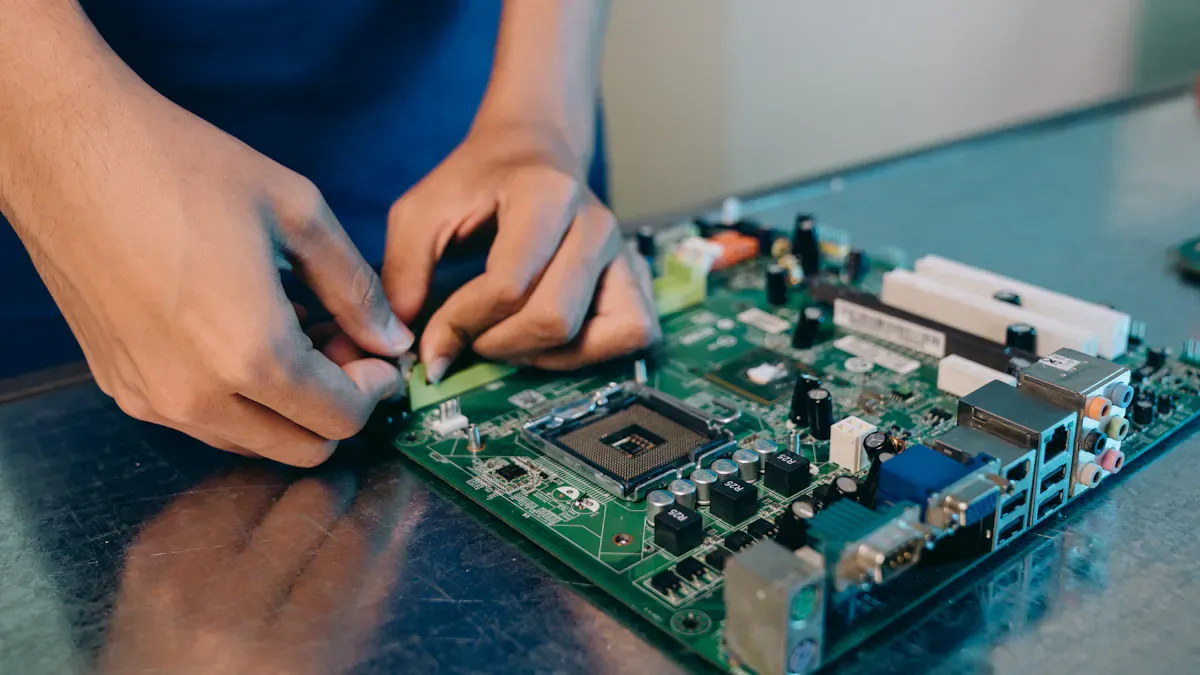
When you make a high-frequency PCB, you must pick the right materials. PTFE is a great choice for high-frequency designs. It has a low dielectric constant and very low dielectric loss. This lets high-frequency signals move fast and stay strong. PTFE keeps signal integrity high, even at very fast speeds. Other advanced composites are ceramic-filled PTFE, hydrocarbon ceramic, and high-temperature thermoplastics. Some brands that make these materials are Rogers, Isola, Taconic, Arlon, and Panasonic Megtron series. These materials help your board work well at high frequencies.
Here is a table that shows how PTFE and FR4 compare:
| Property | PTFE | FR4 |
|---|
| Dielectric Constant (Dk) | ~2.1 | 4.3 - 4.8 |
| Dissipation Factor (Df) | Extremely low | ~0.02 |
| Signal Integrity | Superior | Acceptable |
PTFE and advanced composites have low dielectric loss and better impedance control. This helps your circuits work well at high frequencies.
High Frequency Flexible PCB
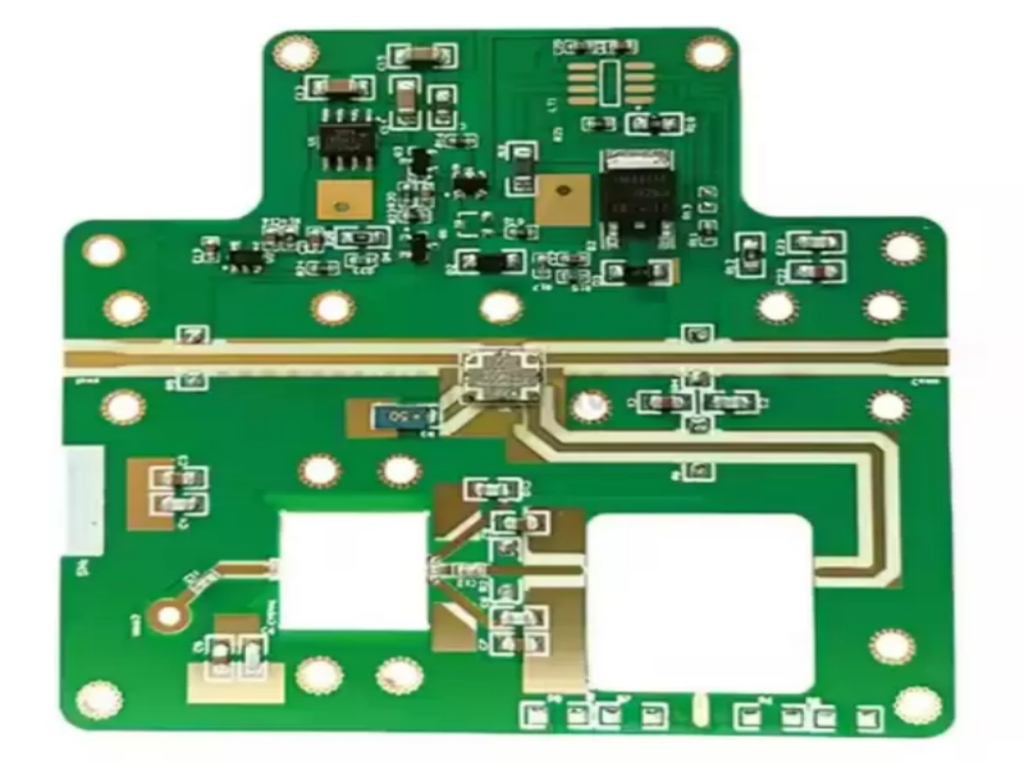
High-frequency flexible PCB can solve many design problems. These boards can bend and twist to fit in small or odd spaces. They use special materials with low dielectric loss. This keeps high-frequency signals clear and strong. You also get better impedance control, so there are fewer signal problems.
Here is a table that explains why high-frequency flexible PCB is good for high-frequency uses:
| Advantage | Description |
|---|
| High Speed Signal Performance | Flex materials have low dielectric constant values, leading to better signal integrity. |
| Design Flexibility | Flexible PCBs can be shaped and routed in ways that rigid PCBs cannot, allowing for innovative designs. |
| Improved EMI and RF Shielding | Flexible PCBs can be easily shielded against electromagnetic interference, enhancing performance. |
High-frequency flexible PCB can be better than rigid boards in some ways. You can see the differences here:
| Feature | High-Frequency FPCs | Rigid PCBs |
|---|
| Signal Type | Optimized for analog high-frequency signals | Suited for high-speed digital signals |
| Frequency Range | Operate effectively at microwave and gigahertz frequencies | Limited high-speed capabilities |
| Impedance Control | Requires controlled impedance | Less focus on impedance |
| Material Loss | Utilizes low-loss materials | Uses higher-loss materials |
| Shielding | Requires shielding to prevent interference | Less emphasis on shielding |
| Applications | Used in RF circuits, radars, satellites, and 5G | Common in general electronic applications |
You should use high-frequency flexible PCB for RF circuits, radar, satellites, and 5G devices. These boards help you get the best high-frequency performance.
Design and Manufacturing Challenges
Designing high-frequency PCBs comes with many challenges. It is hard to keep impedance steady. If you do not control impedance, signals can bounce back and lose quality. EMI and radiation problems can show up during tests and cost a lot to fix. Manufacturing defects might not break the board,d but can make it work badly. Temperature changes can cause both mechanical and electrical failures. Crosstalk and noise get worse as frequency goes up.
Here are some common challenges:
- Design complexity and high-density requirements
- Material selection and cost control
- High-quality standards and testing needs
- Technical challenges in the manufacturing process
You must also watch for problems with via connections. One medical imaging company had a 34% failure rate because of via problems in RF modules at 5.8 GHz. Most signal integrity failures, return loss problems, and EMI issues come from via structures. Careful design and testing help you avoid these problems and keep your high-frequency PCB working well.
Tip: Always check for low dielectric loss and good impedance control when you design high frequency pcb. This helps you avoid common problems and get the best results.
High Frequency Applications
Wireless and Cellular Devices
High-frequency PCBs are used in things like smartphones and Wi-Fi 6 routers. They are also in 5G base stations. These boards help your device send and receive signals with less loss. This means your calls sound clear. Your internet is faster, too. Special materials and designs make these PCBs work better. Rogers RO4003C is one example. It helps stop signal loss and keeps your data strong. The table below shows how these features help your wireless devices:
| Feature | Description |
|---|
| Low-Loss Materials (Dk, Df) | Special materials like Rogers RO4003C keep signals strong and clear. |
| Controlled-Impedance Design | Make sure signals move smoothly by keeping impedance steady. This is important for fast communication. |
| Durability and Precision | Built to last in tough places and keep RF signals clear. |
You notice these benefits when you stream videos or join video calls on your phone.
Aerospace and Automotive
High-frequency PCBs are found in radar systems and satellites. They are also in advanced driver-assistance systems, called ADAS. These boards help cars avoid crashes. They help planes track things in the sky. High-frequency uses in these areas need strong signals and steady work. Here are some ways these PCBs help:
- Radar systems use high-frequency PCBs to find objects.
- ADAS needs these boards for things like crash avoidance and cruise control.
- These PCBs move data fast with little loss.
The table below shows what they do:
| Application Area | Description |
|---|
| Radar Systems | Used for clear signal work in defense, planes, and cars. They help find objects with high accuracy. |
| Advanced Driver-Assistance Systems (ADAS) | Needed for crash avoidance and cruise control. They handle high-frequency signals well. |
You count on these boards for safety and to help you get where you need to go.
Medical and Industrial Uses
High-frequency PCBs are in MRI machines and ultrasound systems. These devices need clear pictures and fast data. In factories, high-frequency PCBs are used in automation systems. These systems need quick and steady signals. The table below shows how these boards help in the industry:
| Feature | Benefit |
|---|
| Heat Resistance | High-frequency PCB materials move heat away. This keeps parts safe in busy circuits. |
| High Transfer Speed. Let's | move data fast, which is needed for new electronics. |
| Excellent Signal Management | Keeps signals strong and clear, so data stays correct in high-frequency uses. |
You trust these boards for good medical tests and for machines that work well every day.
You can find high-frequency PCBs in wireless, medical, and car tech. Picking the right material helps your board work well. You should look for these things:
- Low dielectric constant makes signals move fast
- Low dissipation factor keeps signals strong
- High thermal conductivity helps control heat
- Environmental durability makes boards last longer
If you focus on these features, your devices will be reliable. Always think about what your project needs. High-frequency PCBs help you make better products that work well every day.
FAQ
What is the main difference between high-frequency and standard PCBs?
You use high-frequency PCBs for signals above 500 MHz. Standard PCBs work best at lower frequencies. High-frequency boards use special materials to keep signals clear and strong.
Why do you need special materials for high-frequency PCBs?
Special materials like PTFE have low dielectric loss. This keeps your signals from getting weak or noisy. You get better performance in wireless and fast communication devices.
Can you use FR4 for high-frequency designs?
You should avoid FR4 for high frequency circuits. FR4 has higher loss and can make signals weak. PTFE or advanced composites work much better for these needs.
Where do you find high-frequency PCBs in real life?
You see high-frequency PCBs in smartphones, Wi-Fi routers, radar systems, and medical machines. These boards help your devices send and receive signals quickly and clearly.
About the auther:

Sonic Yang
As a major of Electronics and Mechanical Automation, Sonic has been engaged in PCB design, R&D, manufacturing of eletronics for around 22 years, as engineering director and coordinates with supply chain(components&CNC parts), providing professional supports and consults for global customers.

 en
en

.jpg)
 WhatsApp