If you’re evaluating a PCB Fabrication Service, drilling is one of the steps you should understand—not because you’ll run the machines yourself, but because drilling quality quietly determines whether a board plates well, routes cleanly, and stays reliable after thousands of thermal cycles.
People often describe PCB drilling as “making holes.” That’s true in the same way you could describe a watch as “a box with gears.” In real manufacturing, drilling is a precision operation that connects layers, defines mechanical fit, and sets up plating. And because drilling touches almost every net in the design, it’s mistakes are rarely small.
Below is a practical, detailed guide to the PCB drilling process—from DIY drilling to high-speed CNC and laser microvia drilling—written for engineers, buyers, and anyone who wants to avoid surprises in fabrication.
1. PCB Drilling(Featured Snippet Target)
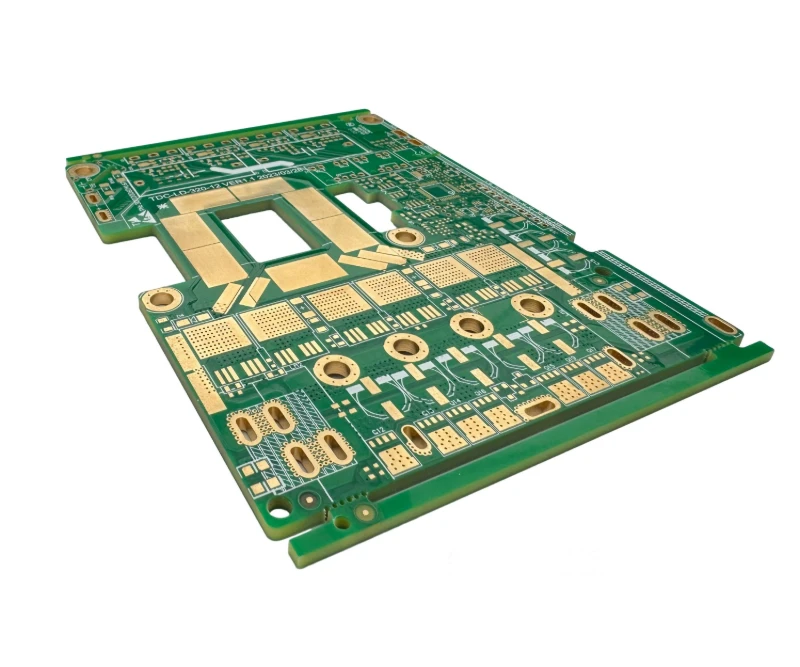
PCB drilling is the precision process of creating accurately positioned holes in a circuit board so they can become reliable electrical and mechanical features—not just “making holes.” In a real PCB drilling process, each hole must hit the intended pad location, maintain a controlled diameter, and produce a clean, smooth hole wall so plating can bond properly and vias can connect layers consistently.
Drilling accuracy directly determines electrical reliability because small errors can reduce annular ring, weaken via barrels, and create poor plating adhesion—issues that may not show up until reflow, thermal cycling, or long-term field use.
DIY drilling and industrial drilling use different tools and tolerances, but they follow the same fundamentals: keep the hole centered, control the cutting conditions, and protect the board from damage. The key difference is that industrial drilling applies those principles at scale with CNC/laser systems, tight registration control, and inspection gates designed for stable mass production.
2. Why PCB Drilling Matters More Than You Think
Drilling is one of the most “connected” steps in PCB fabrication: it touches nearly every circuit path that needs a via, plus every mechanical feature that needs alignment. That gives it outsized influence on performance, strength, and cost.
Electrical impact: signal integrity and plating quality
● Via quality starts with the hole. If the hole wall is rough, smeared, or contaminated, copper plating adhesion can be weak.
● High-speed signals are sensitive to geometry. Variations in hole size, misregistration, and layer alignment change via structures, which affects impedance and return loss.
● Clean, consistent hole preparation supports stable plating. Drilling is tightly linked to desmear, activation, and copper deposition steps.
Mechanical impact: stability and board strength
● Through-holes and mounting holes influence how a board fits into housings and how it handles vibration and torque.
● Poor drilling can create stress concentrators (micro-cracks, delamination) that grow during assembly or field use.
Cost impact: why drilling is expensive
Drilling costs add up because it combines:
machine time at high speed
consumables (drill bits wear and must be replaced)
inspection/verification
rework risk if registration fails
downstream yield effects (a drilling defect can become a plating defect)
In other words: drilling isn’t “just a step.” It’s a cost center because it’s precision + volume + risk.
Failure scenarios caused by poor drilling
intermittent opens from cracked or poorly plated vias
barrel cracks that show up after thermal cycling
insufficient annular ring due to misregistration
resin smear that prevents proper plating adhesion
burrs/debris that create shorts or weak solder mask coverage
3. Types of PCB Holes (With Real Applications)
Not all holes exist for the same reason. Understanding hole types helps you design smarter and quote more accurately.
3.1 Component holes (PTH)
Plated through-holes (PTH) are used for:
through-hole components (connectors, headers, transformers)
high-mechanical-stress parts (large terminals, screw connections)
power features where larger copper barrels help current carrying
These holes often require robust plating and tight fit control, especially for press-fit connectors.
3.2 Via holes
Vias are the backbone of multilayer routing:
Through vias: drill goes through the full board thickness; common and cost-effective.
Blind vias: connect outer to inner layers; reduce routing congestion.
Buried vias: connect inner layers only; improve density but increase process complexity.
Microvias: tiny laser-drilled vias (common in HDI); enable fine-pitch BGAs and compact devices.
Each via type changes the drilling method, cost, and manufacturing steps.
3.3 Mechanical & alignment holes
These holes don’t carry signals but are essential:
mounting holes for enclosures and heat sinks
tooling holes for registration during fabrication
alignment holes for automated assembly fixtures
Mechanical holes often have tighter dimensional requirements than people expect, because fit issues show up immediately in assembly.
4. PCB Drilling at Home vs PCB Drilling in Manufacturing
Aspect | DIY PCB Drilling | Industrial PCB Drilling |
Tools | Hand drill / mini drill | CNC drilling machines |
Accuracy | Manual | Micron-level |
Hole size | ≥0.6 mm | Down to 0.15mm |
Volume | Prototypes | Mass production |
DIY can work for simple projects. Industrial drilling is a manufacturing discipline built for yield, plating, and repeatability.
5. DIY PCB Drilling: Beginner-Friendly Overview
DIY drilling is still useful if you’re prototyping or learning. The goal is not perfection—it’s “good enough” hole placement without destroying the board.
5.1 Tools hobbyists actually need
Drill bits: carbide bits are sharp but brittle; choose sizes that match your lead diameters.
Hand drill vs drill press: a press improves stability and reduces off-center holes.
Backing board: prevents breakout and reduces burrs.
Safety essentials: eye protection and dust control, they matter more than most people think.
5.2 Simple drilling techniques that help
Start with pilot holes for large holes to reduce bit walking.
Use stable support: a flat backing board + clamp improves accuracy.
Balance speed and pressure: too much pressure causes cracks; too little increases chatter and burrs.
5.3 Common DIY mistakes (and how to fix them)
Broken bits: often caused by lateral force; keep the board stable and drill vertically.
Off-center holes: mark accurately, use a center punch lightly, or start with a smaller pilot bit.
Board cracking: reduce pressure, use a backing board, and avoid dull bits.
DIY drilling teaches principles—but it isn’t a substitute for industrial drilling when plating reliability matters.
6. Industrial PCB Drilling Process (Step-by-Step)
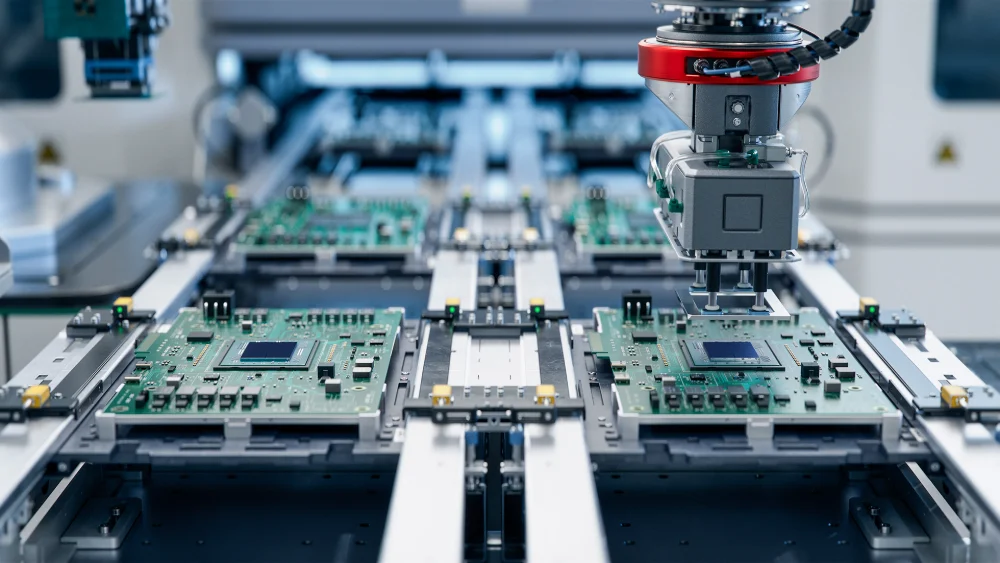
In professional PCB fabrication, drilling is a controlled workflow designed to produce plating-ready holes at scale.
Step 1: Drill data preparation (NC / Excellon)
Manufacturers generate drilling programs from:
Excellon drill files
tool tables (bit sizes, counts, offsets)
registration targets and stack thickness
This step determines tool selection, drilling order, and machine strategy. Errors here can misplace thousands of holes.
Step 2: Panel stacking and pinning
To boost efficiency, factories often drill multiple panels in a stack. That requires:
clean alignment
stable entry/backup materials
correct pinning and registration
Stacking improves throughput but increases risk if not controlled (heat, smear, positional drift).
Step 3: High-speed drilling
CNC drilling machines run at very high spindle speeds. The objective is:
accurate location
controlled hole diameter
smooth wall quality
minimal smear and delamination
Tool wear management is critical. A worn bit can quickly degrade hole wall quality, even if the hole “looks” the right size.
Step 4: Deburring and brushing
After drilling, surfaces can have burrs and debris. Brushing and cleaning remove:
loose fibers/resin dust
small burrs around pads
contaminants that can interfere with plating chemistry
Step 5: Hole inspection and cleaning
Before plating, manufacturers verify:
hole location and size distribution
debris removal
wall condition readiness for desmear and metallization
This is the handoff point: drilling ends, and hole preparation/plating begins.
7. Mechanical Drilling vs Laser Drilling (Decision Guide)
This is where many engineers and buyers get stuck: which drilling method is “better”? The real answer is: it depends on the hole type and density.
This section also intentionally covers the long-tail topics engineers search for: PCB drilling process and PCB via holes, because the drilling method dictates via reliability.
Mechanical drilling
Best for: standard through-holes, many through-via structures
Advantages:
cost-effective for large volumes
fast throughput
smooth, consistent walls when tooling is controlled
flexible for many hole sizes
Limitations:
minimum practical hole size limited by bit strength and wear
bit wear can cause diameter drift and wall roughness
mechanical force can create smear or micro-delamination if parameters are wrong
Mechanical drilling remains the backbone of mainstream PCB production because it’s efficient and reliable within its design window.
Laser drilling
Best for: HDI microvias, fine-density interconnect structures
Advantages:
enables ultra-small holes for microvias
minimal mechanical stress on the board
supports dense routing and fine-pitch packages
Limitations:
higher equipment and process cost
risk of heat-affected edges if not controlled
depth control must be precise (especially for blind vias)
may require additional cleaning/conditioning steps depending on material behavior
Laser drilling isn’t “better” universally. It’s better when the design demands microvia density and small geometries that mechanical tools can’t deliver consistently.
8. Critical PCB Drilling Parameters That Engineers Must Know
Even if you never touch a drilling machine, these parameters affect what’s could be manufactured and how consistent the result will be.
Hole diameter tolerance
Hole size is not a single number, it’s a tolerance window. Diameter affects:
component lead fit and mechanical stress
plating thickness distribution
via current capacity and reliability
Aspect ratio (practical limits)
Aspect ratio generally relates hole depth to hole diameter. Higher aspect ratios are harder to plate reliably, because:
chemistry must reach deep into the hole uniformly
copper thickness distribution becomes harder to control
If your design pushes aspect ratio too far, the weakest point often becomes via plating reliability—not the drilling itself.
Drill speed and feed rate
Incorrect speed/feed causes:
resin smear
rough walls
burrs
heat damage or micro-cracking
Factories tune these parameters based on stack thickness, material, copper weight, and hole density.
Copper thickness influence
Thicker copper and certain material sets can change drilling conditions:
copper can increase tool wear
heat behavior changes
smear risk can rise without proper controls
Minimum hole-to-copper clearance
Clearance rules protect against:
breakout into copper planes
reduced annular rings
shorts or unreliable plating
This is a common DFM issue: the hole may “fit” electrically, but not physically once registration tolerances are applied.
9. PCB Drilling Defects and Root Causes
Most “drilling defects” aren’t dramatic. They’re subtle issues that appear later as plating failures or intermittent reliability problems.
Delamination
Often caused by:
excessive heat
incorrect feed/speed
poor material handling or moisture conditions
Burrs and debris
Debris can:
block plating chemistry
cause shorts if trapped
interfere with solder mask coverage
Misregistration
Misregistration reduces annular rings and can create:
weak vias
breakout conditions
higher scrap risk
Broken drill bits
Common causes:
excessive stacking without tool control
vibration/chatter from poor clamping
incorrect drilling parameters
Poor plating adhesion (drilling-related)
Often linked to:
rough walls
resin smear
contamination or incomplete cleaning
Many via failures traced “to plating” actually begin with drilling + hole preparation.
10. Quality Control After PCB Drilling
Quality control is how a factory turns drilling from a risky step into a predictable step.
Visual inspection
Checks for obvious issues:
burrs
broken bits and damage
gross misregistration
It’s quick, but not enough alone.
Microsection analysis
Cross-sectioning verifies:
hole wall condition
smear presence
layer registration around the hole
It’s one of the clearest ways to confirm readiness for plating.
Hole wall roughness awareness
Wall quality influences copper adhesion. Factories manage roughness through:
correct drilling conditions
proper desmear and cleaning
stable maintenance routines
Plating readiness checks
Before metallization, manufacturers confirm holes are:
clean and de-smeared
properly conditioned for chemical copper deposition
consistent enough for stable plating thickness
This is the transition point between drilling and through-hole metallization.
11. Advanced PCB Drilling Technologies
As circuits become denser, drilling becomes more than “spindle and bits.”
Laser microvia drilling
Enables microvias for HDI designs:
smaller interconnect structures
better routing density
support for compact consumer and computing hardware
Direct imaging / exposure alignment support
While not “drilling,” modern imaging and registration systems support drilling accuracy by improving layer-to-layer alignment targets and correct factors.
HDI drilling strategies
HDI often combines:
mechanical drilling for through features
laser drilling for microvias
sequential build steps with verification between cycles
Automation and AI alignment correction
Modern factories increasingly use automated alignment and correction to reduce drift:
optical registration
machine compensation
data-driven tool life management
The goal is simple: fewer surprises at scale.
12. Design Tips to Reduce PCB Drilling Cost
If your quote is high, drilling is often one of the reasons. You can reduce cost without reducing reliability by designing with drilling reality in mind.
Optimize hole count
High hole count increases:
drilling time
tool wear
inspection load
Ask if some vias are truly necessary, especially in low-speed areas.
Reduce excessive vias
Sometimes vias get added “just in case” during layout. Each via is a real manufacturing event. Reduce redundancy where it doesn’t improve performance.
Choose manufacture-applicable hole sizes
Extremely small mechanical holes can increase scrap risk and tool wear. If you don’t need a tiny hole, don’t specify it.
Know when to switch from mechanical to laser
If your design truly requires microvias and fine pitch, forcing mechanical drilling beyond practical limits often creates yield problems. In those cases, laser drilling isn’t a luxury—it’s the right process.
13. PCB Drilling FAQs
1. What is the minimum PCB drill hole size?
In practice, minimum drill size depends on:
board thickness
material set
tool life constraints
yield requirements
For microvias, laser drilling enables much smaller features than mechanical drilling.
2. Why is PCB drilling so expensive?
Because it combines high-precision equipment, consumables, time, and risk. And if drilling fails, it can destroy yield downstream.
3. Can PCBs be drilled after lamination?
Yes—standard multilayer boards are typically drilled after lamination because the stack must be unified before through-hole drilling and plating.
4. How many holes are in a typical PCB?
It depends on designs. Some boards have hundreds of vias; HDI and dense designs might reach tens of thousands. Hole count is one of the biggest drivers of drilling time.
5. Is laser drilling always better?
No. Laser is better for microvias and HDI density. Mechanical drilling is still the best option for many through-hole and standard via applications due to speed and cost effectiveness.
14. Conclusion: From DIY Boards to Mass Production
DIY drilling is a practical way to learn how holes behave in a PCB. But once you move into real manufacturing, drilling becomes a manufacturing discipline: it sets up via reliability, plating quality, mechanical fit, and long-term durability.
At every level—home prototypes or high-volume production—the principle is the same: a via is only as reliable as the hole since it starts from. If you want stable yields and consistent electrical performance, choose a fabrication partner that treats drilling as a controlled process with verification, not a commodity step.
To explore Benlida’s capabilities across board types and manufacturing processes, you can start with explore PCB Fabrication Service and match your design needs to the right process.
Related PCB manufacturing processes
PCB Manufacturing Process Step-by-Step
PCB Inner Layer Imaging & Etching Process
What is the PCB Lamination Process?
What is the plating process in PCB Manufacturing?
How are vias formed in PCBs?
How is solder mask applied on PCB?
Ultimate Guide to PCB silk screen printing process
What is the surface finish process in PCB?
What are the most common methods of PCB testing?
About the auther:

Sonic Yang
As a major of Electronics and Mechanical Automation, Sonic has been engaged in PCB design, R&D, manufacturing of eletronics for around 22 years, as engineering director and coordinates with supply chain(components&CNC parts), providing professional supports and consults for global customers.

 en
en



 WhatsApp